
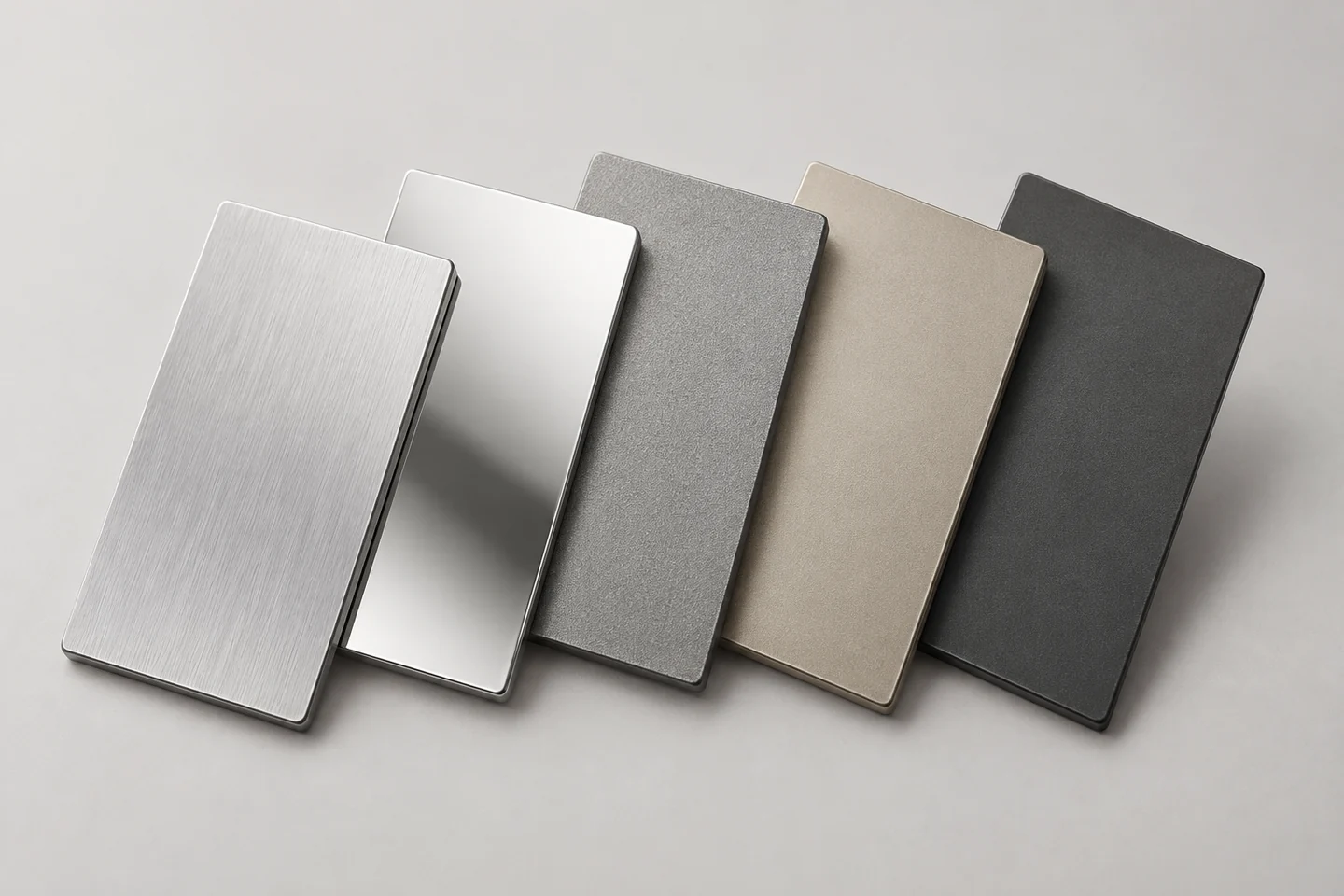
Describe surface appearance with references that can be reviewed consistently.
Separate color, texture and reflection
A surface description needs more than a color name. Record the intended color, visible texture and degree of reflection separately. For example, a brushed appearance has a direction that may matter across adjacent components. Terms such as matte or glossy are useful starting points, but the team still needs an agreed reference and inspection approach.
Mark the important surfaces
Use an annotated image or drawing to identify visible faces, hidden faces and functional contact areas. State where a finish should stop and whether any surfaces need to remain protected. Ask the manufacturing team to review how the proposed finish relates to the material and geometry. Do not assume a treatment can be applied to every material or feature in the same way.
Approve with a physical reference
Screen brightness, lighting and camera processing all influence how an image looks. Use a physical sample or agreed reference standard for final approval where appearance matters. View related components together under consistent lighting. Record the reference identity and the conditions used for comparison, especially when a collection contains several materials.
Document acceptable variation
Discuss where variation is acceptable and where matching is important. Keep the approval sample, finish description and relevant drawing revision connected. If a supplier proposes an alternative treatment, review a new sample before describing it as equivalent. The goal is an achievable, repeatable appearance requirement, not a promise based only on a rendered image.
Separate appearance from geometry
A finish brief should identify show faces, hidden faces, contact areas and dimensions that must remain controlled. Indicate where a texture may continue around an edge and where a clear transition is required. Ask the reviewer to distinguish a cosmetic observation from a functional failure so the next decision is specific.
Create a repeatable appearance review
Keep the reference sample, comparison direction and lighting consistent. For brushed surfaces, record the grain direction; for polished surfaces, identify the expected gloss and visible marks; for coated surfaces, define the color reference and masking areas. Words such as premium or perfect do not describe an acceptance method.
Keep records that travel with the project
Photograph the approved sample for identification, but retain the physical reference where appearance is critical. Link that reference to the drawing and order revision. Record what variations were discussed and whether they apply to one sample or to the production acceptance criteria. Revisit the approval if the process or material changes.