
Equivalent length
Compare assembled bracelets at the same intended wearing length. Record link count, connector, clasp and measurement method with the result.
WATCH BANDS / MATERIAL IDENTITY
Bring material identity, assembly weight and finish into the same conversation. Evaluate the complete bracelet and make the composition of links, clasp, connector and hidden hardware clear before approving a collection.
Grade, titanium component scope, documentation, finish and manufacturing route require project confirmation. No weight-saving percentage, health claim or finished-product certification is promised.
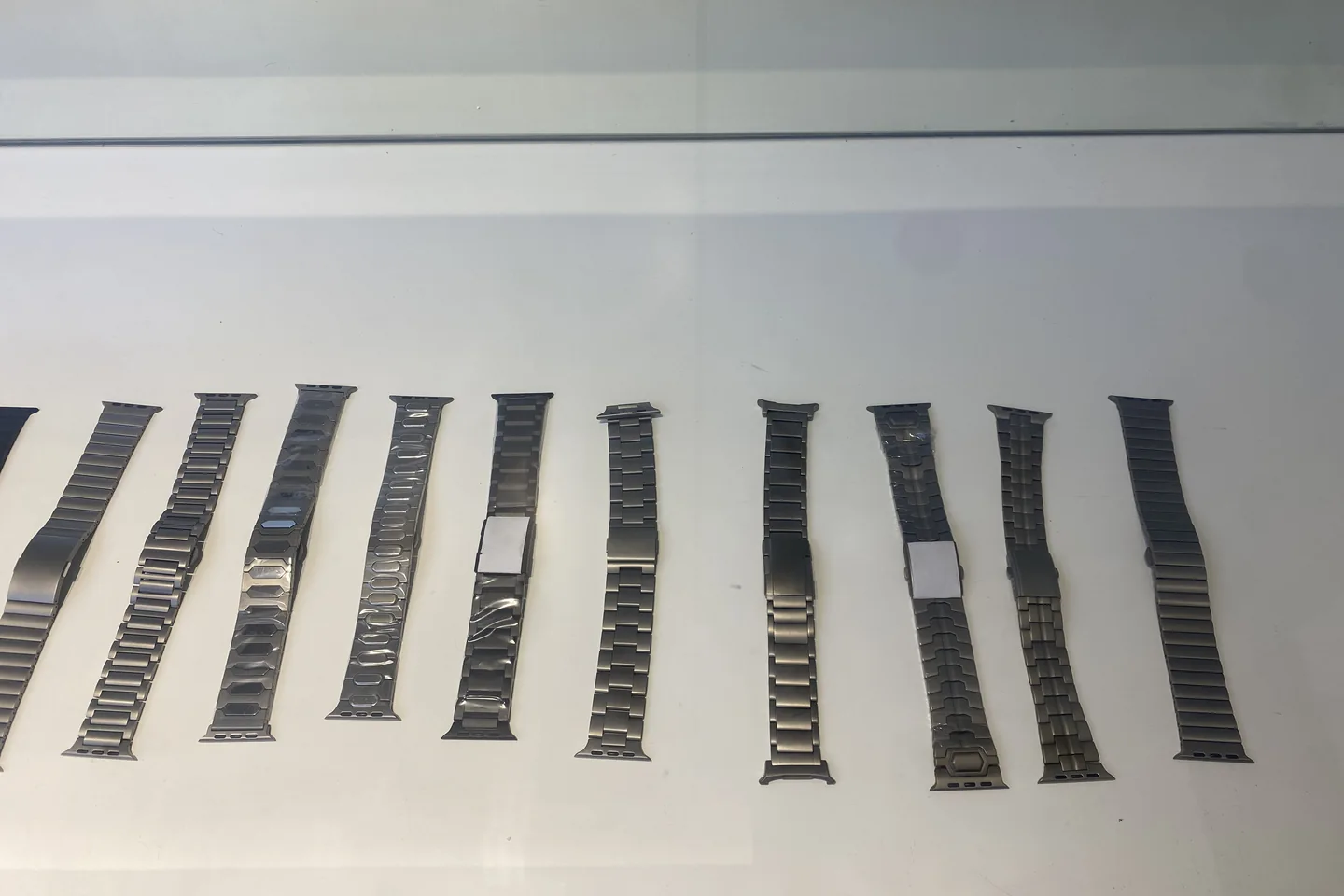
Supplied titanium display-area photograph. It is a collection reference, not a grade certificate for every visible component.
01 / MATERIAL IDENTITY
Titanium is a family of materials, not a visual finish. Commercially pure grades and alloys are different specifications, and a complete bracelet can contain several materials.
| Component | Question to resolve | Evidence to agree |
|---|---|---|
| Link bodies | Which exact grade is offered, and which links are within its scope? | Component description and required supporting material records. |
| Clasp & connector | Are these titanium, another metal or a mixed assembly? | Material scope and any design-related exceptions. |
| Pins, screws & springs | Which hidden parts differ from the link body? | Hardware description and functional review of the assembly. |
| Surface treatment | Is the appearance from substrate, texture or an applied treatment? | Finish specification, sample and treatment scope. |
02 / WEIGHT & FEEL
Titanium may be considered when mass is a design concern, but the result also depends on geometry, link count, clasp, connector and mixed materials. A material name does not quantify wearing performance.
Compare assembled bracelets at the same intended wearing length. Record link count, connector, clasp and measurement method with the result.
Consider where mass sits, not only total weight. Clasp size, link movement and watch balance can change the wearing experience.
Review pinching, hair snagging, joint freedom and protruding hardware. A lower mass does not resolve these construction issues.
Identify all contact materials and required evidence for the destination and wearer. Do not infer finished-product suitability from titanium terminology alone.
03 / SURFACE FINISH
Grade, geometry and treatment can change brushed, blasted or polished appearance. A titanium-colored finish on another metal should not be represented as a titanium substrate.
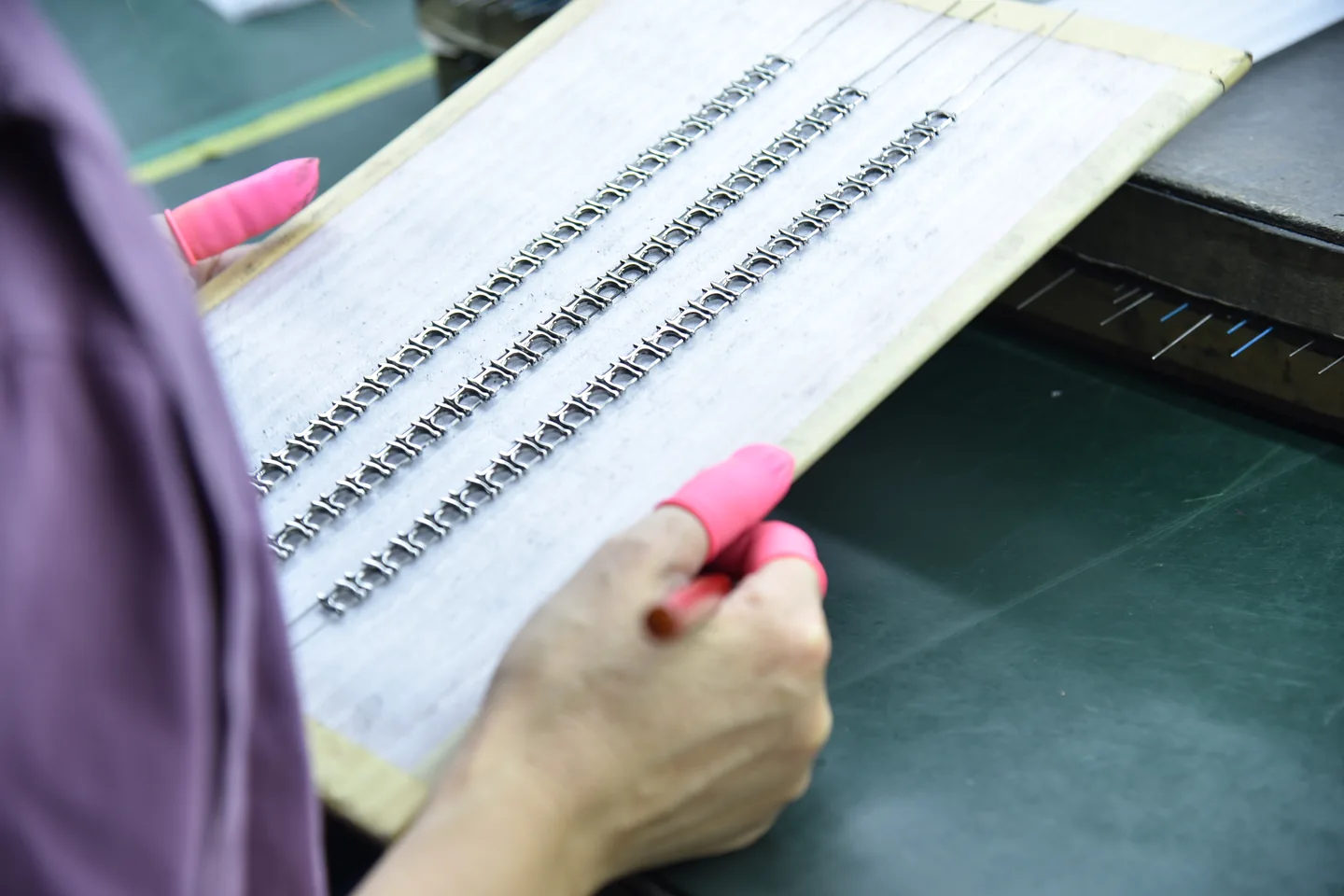
Supplied finishing inspection image. It does not verify titanium grade or a product-specific test result.
Identify visible faces, brushing direction and transitions between link sides, top faces and clasp. Show the relationship on a sample.
Agree lighting, viewing angle and permitted differences between links, connector and clasp. Mixed substrates can make matching more demanding.
Identify rubbing areas at joints and the watch interface. Where durability matters, agree a relevant evaluation and evidence rather than assuming a finish will pass.
| Decision | Titanium route | Stainless route |
|---|---|---|
| Material definition | Grade and exceptions by component. | Grade and hardware scope by component. |
| Mass requirement | Evaluate the complete offered assembly. | Use equivalent length and assembly configuration. |
| Appearance | Approve substrate, texture and treatment together. | Approve finish, transitions and any coating together. |
| Purchasing basis | Balance identity, construction and evidence. | Balance grade, construction, environment and evidence. |
04 / FIT & HARDWARE
Use the actual watch reference or controlled mating information. Engagement, clearance, release and adjustment must be reviewed for the offered assembly even if a previous style looked similar.
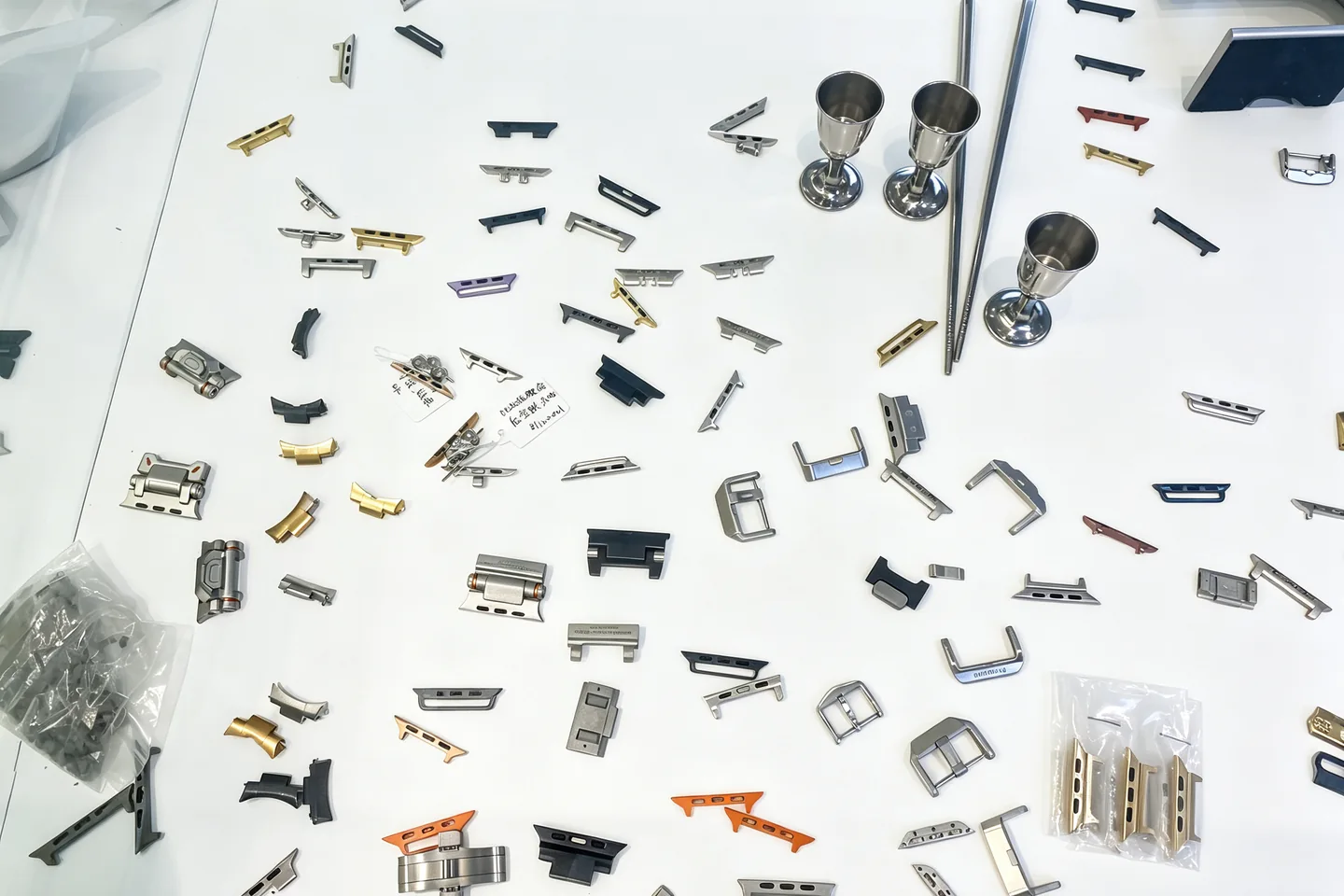
Supplied component references. Visible appearance does not identify every piece as titanium.
Identify the interface revision and review engagement, release and movement. Record any damaging contact or binding on the intended watch reference.
Define wrist range, removal method, tools and replacement hardware. Check closure operation after the sample is adjusted.
Identify the materials and intended exposure at contact areas. Environmental suitability is a project-specific question, not a conclusion from material names.
Agree adjustment and care instructions for the actual finish and hardware. Keep model, material scope and revision tied to the supplied configuration.
05 / APPROVAL EVIDENCE
Keep material identity, appearance and functional acceptance connected to the same model and revision. Agree documentation before the quotation becomes an order.
Name component scope, grade, exceptions and required records.
Check complete weight, fit, movement, edges and appearance.
Record material or finish discrepancies and any required new sample.
Approve quantity, identification, packaging and inspection scope.
Check the delivered configuration against agreed identifiers and records.
06 / QUESTIONS
Separate the material, functional and commercial questions so each can be answered with appropriate evidence.
Not automatically. Define the grade and component scope; clasps, connectors, pins, screws and springs may have different materials.
No universal comparison is stated. Compare complete assemblies of equivalent length and configuration.
Neither finished-product claim is made here. The actual materials, treatment, contact conditions and appropriate evidence are needed.
State the requirement in the brief. Availability, traceability scope and exceptions must be confirmed for the proposal.
Interface, style or drawing, titanium component scope, grade if required, finish reference, quantity by variant, sample checks and documentation needs. MOQ and timing remain project-specific.
PREPARE THE NEXT DECISION
Share the watch interface, which components must be titanium, the requested grade if known, and how you want the assembly evaluated.
sales@keepwinco.comAn enquiry starts a team review. Material, fit, quantity, schedule, operation responsibility and supporting records are confirmed in the proposal; this form does not create an order or an instant price.
Start with what you know. Review your details before sending; no account needed.
Start watch band inquiry →Your project is saved securely only when submission succeeds.
General material context only; external references do not certify a finished KeepWin product.
TIMET · titanium alloy families ↗TIMET · environment-dependent corrosion behavior ↗