
Geometry model
Useful for defined shape, space or assembly questions. Record material and route differences and avoid extending the result to molding-specific appearance or properties.
PARTNER-SUPPORTED MANUFACTURING / SAMPLE DECISIONS
A shape model, a resin sample and a molded prototype can answer different questions. Name the purpose and represented conditions so the approval supports the next decision without hiding unresolved production requirements.
KeepWin coordinates partner-supported review. Exact material, responsible operations, process availability, dimensions, inspection, commercial quantities and timing are confirmed in the project proposal; no universal capability or certification is promised.
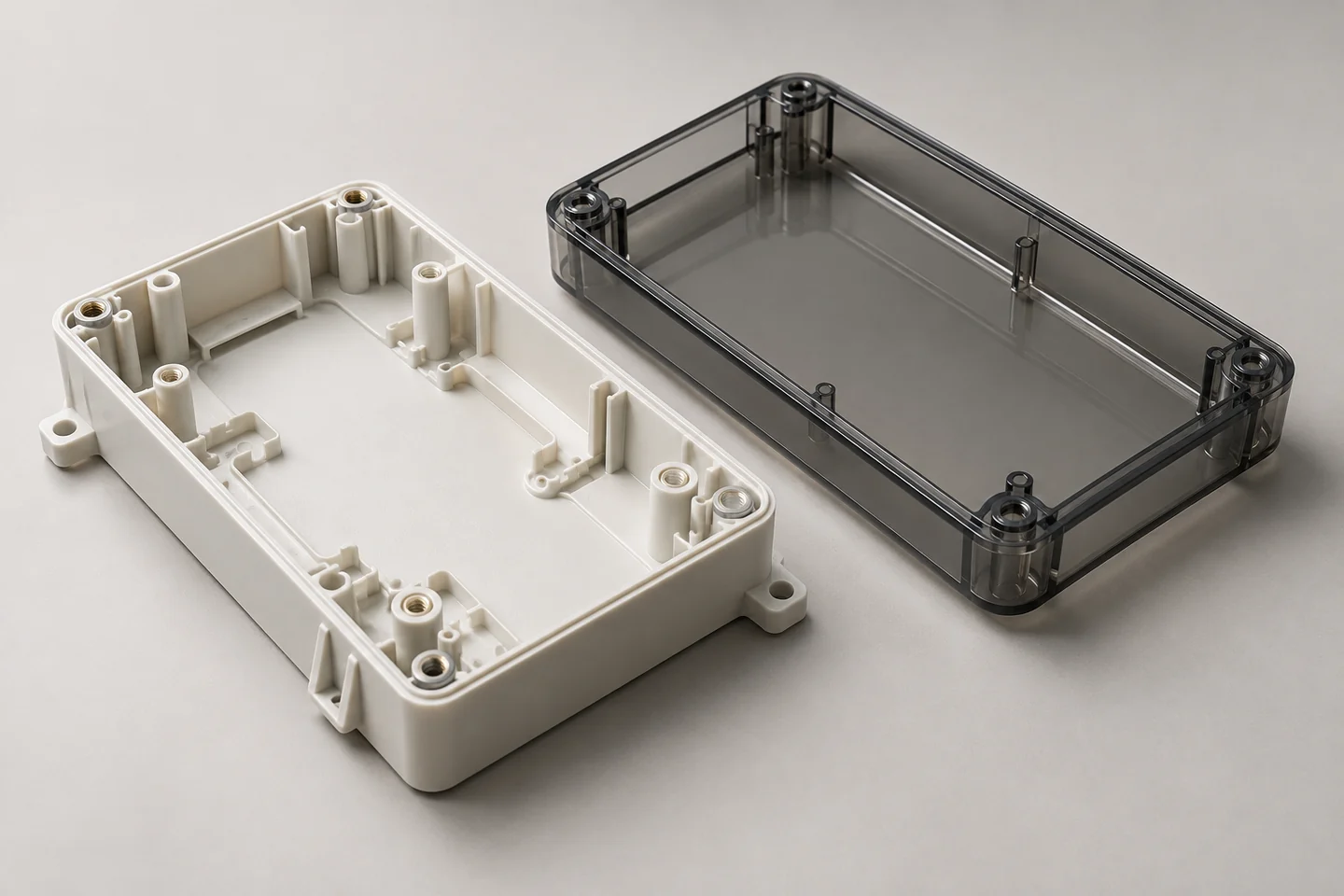
Generated enclosure design study, not a sampled production part, measured inspection result or verified molding facility.
01 / SAMPLE CHOICE
A printed shape and an actual molded component should not be treated as equivalent evidence. Compare what each represents before procurement.
Useful for defined shape, space or assembly questions. Record material and route differences and avoid extending the result to molding-specific appearance or properties.
Review the actual resin, tool and processing it represents. Define which fit, surface or functional checks support the next decision.
Agree whether the offered sample represents the intended repeat configuration. Identify tool, cavity and processing questions still needing resolution.
02 / REPRESENTATION
The value of a prototype depends on its relationship to the intended part and route. Write that relationship down before evaluating it.
State model, drawing, units and revision. Record sample-only changes, added reliefs or altered interfaces and their effect on the decision.
Name exact resin and the relevant completed state. A visually similar sample or family label is not automatically representative.
Ask what tool and cavity configuration the sample uses. Confirm which characteristics transfer to the proposed repeat route and which require further review.
Provide assembly parts, appearance references or functional conditions. Agree methods and the sample quantities needed for the actual question.
03 / EVIDENCE COMPARISON
Each approval should name the actual check and its limits. A successful sample decision does not settle every later manufacturing assumption.
| Sample decision | Evidence | Does not automatically prove |
|---|---|---|
| Shape | Controlled geometry and stated review. | Production material or tooling behavior. |
| Fit | Mating reference and checked interfaces. | Every dimension or service duty. |
| Appearance | Processed physical sample and viewing basis. | All colors, cavities or future changes. |
| Application | Defined method and material condition. | Uses or environments outside the evaluation. |
04 / TOOL & ITERATION
Prototype work can create tool and geometry changes. Keep the decision owner, cost scope and resampling rules visible.
List unresolved design, material, tooling or acceptance questions. Do not hide them inside an undefined sample approval.
Identify each revised model, resin, surface or tool decision. State which earlier evidence remains applicable and which needs another check.
Confirm prototype-tool ownership, modification, storage and any transfer assumptions. No universal tool package or life is implied.
Ask what additional work or evidence is required before repeating the part. A prototype offer need not include all production-release scope.
05 / ACCEPTANCE RECORD
The record should let another reviewer understand what was evaluated without seeing this enquiry conversation.
| Record | Include | Reason |
|---|---|---|
| Identity | Part, revision, material and sample quantities. | Identifies what was reviewed. |
| Condition | Tool/route and completed operations. | Defines represented state. |
| Checks | Features, references, methods and outcomes. | Explains the decision basis. |
| Limitations | Open issues and production differences. | Prevents unsupported transfer. |
06 / QUOTATION BRIEF
Samples with different material, tooling or evidence are not the same offer. Specify the decision before comparing price and timing.
Send files, exact resin or selection needs, sample quantities, critical interfaces, application or appearance reference and destination.
Ask what tooling, setup, iterations, sample checks, reports and secondary work are included. Identify the work needed for later production separately.
State the approval owner, change process and next hold point. Minimum quantities, capacities and schedule are proposal-specific rather than general sample promises.
07 / QUESTIONS
Approve the actual represented condition, not a broad process label.
It can answer its defined questions, but does not automatically represent molding material, tooling, surface or process behavior.
Tool strategy, ownership, transfer and later work require actual proposal confirmation.
Only within explicit scope. Changes in material, color, geometry or tool configuration may require further evaluation.
Record revisions, approval responsibility and which checks or tooling work are repeated. Confirm commercial scope.
Identity, represented condition, checks, decision, limitations and the next production questions.
PREPARE THE NEXT DECISION
Include CAD and drawing, intended sample purpose, exact resin if required, critical interfaces, tooling scope, appearance reference, evidence, quantities and destination.
sales@keepwinco.comAn enquiry starts a team review. Material, fit, quantity, schedule, operation responsibility and supporting records are confirmed in the proposal; this form does not create an order or an instant price.
Start with what you know. Review your details before sending; no account needed.
Start parts inquiry →Your project is saved securely only when submission succeeds.
General material context only; external references do not certify a finished KeepWin product.
Protolabs - part, tooling and acceptance context ↗