
Fixtures and nests
Show workpiece references, locating faces and permitted contact. State what the fixture must hold and which repeat-use questions need evaluation.
APPLICATION REVIEW / EQUIPMENT COMPONENTS
A fixture, bracket or cover becomes useful through its relationship to the equipment. Show the reference it holds, the movement it must allow and the delivered condition the equipment owner can accept.
KeepWin coordinates partner-supported review. Exact material, responsible operations, process availability, dimensions, inspection, commercial quantities and timing are confirmed in the project proposal; no universal capability or certification is promised.
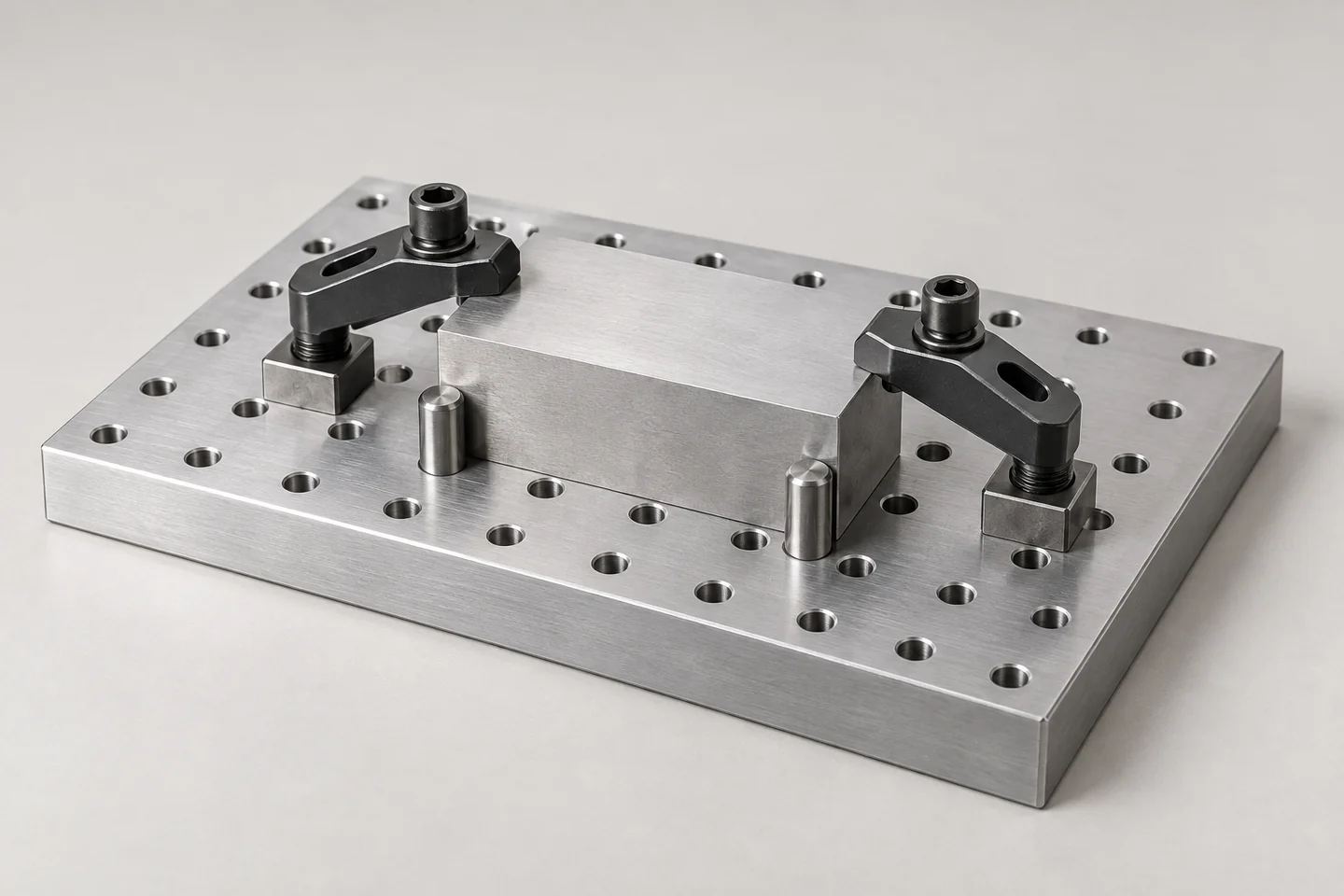
Generated fixture concept, not an operating machine, certified guard or measured production result.
01 / COMPONENT PURPOSE
A part label does not reveal whether it locates, supports, protects or provides access. Identify the owner of the complete equipment decision.
Show workpiece references, locating faces and permitted contact. State what the fixture must hold and which repeat-use questions need evaluation.
Define equipment and accessory interfaces, load direction and access. Identify critical relationships after finishing and assembly.
Explain guarding or access purpose, removable features and service conditions. A cover concept does not prove safety or machine compliance.
02 / OPERATING CONTEXT
Mounting drawings and workpiece models may be more useful than an isolated solid model. Connect requirements to the assembled use rather than a universal strength claim.
Show travel, clearances, neighbouring parts and the required assembled position. Define where interference is unacceptable.
Map repeated contact, locating and replaceable areas. Exact material, surface condition and any wear evaluation need agreement.
Identify relevant fluids, temperature, debris or cleaning conditions. Avoid assuming an alloy or plastic family suits every operating environment.
Mark fasteners, removal paths and serviceable features. Confirm whether a replacement must preserve an existing installation without modification.
03 / MANUFACTURING CHOICES
Shape, interfaces and replacement intent drive different preparation and acceptance scopes. Include secondary operations in the comparison.
| Route | Review focus | Delivered-state question |
|---|---|---|
| Machining | Datums, access and critical locating faces. | How are final interfaces measured? |
| Sheet fabrication | Bends, seams and mounting relationships. | Does the formed assembly fit the equipment? |
| Additive development | Shape, access and iteration. | Which operating properties remain unrepresented? |
| Molding | Repeat configuration and inserts. | What tooling/material state is approved? |
04 / SERVICE CONFIGURATION
A service part may need to fit an existing installation. Record the configuration instead of silently replacing it with a visually similar design.
Identify the equipment revision and mating parts. Clarify whether new geometry is permitted or interchangeability is required.
Link part numbers, variants and requested records to the supplied quantity. Similar brackets or fixtures should not rely on appearance alone.
Record material, finish or geometry changes and review their effect on interfaces and operating evidence. Name the approval owner.
Confirm responsible manufacture, finishing and checks. This page does not claim every process is in-house or certify the completed equipment.
05 / ACCEPTANCE PLANNING
A dimensional report may verify the component while leaving operating suitability unresolved. Agree who evaluates the complete installation.
| Scope | Specify | Record |
|---|---|---|
| Part geometry | Datums, features and final condition. | Method, revision and sample scope. |
| Equipment fit | Mounting and mating configuration. | Reference components and result. |
| Use evaluation | Relevant operating check and criterion. | Conditions and responsible approval. |
| Surface and stock | Exact material and protected/visible areas. | Identity, reference and applicable evidence. |
06 / RFQ PREPARATION
Provide the assembly relationship before asking for a bare-part price. A reusable fixture and a one-time shape sample are different commercial scopes.
Send controlled files, machine/workpiece references, material and finish, important interfaces, use conditions, variants and quantities. Include destination and requested milestones.
Identify preparation, manufacture, hardware, finishing, assembled checks, requested records and protective packing. Confirm any customer-supplied inputs.
Define sample purpose and equipment-owner approval. Actual process availability, capacity, minimum quantities and timing require proposal confirmation.
07 / QUESTIONS
Include the installed reference and the owner of operating acceptance.
No. Define locating requirements and the relevant check in the actual configuration.
No blanket certification is claimed. Equipment safety and required validation remain explicit responsibilities.
Provide the installed equipment and mating references, controlling dimensions and any permitted changes.
Its scope must be reviewed against material, process and operating requirements; shape approval alone is insufficient.
No. Define conditions, methods, criteria and responsible evaluation for the project.
PREPARE THE NEXT DECISION
Include part and assembly files, mounting/workpiece references, material, service environment, relevant loads and movement, protected surfaces, acceptance checks, quantities and destination.
sales@keepwinco.comAn enquiry starts a team review. Material, fit, quantity, schedule, operation responsibility and supporting records are confirmed in the proposal; this form does not create an order or an instant price.
Start with what you know. Review your details before sending; no account needed.
Start parts inquiry →Your project is saved securely only when submission succeeds.