
Grade and condition
Name the controlling alloy specification and condition where required. Identify relevant supply form and permitted alternatives.
MATERIAL REVIEW / METAL COMPONENTS
A broad metal label can conceal different stock, hardware and finishes. Define the supplied material by component and connect it to the fabrication route and accepted surface state.
KeepWin coordinates partner-supported review. Exact material, responsible operations, process availability, dimensions, inspection, commercial quantities and timing are confirmed in the project proposal; no universal capability or certification is promised.
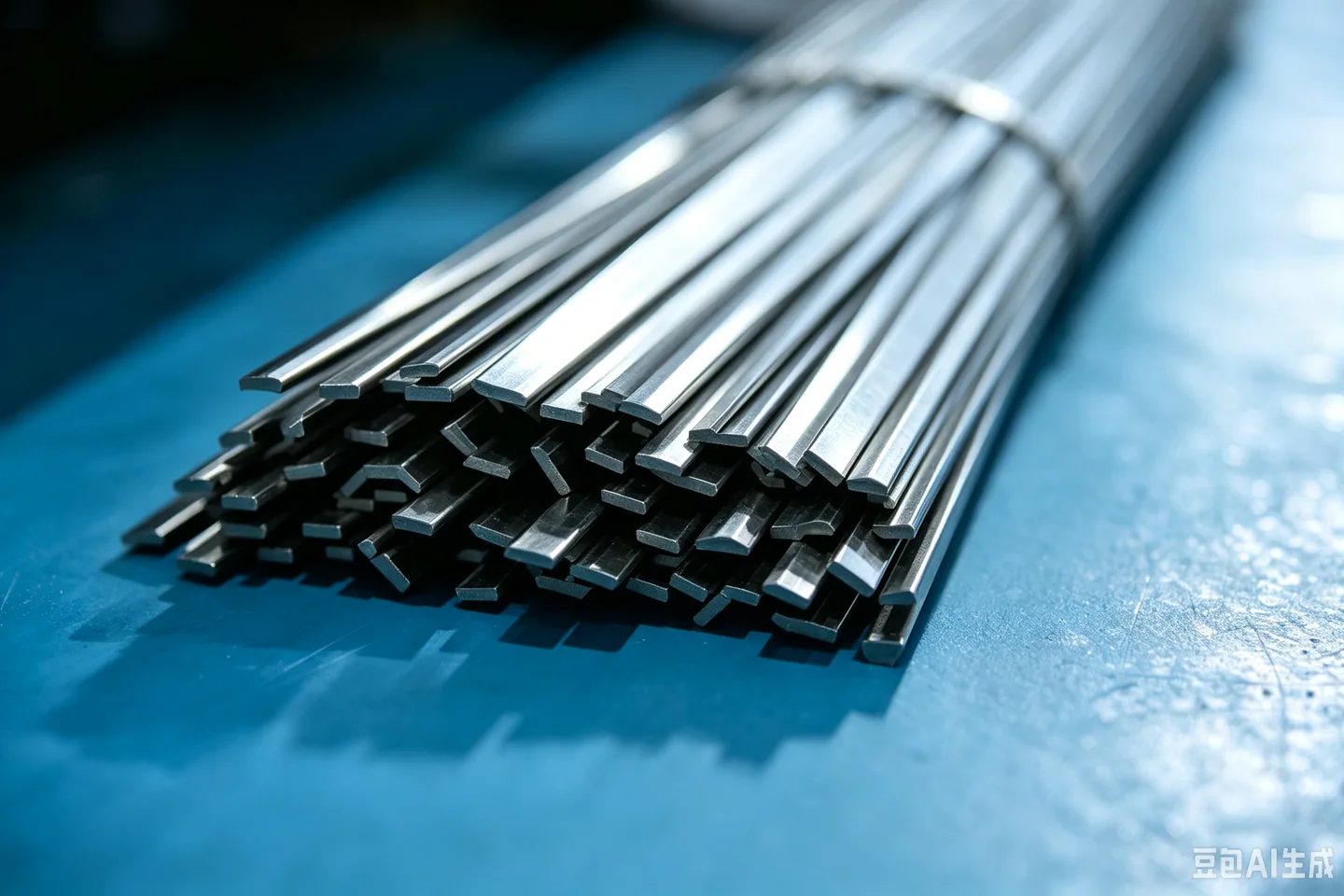
Supplied metal-stock reference. It is not a stock inventory, grade certificate or universal material capability statement.
01 / SPECIFICATION STRUCTURE
An assembly can contain a body, fasteners, pins and other hardware with different specifications. Avoid applying one material label to all components.
Name the controlling alloy specification and condition where required. Identify relevant supply form and permitted alternatives.
List bodies, hardware and supplied mating parts separately. Mark exceptions and the evidence needed for each relevant component.
Specify fabrication, surface treatment and assembled use. Stock identity is one input rather than complete finished-part approval.
02 / SELECTION INPUTS
Geometry, environment and surface purpose can determine different review questions. Generic property comparisons are insufficient without the exact supply and use.
Mark critical fits, contact, movement and relevant loads. Identify the application evaluation required rather than assuming one family covers every purpose.
State fluids, temperature or environmental requirements where relevant. Surface treatment and assembled configuration may need their own review.
Identify cutting, machining, forming, joining or molding-insert scope. Actual feasibility depends on grade, condition and geometry.
Map cosmetic faces, sliding/contact areas and protected interfaces. Confirm the treatment and accepted final dimension.
03 / FAMILY REVIEW
These groupings organize the enquiry; they are not guaranteed supply or property claims.
| Family | Specify | Review |
|---|---|---|
| Aluminum-related | Exact alloy and condition. | Fabrication, surface and final interface. |
| Steel/stainless | Exact grade, condition and component role. | Contact/exposure and treatment requirements. |
| Titanium-related | Controlling specification and supply condition. | Actual route and requested evidence. |
| Mixed-metal assembly | Identity of each relevant component. | Joining/contact and change responsibility. |
04 / SOURCE AND FINISH
A polished or coated appearance does not identify the underlying grade. Confirm supply records and surface scope separately.
Request the relevant identity or certificate scope. Verify what entity, product, quantity or lot it represents.
Define permitted alternatives and approval ownership. A visually similar part is not automatic material equivalence.
Review substrate compatibility, preparation and masking. Define physical appearance reference and any separate performance criteria.
Review hardware or surface substitutions against contact, joining and earlier sample evidence. Keep component identity current.
05 / EVIDENCE PLANNING
Supply, geometry and surface records can all be needed, but none should be extended beyond its represented scope.
| Evidence | Identify | Limit |
|---|---|---|
| Material record | Grade/condition and applicable supply reference. | Stated supply scope. |
| Dimensional report | Part/revision, method and final state. | Agreed quantities and features. |
| Finish reference | Substrate, treatment and comparison basis. | Defined surfaces and appearance. |
| Application check | Configuration and conditions. | Required criterion and represented use. |
06 / QUOTATION BRIEF
A quote for raw stock or an unfinished component is different from a finished assembly. State the material and evidence beside the quantity.
Send component map, exact grade/condition, controlled files, use requirements, final treatment, permitted alternatives and requested records. Include quantities and destination.
Identify supply, fabrication, hardware, surface work, assembly, checks and protection. Confirm actual record availability and responsible operations.
Agree sample identity and change review. No universal grade availability, corrosion result, tolerance, MOQ or delivery timing is claimed.
07 / QUESTIONS
Exact specification and component scope should travel with the drawing.
No. Appearance and metal identity require separate definition and evidence.
Only if explicitly specified. Map relevant hardware and exceptions separately.
No inventory claim is made. Confirm the actual offered grade, condition and supply.
No blanket result is claimed. Define required exposure, criteria and configuration-specific evidence.
Only an explicitly permitted or approved alternative should be used after reviewing function, process and prior evidence.
PREPARE THE NEXT DECISION
Include exact grade/condition, component map, fabrication files, use requirements, final treatment, permitted alternatives, requested supply records, quantities and destination.
sales@keepwinco.comAn enquiry starts a team review. Material, fit, quantity, schedule, operation responsibility and supporting records are confirmed in the proposal; this form does not create an order or an instant price.
Start with what you know. Review your details before sending; no account needed.
Start parts inquiry →Your project is saved securely only when submission succeeds.