
Describe the exposure
Identify ordinary wear, perspiration, cleaning products and any relevant salt or chloride exposure. Avoid a blanket request for a bracelet that “never corrodes”.
WATCH BANDS / GRADE & SURFACE
Turn a steel bracelet reference into a clear component and appearance specification. Review the offered grade, hidden hardware, surface treatment and intended exposure alongside connector fit and complete-sample acceptance.
Material grade, treatment, records and manufacturing responsibility require project confirmation. No universal corrosion, skin-contact or coating performance claim is made.
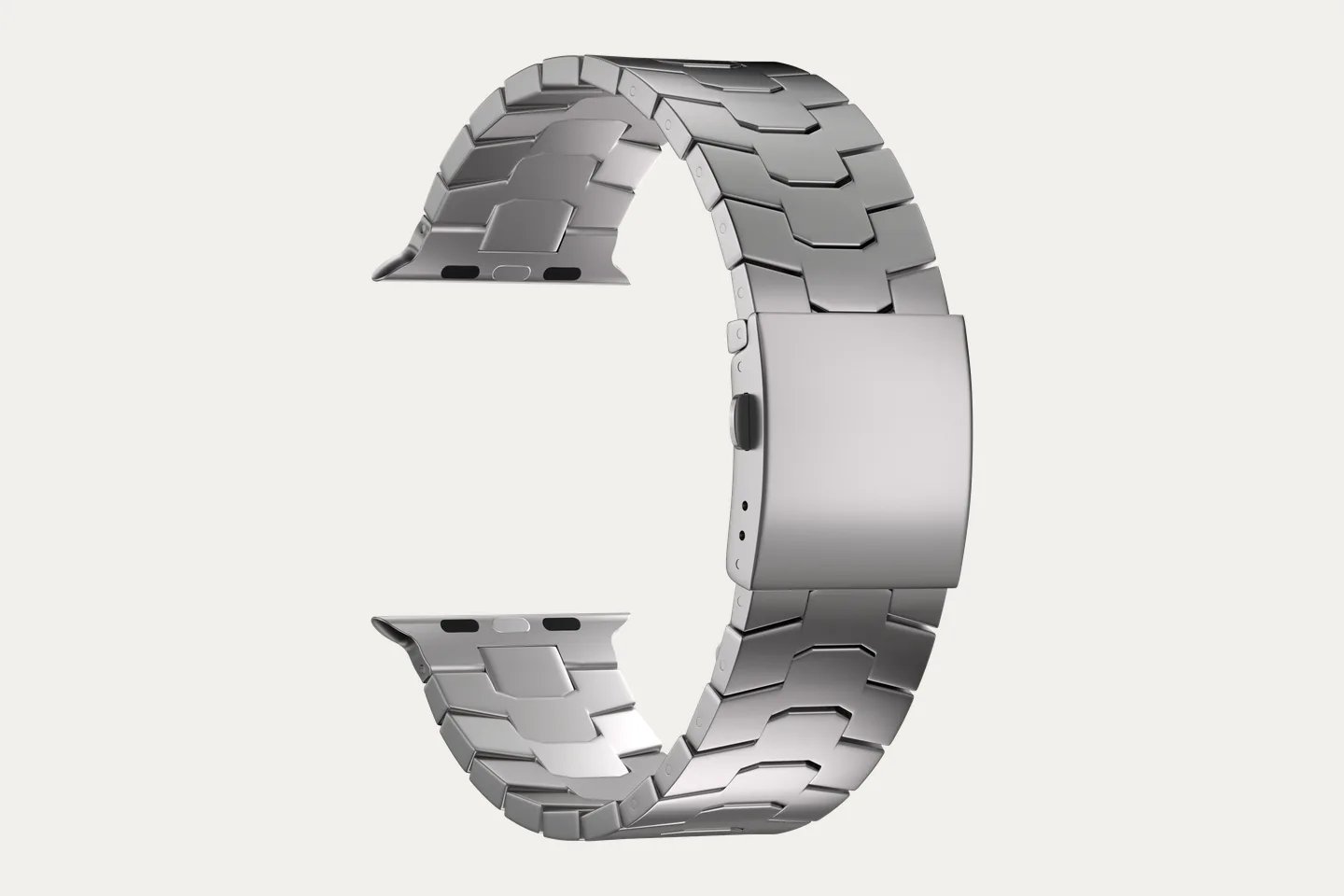
Supplied metal-link product photograph. Appearance does not establish stainless grade or the composition of hidden hardware.
01 / GRADE SCOPE
Different stainless grades serve different material and manufacturing requirements. The body, clasp, connector and joining hardware should have a defined scope rather than being inferred from one visible surface.
| Item | Question for the offered configuration | Approval requirement |
|---|---|---|
| Visible links | Which grade and construction are proposed? | Agreed material identity and any supporting records required. |
| Clasp & connector | Do these use the same grade as the link body? | Record exceptions and their functional purpose. |
| Pins & screws | Which material and replacement hardware are offered? | Hardware scope tied to the assembled sample. |
| Surface treatment | Is the appearance mechanical finishing, coating or another treatment? | Specify substrate, treatment and protected contact areas. |
02 / USE ENVIRONMENT
Stainless steel is not immune to every environment. Grade, surface condition, deposits, cleaning and mixed-material contacts all deserve consideration where appearance or durability is a purchasing requirement.
Identify ordinary wear, perspiration, cleaning products and any relevant salt or chloride exposure. Avoid a blanket request for a bracelet that “never corrodes”.
Consider crevices, link joints and contact between different materials. State where discoloration or surface change would be unacceptable.
If corrosion-related evaluation is needed, agree the method, conditions, acceptance criterion, samples and report scope. A test-equipment photograph is not evidence of a result.
General alloy guidance is not certification for a finished bracelet. Marketing wording should follow the evidence for the actual grade, treatment and hardware.
03 / SURFACE CHOICES
Polish, brushing and textured finishes change the visual reading of a link. Specify where each belongs and how the bracelet and clasp should match.
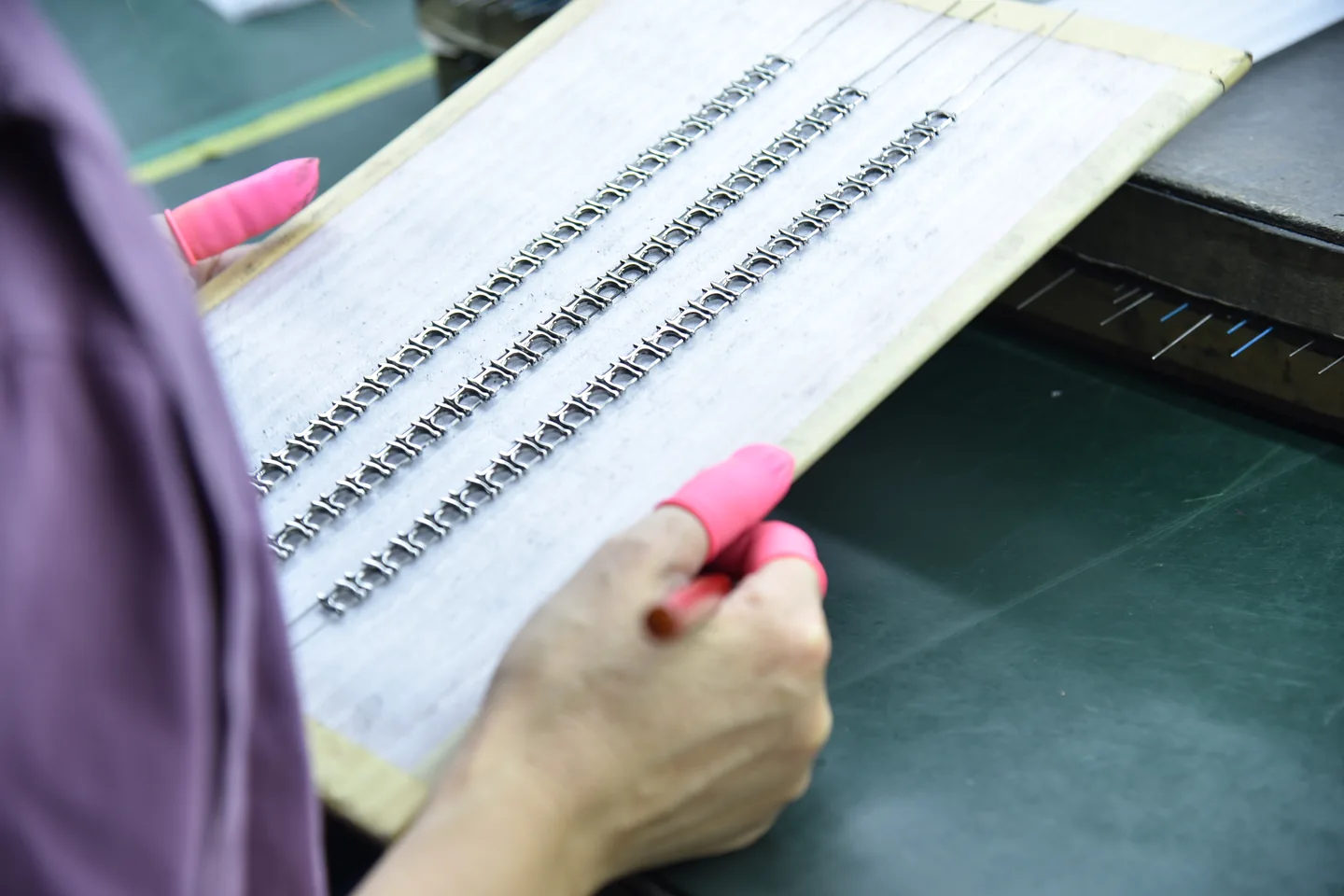
Supplied finish-inspection reference. It illustrates an activity, not a universal inspection method or certified result.
Identify orientation on top faces, sides and clasp. Check transitions near edges and connector pieces rather than approving one flat area alone.
Mark the faces or edges intended to reflect light. Agree permitted tool marks and the treatment of small corners where polishing can change appearance.
Confirm the proposed treatment, substrate and reference color. Identify rubbing, masking or contact surfaces and request evidence for any durability claim.
| Feature | Define | Compare under agreed conditions |
|---|---|---|
| Texture | Direction, visible-area scope and reference. | Links, end pieces and clasp consistency. |
| Color | Physical reference and allowable variation. | Whole assembly, not isolated components. |
| Edges | Burr, protrusion and edge-treatment requirements. | Skin-contact and snagging areas. |
| Marks | Permitted process traces and defect criteria. | Normal visible surfaces and agreed viewing distance. |
04 / ASSEMBLY REVIEW
The offered bracelet still needs its own interface, adjustment and closure review. Keep material approval and functional approval connected to the same model revision.
Use the intended mating reference. Review insertion, retention, release and case clearance with the actual connector.
Check movement, side play, pinch points and contact after adjustment. A different link count can change clasp position and feel.
Review release controls and any requested secondary retention on the assembled sample. Do not infer safety performance from the clasp style alone.
Agree adjustment instructions, spare hardware and care guidance appropriate to the actual finish and configuration.
05 / ORDER BASIS
A comparable proposal includes the same grade, construction, finish, sample checks and delivery basis. Make exclusions visible before approving quantities.
Reference model, interface, component material scope and finish map.
Required material records and sample acceptance checks.
Fit, adjustment, closure, edges and finish consistency.
Quantities by connector, color, length and packaging configuration.
Inspection, identification, records, transport and schedule assumptions.
06 / QUESTIONS
Ask for the specification and evidence of the offered assembly instead of accepting a material label alone.
It must be confirmed for the offered configuration, including exceptions in clasp and hardware. This page does not state a universal grade for all models.
No. Environment, surface condition, grade and construction matter. State the exposure and evidence needed for your project.
Describe the finish map and reference appearance. Review transitions and matching on the assembled sample; methods and feasibility require confirmation.
Neither claim is implied. Any skin-contact or composition requirement needs specific evidence for the actual finished components.
Use it as a reference, but review the new geometry, material scope and treatment on its own sample. Do not silently transfer acceptance between configurations.
PREPARE THE NEXT DECISION
Share the style, watch interface, grade requirement if known, exposure and finish reference, plus the evidence needed for approval.
sales@keepwinco.comAn enquiry starts a team review. Material, fit, quantity, schedule, operation responsibility and supporting records are confirmed in the proposal; this form does not create an order or an instant price.
Start with what you know. Review your details before sending; no account needed.
Start watch band inquiry →Your project is saved securely only when submission succeeds.
General material context only; external references do not certify a finished KeepWin product.
Outokumpu · environment-dependent corrosion resistance ↗Outokumpu · stainless grade families ↗