
Internal or complex geometry
Identify channels, inaccessible details and consolidated features. Review how unused material is removed and how important internal requirements are verified.
PARTNER-SUPPORTED MANUFACTURING / METAL ADDITIVE
Complex metal geometry still needs an alloy, a practical processing sequence and final-state acceptance. Keep powder removal, supports, treatment and any machined interfaces visible in the project proposal.
KeepWin coordinates partner-supported review. Exact material, responsible operations, process availability, dimensions, inspection, commercial quantities and timing are confirmed in the project proposal; no universal capability or certification is promised.
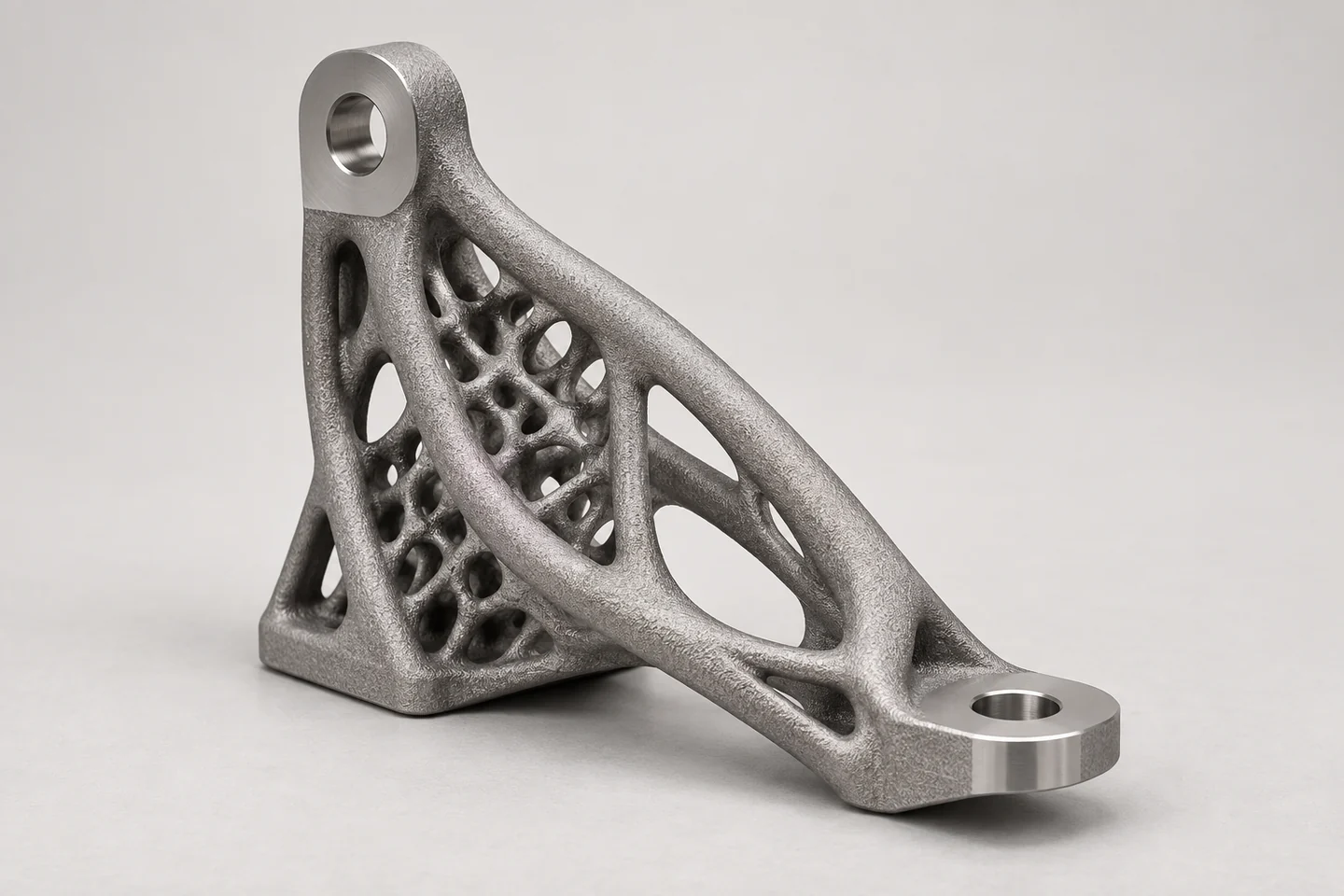
Existing generated metal-additive concept. It is not a qualified part, measured density result, machine inventory or evidence of a certified facility.
01 / ROUTE SELECTION
An additive route should answer a concrete design or procurement question. Compare it with machining, fabrication or another route using the same finished requirement.
Identify channels, inaccessible details and consolidated features. Review how unused material is removed and how important internal requirements are verified.
State which interfaces or joints are being replaced. Review the revised geometry, treatment and acceptance before assuming fewer pieces mean simpler qualification.
Show where final fits, datums or surface requirements need secondary work. Include access, stock allowance and responsibility for review.
02 / PROCESS SEQUENCE
Alloy, geometry and use affect the proposed build and post-processing. No one fixed sequence is asserted for every metal or partner route.
| Operation | Review | Evidence question |
|---|---|---|
| Build arrangement | Orientation, supports and important geometry. | What configuration does the sample represent? |
| Material removal | Unused powder, supports and access. | How is the relevant condition verified? |
| Treatment | Required condition and process scope. | Which applicable records are available? |
| Secondary machining | Reach, holding and functional interfaces. | Which final-state dimensions are checked? |
03 / ALLOY & CONDITION
An image cannot distinguish the alloy, supplied material history or final metallurgical state. Name the required grade and the condition your evidence must cover.
Specify the required grade or acceptable alternatives. Confirm actual supply, responsible route and any material-identity records needed.
State treatment or other required delivered condition. Ask which proposal items establish that state rather than assuming it from the process name.
Review the named material, specimen or part, processing and method represented by any test data. A general datasheet is not automatically a delivered-part report.
If identity and processing records matter, define how part revision and delivery scope connect to them. Availability must be confirmed for the offered project.
04 / ACCESS & INTERFACES
Closed cavities, passages, support locations and later tool access should be reviewed together. A printable model does not prove that every subsequent operation is feasible.
| Feature | Mark | Resolve |
|---|---|---|
| Internal passages | Entrances, exits, sections and functional purpose. | Removal access and relevant verification. |
| Supported regions | Permitted contacts and important surfaces. | Removal method and accepted remaining condition. |
| Mating faces | Datums, fits and final surface requirement. | Secondary access and final-state inspection. |
| Thin or delicate features | Critical walls, transitions and protected detail. | Proposed changes and sample questions. |
05 / QUALIFICATION & RECORDS
Dimensional inspection, material identity and internal or mechanical evaluation answer different questions. Neither a photo nor an exterior dimension proves all requirements.
Generated metal-additive geometry reference; not a measured metallurgical condition, qualified application or customer inspection report.
List critical features and datums, final-state condition, method and sampling. Include post-treatment and post-machining effects where relevant.
If a channel, density-related requirement or internal defect criterion matters, define the requirement and ask for an appropriate verification proposal. No test availability or result is assumed.
Describe service conditions and application checks. Required mechanical, fatigue, pressure or other evidence needs an agreed method, scope and responsibility.
Request only the documents needed for the actual route. Check named entity, site, scope and validity; this page claims no universal KeepWin or partner certification.
06 / COMPLETE QUOTATION
Printing, treatment, support work and machining can belong to different operations. Make each handoff and exclusion clear before accepting an offer.
Files, alloy, use and final requirements.
Build arrangement and removal access.
Treatment, machining and responsible route.
Sample scope and agreed evidence.
Configuration, records, quantity and delivery.
Ask for preparation, build, removal, treatment, secondary machining, inspection, samples, records and packing to be identified where relevant.
State which acceptance or release starts the proposed schedule. Exact capacities, minimum quantities, record availability and milestones require confirmation for the actual route.
07 / QUESTIONS
The offered route must connect the alloy, geometry and evidence to the delivered state.
Do not assume equivalence from the alloy family alone. Review exact material, processing condition and application evidence.
The sequence depends on the proposed route, material and geometry. Confirm actual operations rather than applying one universal workflow.
No such guarantee is made. Show internal geometry and agree removal access and relevant verification before approval.
Feasibility depends on access, holding, geometry and the offered sequence. Identify the faces, final requirements and responsibility for review.
No. It is a generated geometry reference. Required site, process or application documents need explicit evidence and scope confirmation.
PREPARE THE NEXT DECISION
Include CAD and drawing revision, alloy, functional interfaces, internal passages, treatment or machining needs, application evidence, quantities and destination.
sales@keepwinco.comAn enquiry starts a team review. Material, fit, quantity, schedule, operation responsibility and supporting records are confirmed in the proposal; this form does not create an order or an instant price.
Start with what you know. Review your details before sending; no account needed.
Start parts inquiry →Your project is saved securely only when submission succeeds.
General material context only; external references do not certify a finished KeepWin product.
EOS - metal additive processing chain ↗EOS - powder removal and secondary operations ↗