
Route-specific completion
Discuss support removal, resin cleanup, powder removal and any required processing for the chosen material. Confirm the actual operations and responsibility.
PARTNER-SUPPORTED MANUFACTURING / ADDITIVE FINISHING
Separate the operations needed to complete a printed part from the work that changes its appearance or interfaces. Define cleanup, surface scope and final-state checks before comparing a finished quotation.
KeepWin coordinates partner-supported project review. Available processes, exact materials, equipment suitability, dimensions, inspection, minimum quantities and schedule are confirmed in the proposal; this page is not an equipment inventory or universal capability promise.
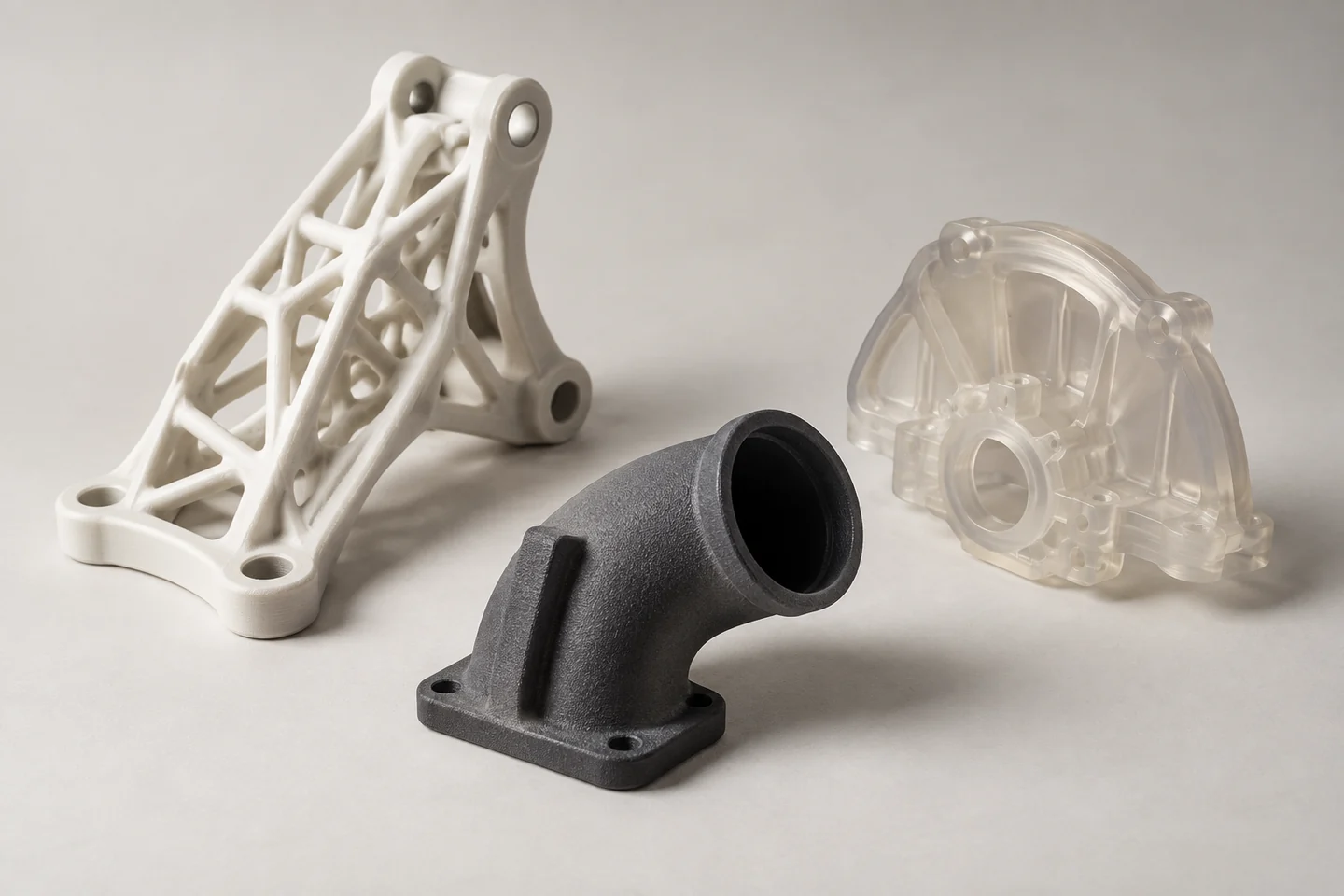
Existing generated printed-part concepts. These are geometry references, not a before-and-after finishing comparison, measured samples or evidence of a completed customer project.
01 / FINISHING SCOPE
Cleaning or required curing is a different decision from painting or cosmetic smoothing. The offer should explain what the delivered condition includes.
Discuss support removal, resin cleanup, powder removal and any required processing for the chosen material. Confirm the actual operations and responsibility.
Map visible faces, texture, color and permitted marks. Ask for a controlled physical reference where screen images cannot define acceptance.
Identify mating faces, holes, inserts or other features that need final-state review. Added work and its feasibility belong in the proposal.
02 / CLEANUP & ACCESS
External appearance cannot prove that a cavity or channel is clear. Identify internal spaces and the evidence required for the selected printing route.
| Route | Access question | Acceptance discussion |
|---|---|---|
| Resin printing | Can residual resin and cleaning media leave the relevant cavities? | Required cleaning and material-specific processed state. |
| Powder-based printing | Can unused powder be removed from openings and channels? | Clearance and cleanliness evidence for the intended use. |
| Supported geometry | Can supports be reached without compromising features? | Contact locations, removal scope and permitted marks. |
| Metal additive route | Which supports, treatment or secondary operations are proposed? | Responsibilities and final-state checks; no universal sequence assumed. |
Provide sections or notes for cavities, channels and assembled volumes. Discuss changes to openings before approving them.
If an internal path or cleanliness condition matters, specify an appropriate verification requirement. A surface photograph alone is not a complete check.
03 / SURFACE OPTIONS
Surface operations can remove material, add a layer or change appearance. Review compatibility and geometry before assuming the process preserves every detail.
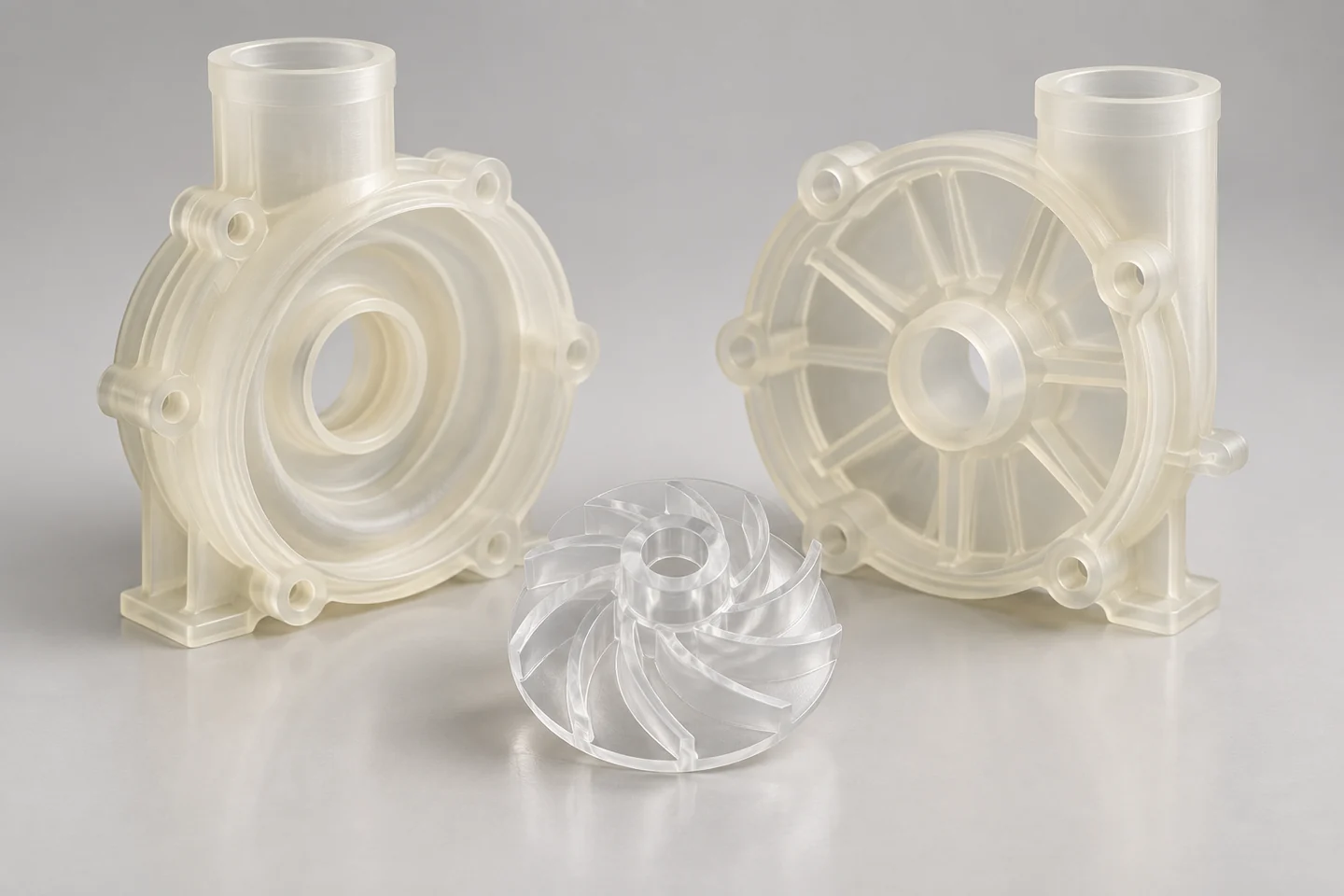
Existing generated resin-prototype concept. It does not show a measured roughness, completed polishing result or actual coating specification.
| Option | Review | Do not infer |
|---|---|---|
| Support-mark removal / sanding | Contact zones, edge details, material removal and visible areas. | No effect on thin sections or functional dimensions. |
| Blasting or polishing where suitable | Substrate, texture intent and protected faces. | Universal availability or an exact roughness from an image. |
| Coloring / painting / coating | Compatible material, preparation, layer scope and appearance reference. | A fixed thickness, certified durability or unchanged mating fit. |
| Secondary machining or inserts | Feature access, remaining material and assembly requirements. | Every feature can be corrected after printing. |
04 / FINAL-STATE GEOMETRY
Removal, additional layers and process conditions can change a feature. Agree which dimensions apply after the relevant operations and how they will be checked.
Mark visible, functional and protected areas. Explain the reason for each protected interface so the proposed route can be assessed.
Identify holes, threads, clips and contacting faces. Define final-state acceptance instead of relying on dimensions measured before a changing operation.
Highlight thin walls, edges and embossed or recessed features. Discuss permitted changes and any sample needed before approving surface work.
Ask which protection and sequence are feasible for the chosen material. Availability and commercial scope need confirmation; they are not default inclusions.
05 / PHYSICAL REFERENCE
Light, viewing angle, substrate and geometry affect a visual result. Keep digital direction separate from the physical reference used for acceptance.
Record the sample, material, printing route and finishing state. A reference for one substrate does not automatically approve another.
Map the areas that govern the decision and any different requirements for hidden faces. Include support-contact transitions where relevant.
Agree viewing conditions, color reference and permitted variation. Do not use a generated render as a measured color standard.
State which appearance and dimensional checks were accepted. Record open issues and who authorizes a revised finish or material.
06 / QUOTE & HANDOFF
The finishing handoff should connect model revision, material, operation scope and acceptance. Sample and repeat-production assumptions need to remain visible.
Internal access, important surfaces and final fits.
Material, cleanup and compatible refinement.
Final condition and the checks it represents.
Included operations, quantities, records and price basis.
Agreed appearance, fit, identity and packaging.
| Include | Confirm in the proposal |
|---|---|
| Part and material | Model units and revision, exact formulation or grade and allowed alternatives. |
| Operations | Cleanup, curing as applicable, surface work, secondary features and protection. |
| Acceptance | Final-state dimensions, appearance reference, sampling and any internal checks. |
| Commercial scope | Samples, optional work, reports, packaging, delivery and schedule assumptions. |
07 / QUESTIONS
Describe the required delivered condition and review the operations needed to reach it.
Only the agreed scope should be assumed. Separate process completion, appearance work and functional secondary operations in the offer.
No universal result is promised. Review the exact material, geometry, operation and physical appearance reference.
It can affect the delivered interface. Mark mating areas and agree final-state dimensions, protection and checks.
No. Identify internal spaces and agree relevant access and verification for the selected route.
Not automatically. Compatibility, cleanup and processing must be reviewed for the exact material and printing route.
Record and review its effect on dimensions, appearance and evidence. Another sample or check may be needed before accepting the new configuration.
PREPARE THE NEXT DECISION
State printing route and material if known, internal openings, support-mark limits, visible and protected faces, desired appearance, final-state fits, quantity and evidence needs.
sales@keepwinco.comAn enquiry starts a team review. Material, fit, quantity, schedule, operation responsibility and supporting records are confirmed in the proposal; this form does not create an order or an instant price.
Start with what you know. Review your details before sending; no account needed.
Start parts inquiry →Your project is saved securely only when submission succeeds.
General material context only; external references do not certify a finished KeepWin product.
Formlabs - resin post-processing context ↗HP - powder removal and finishing context ↗