
Stock product
Name exact machinable supply and required condition. Include relevant dimensional, exposure and final-state requirements.
MATERIAL REVIEW / POLYMER COMPONENTS
A polymer family name may describe stock, molding resin and printing feedstock with different configurations. Specify the actual supplied product and manufactured state before comparing appearance or application requirements.
KeepWin coordinates partner-supported review. Exact material, responsible operations, process availability, dimensions, inspection, commercial quantities and timing are confirmed in the project proposal; no universal capability or certification is promised.
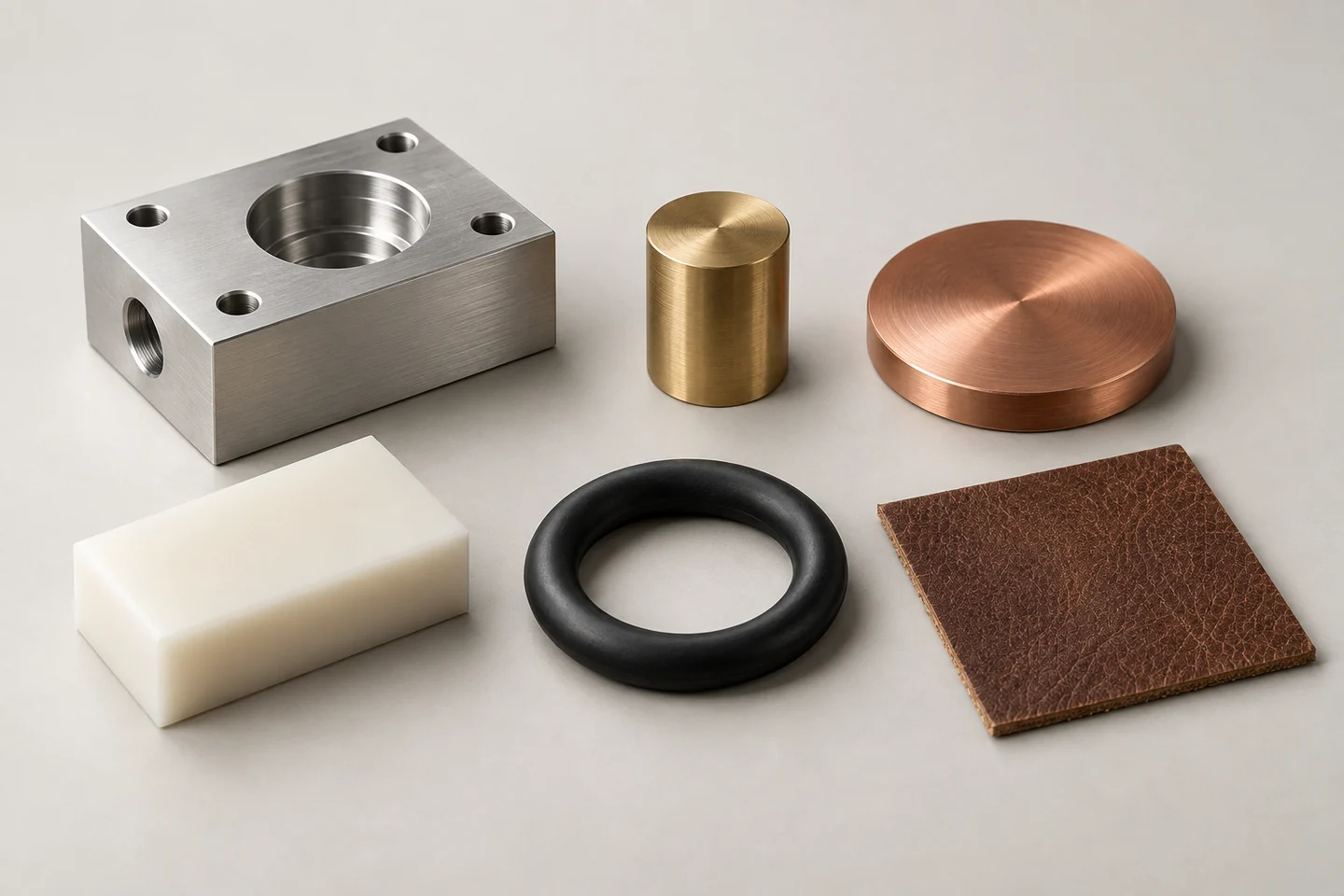
Generated material-sample concept. It is not an identified product, measured property comparison or guaranteed material list.
01 / PRODUCT DEFINITION
Exact grade, color and additives belong beside the part files. A broad family label should not conceal the actual product or an unapproved substitute.
Name exact machinable supply and required condition. Include relevant dimensional, exposure and final-state requirements.
Specify product/grade and compounded or mixed components. Keep sourcing and processing responsibilities visible.
Identify exact filament, resin or powder and build route. Review final treatment and the sample questions it represents.
02 / USE REQUIREMENTS
Generic datasheet comparisons may not answer the actual component requirement. Define configuration and relevant evidence instead of assuming universal suitability.
Mark fits, loading/contact intent and important geometry. State which final-state checks or evaluations are required.
Identify temperature, fluids, cleaning or exposure requirements where relevant. Confirm the exact product and represented conditions.
Supply applicable buyer or application requirements. A polymer name does not grant medical, food-contact or other universal approval.
Specify substrate/product, color/texture reference and visible areas. Compare the actual construction in agreed conditions.
03 / ROUTE COMPARISON
The same family name can appear in different supplies and processes. Sample approval should identify the actual configuration.
| Route | Identify | Review boundary |
|---|---|---|
| Machining | Exact stock and final surface. | Features, condition and use evidence. |
| Molding | Resin/additives and tooling state. | Approved sample configuration and changes. |
| Printing | Feedstock, build and post-processing. | Represented questions and limitations. |
| Assembly | Mating materials and secondary work. | Final fit, contact and responsibility. |
04 / SOURCE AND CHANGES
A supply or route change may affect different parts of the earlier approval. Record it before treating a new part as equivalent.
Request applicable product information and supply records. Review what condition and scope the information represents.
State permitted products or require explicit review. Compare the proposed alternative with function, route, finish and evidence requirements.
Record the accepted mixture or compounded product. A visual match alone does not establish unchanged material identity.
Define machining, curing/treatment, finishing or assembly where relevant. Agree which operations precede final acceptance.
05 / EVIDENCE PLANNING
Material identity, geometry, appearance and use checks cover different decisions. Keep the record scope visible.
| Evidence | Identify | Limit |
|---|---|---|
| Product information | Exact grade and represented condition. | Applicable stated product scope. |
| Supply identity | Requested source/lot information. | Agreed incoming material scope. |
| Part inspection | Revision, method, features and state. | Agreed samples and characteristics. |
| Use evaluation | Configuration, condition and criterion. | Represented application question. |
06 / QUOTATION PACKAGE
Include material sourcing, secondary work and evidence instead of pricing only the shape. Confirm unresolved requirements before release.
Send exact product/grade, additives/color, route preference, controlled files, use conditions, critical interfaces, final finish and quantities. Include destination and requested records.
Identify supply, preparation, manufacture, secondary operations, assembly, inspection and packing. Confirm actual record and process availability.
Agree substitutions and sample scope. No universal property, approval, available grade list, MOQ, tolerance or timing is promised.
07 / QUESTIONS
Exact product, process and final state should be reviewed together.
No. Identify exact product/grade, additives and relevant requirements.
No equivalence is assumed. Review the actual supply, route and represented evidence.
It supports its applicable product scope. The component may need separate geometry and use evidence.
No blanket approval is claimed. Provide the applicable intended-use and evidence requirements.
Review the changed product, additives or route against the controlled requirements and earlier sample approval.
PREPARE THE NEXT DECISION
Include product/grade, additives/color, preferred route or alternatives, part files, exposure/contact requirements, critical interfaces, final finish, requested records, quantities and destination.
sales@keepwinco.comAn enquiry starts a team review. Material, fit, quantity, schedule, operation responsibility and supporting records are confirmed in the proposal; this form does not create an order or an instant price.
Start with what you know. Review your details before sending; no account needed.
Start parts inquiry →Your project is saved securely only when submission succeeds.