
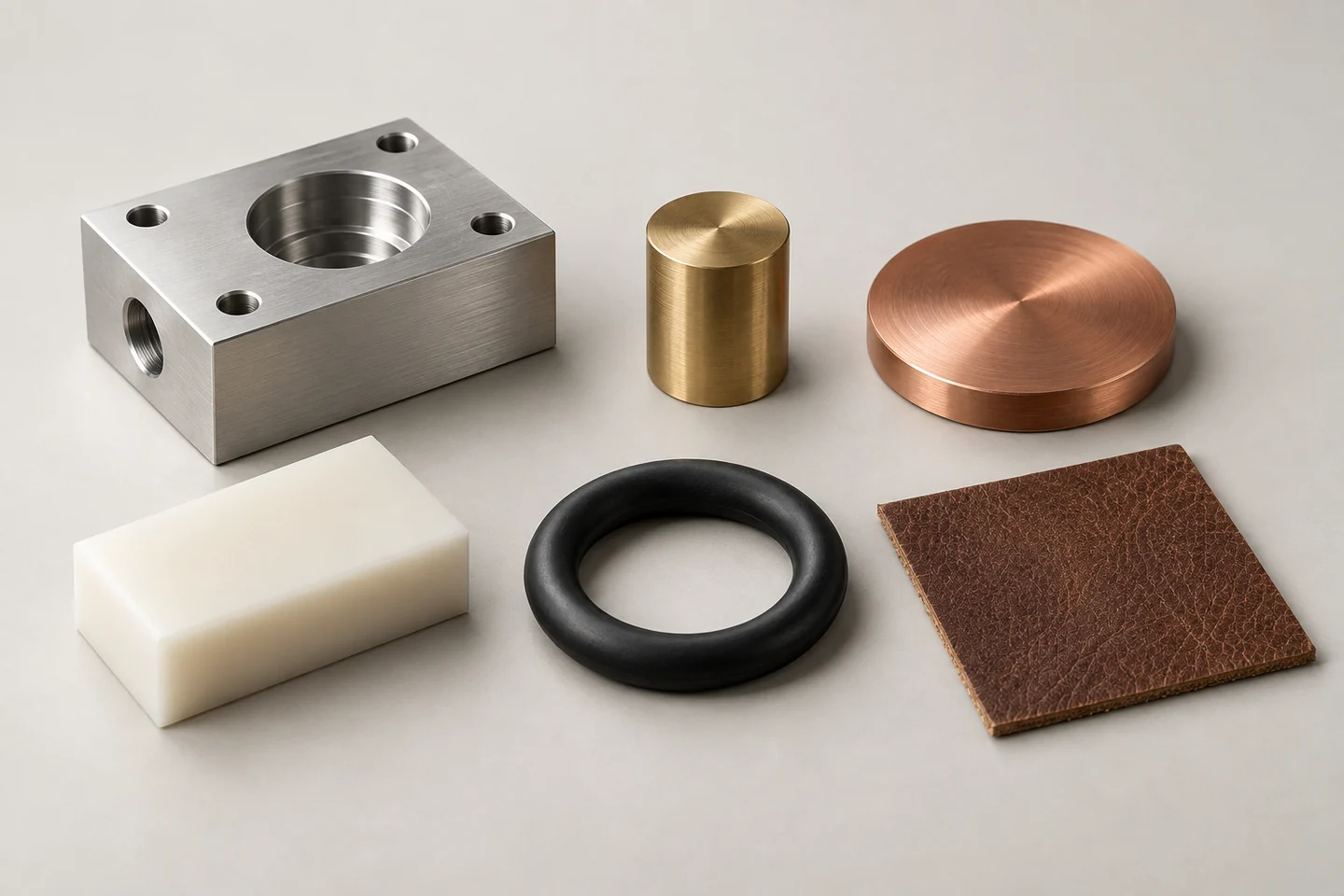
Compare the design questions behind three common watch band families before narrowing the specification.
Compare the experience you want to create
Begin with the visual and tactile direction, rather than a broad claim that one material is best. A structured metal bracelet, a flexible sport strap and a stitched leather strap create different impressions. Consider how the product will be presented, adjusted and cared for. Ask the team to evaluate actual samples, because photographs cannot reproduce weight, flexibility or texture reliably.
Metal: define the construction
For a metal band, discuss link geometry, adjustment, clasp operation, connector details and surface appearance. Specify the required material grade instead of relying on words such as premium or stainless. Mixed finishes should be identified on a drawing or annotated reference. Also discuss which interfaces must remain consistent across different finishes.
Elastomer: define the formulation and feel
Rubber, silicone and fluoroelastomer are not interchangeable specification terms. State the intended material family, hardness target if known, texture, color and use environment. Ask for material-specific guidance and test requirements rather than assuming every flexible strap behaves the same way. A molded sample is more useful than a screen image for reviewing feel.
Leather: define the visible details
For leather, describe the leather type, grain, backing, edge treatment, stitching and buckle. Specify the reference sample and identify which variations are acceptable. Review the strap as an assembly, not just as a leather swatch. Keep the chosen material and its supporting requirements in the approved specification so future orders have the same starting point.
Compare the finished construction
For a useful comparison, hold the connector, usable length and buckle requirements constant. Record the complete sample weight rather than relying on a general impression of the material. Note how the band bends around the wrist, where edges contact the skin and whether the adjustment can be performed without damaging the finish. A lighter component is not automatically a more comfortable complete product; the geometry and closure also matter.
Build a material decision matrix
Create one row for each candidate with fields for exact material, lining or reinforcement, hardness where relevant, finish, logo method, care instructions and sample observations. Mark an unknown as an open question rather than copying a value from a similar product. If a material record is required for your sales channel, make that requirement part of the quotation and acceptance process.
Do not approve from a color image
The same screen color can represent very different gloss, grain and texture. Review physical references under consistent lighting and compare the assembled hardware with the strap. Keep the approved sample identified by revision so the production team is not comparing against an earlier development sample.