
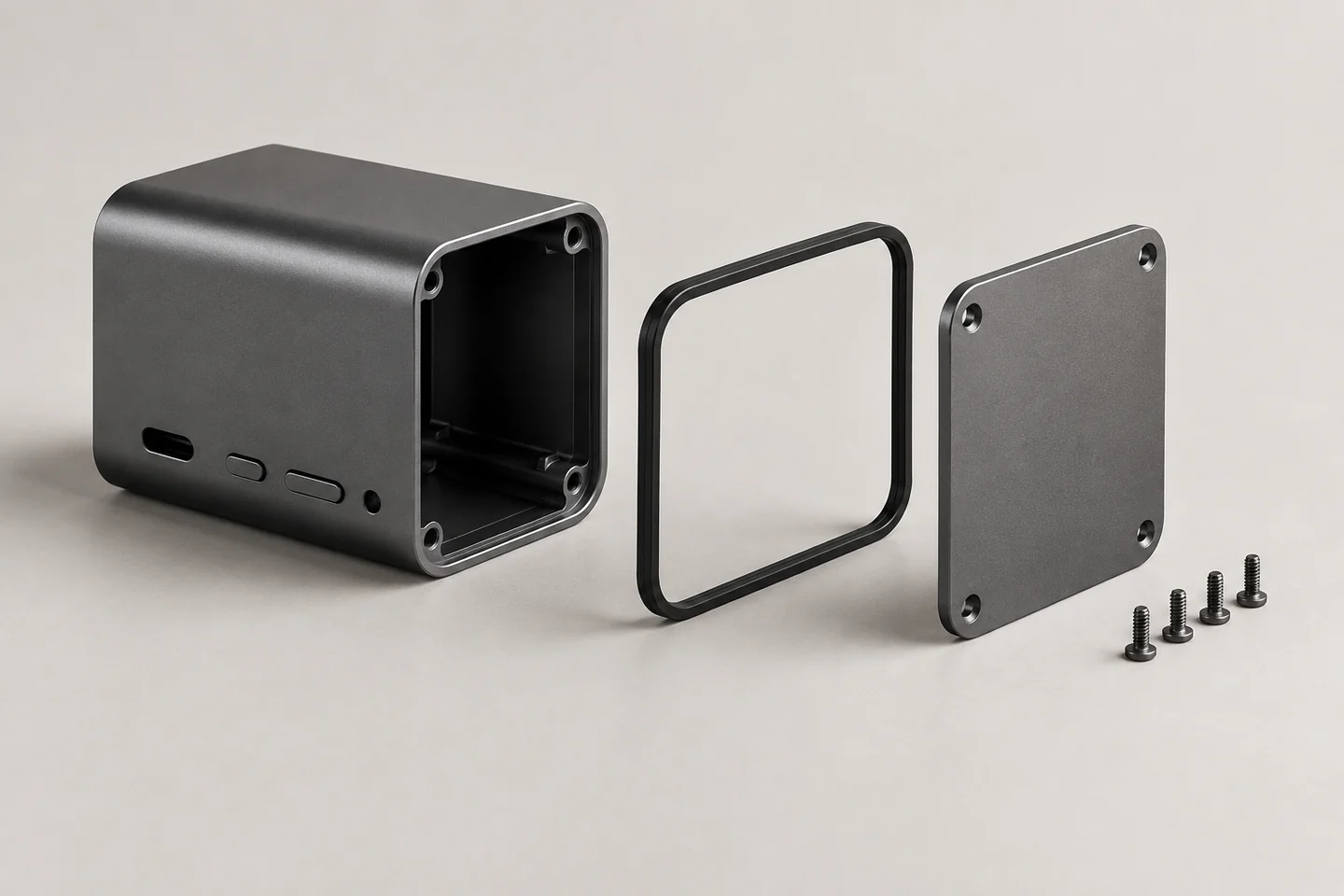
A fictional example of separating geometry, interfaces and finishing decisions.
Define the limits of the example
This is an illustrative planning scenario, not a record of a delivered customer project. Consider a small enclosure with a main shell, rear cover and gasket. The example does not establish a sealing rating, production material, tolerance or qualification. Those requirements would need to be defined and reviewed for a real application.
Describe the interfaces
A useful brief would show the mounting points, connector openings and internal space requirements. It would identify the mating components that influence fit and distinguish supplied items from custom parts. The design owner would provide the relevant model and drawing revisions, with critical interfaces called out for review.
Compare routes around the development question
An appearance prototype might answer a different question from a machined fit sample or a production-intent molded part. The team would state what each sample is intended to establish. Finishing and assembly requirements would be discussed with the proposed route, rather than selected in isolation from the geometry and material.
Create the handoff record
The final brief would connect the approved design revision, material, finish, part list and acceptance criteria. Packaging and assembly scope would be identified separately. Open issues would remain visible until resolved. Use this structure to frame your own project, then replace every assumed detail with a confirmed requirement.