
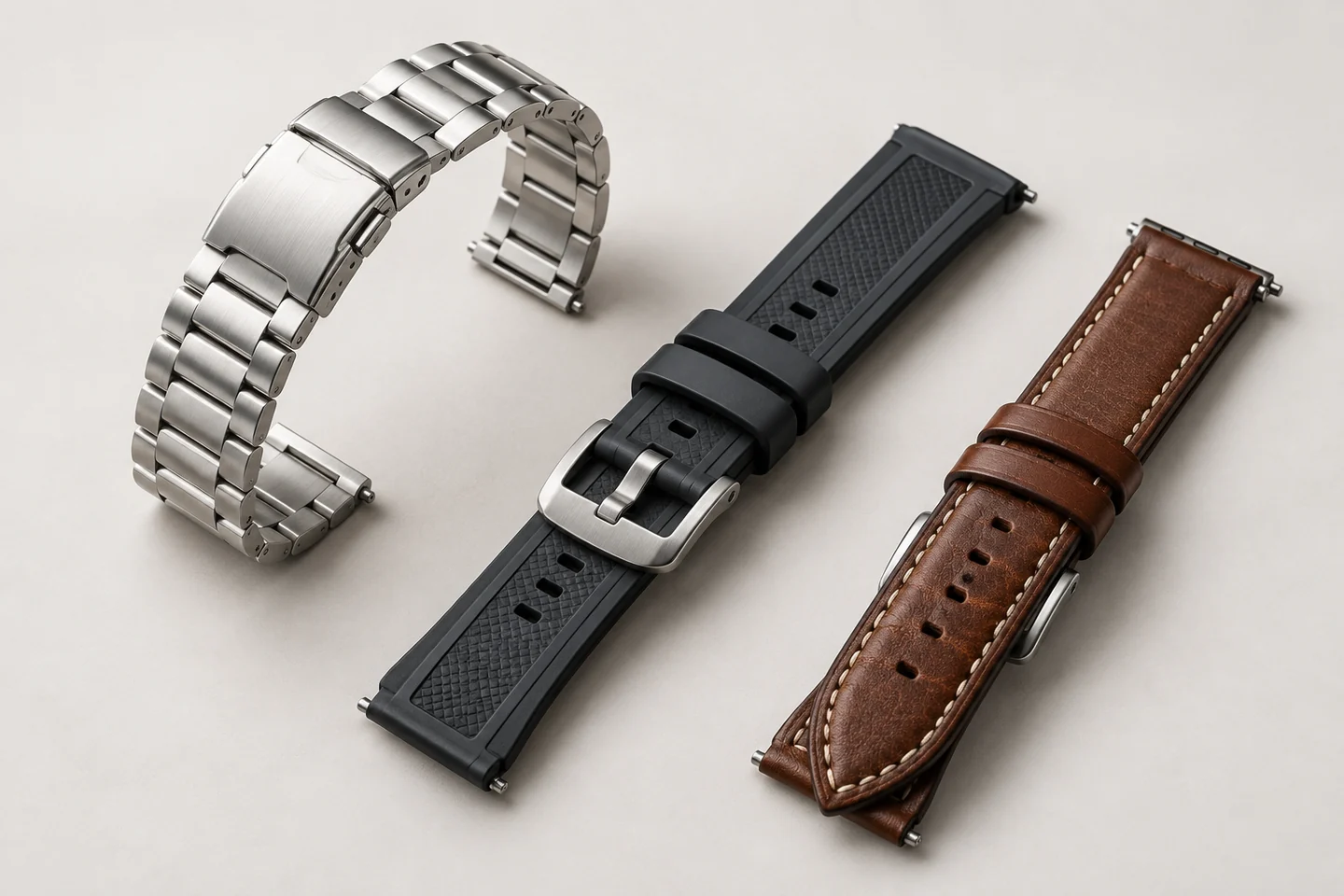
An illustrative project brief showing how a collection can be organized before sampling.
This is a planning example
The following scenario is fictional and is provided as a working example, not as a customer case study or a claim about completed work. Imagine a brand exploring a metal band and a rubber strap with a shared visual identity. No quantity, price, test result or delivery performance is implied. The purpose is to demonstrate how to organize the discussion.
Build the initial brief
The brand would identify its target watch interface, intended wearer, preferred closure and style references. Each product family would receive a separate variation list. Shared elements, such as logo orientation and packaging appearance, would be recorded once and cross-referenced. Material grades and any performance requirements would remain explicit questions until confirmed.
Break the review into decisions
The first decision could address fit and construction. A second review could focus on surface appearance and branding. Packaging would be reviewed with an actual packed sample. Each stage would have its own reference and decision owner. If a change affected an earlier decision, the team would return to that requirement rather than assuming the earlier approval still applied.
Use the example as a template
Replace the imagined product families with your own collection and remove fields that are irrelevant. Add application-specific checks with the project team. Keep unanswered questions in the brief and assign a next action. A real case study should only be published after the participants, scope, images and results have been verified and approved for public use.