
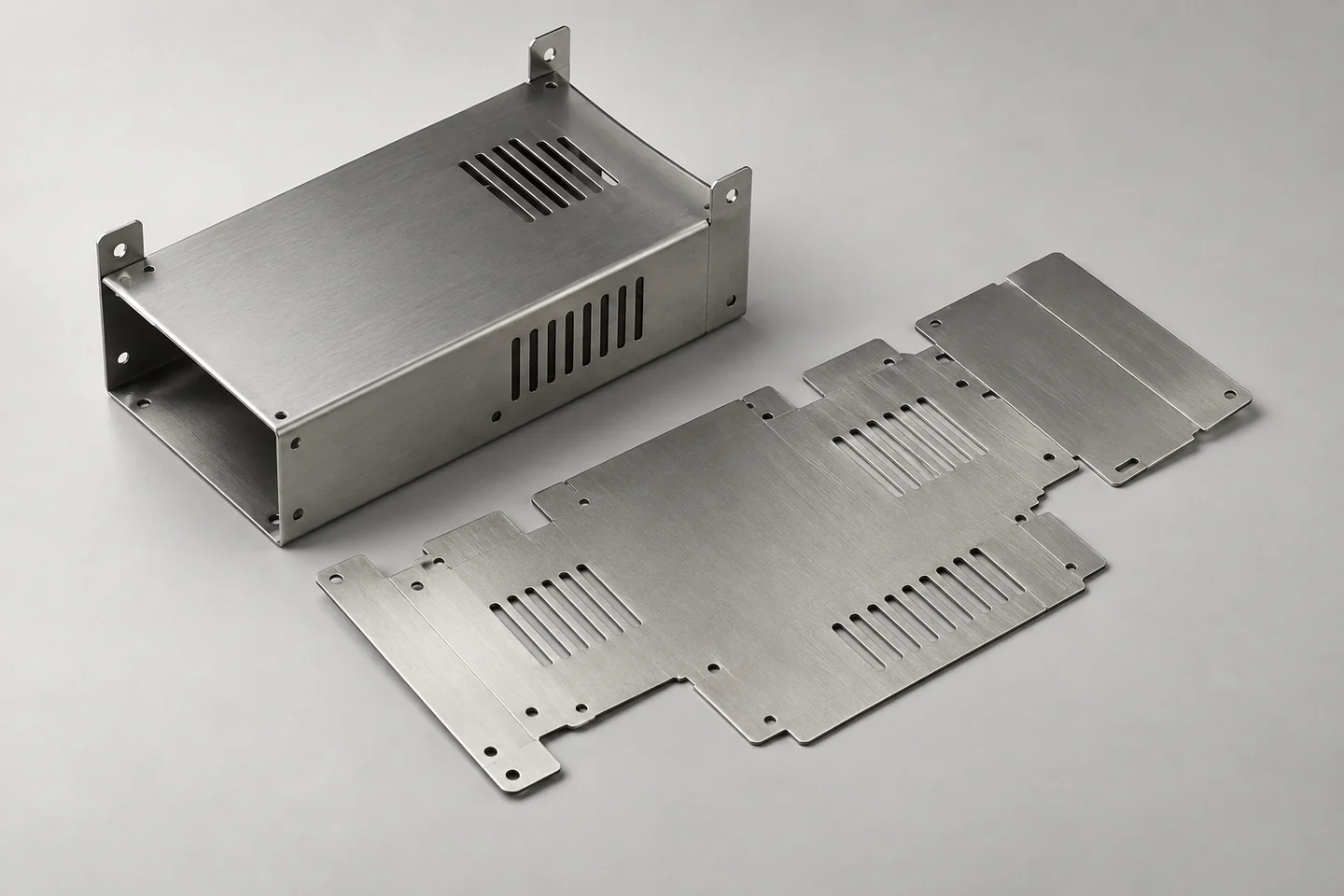
Connect the formed geometry, material thickness and assembly details in one quotation package.
Show the finished part
Provide the intended formed geometry and a dimensioned drawing, not just a flat outline. Explain where the part will be mounted and what it must fit around. Identify the important dimensions in the assembled state. If you also provide a flat pattern, clarify whether it is a reference or a manufacturing definition that has already been agreed.
Specify the material and thickness
Record the material grade, thickness and any finish requirements. Ask the manufacturing team to review the design against the actual material and tooling. Bend locations, radii, holes and slots interact with the forming process. Avoid assuming that a rule or capability published for another shop applies unchanged to the proposed supplier.
Include joining and hardware
Identify inserts, fasteners, weld locations and mating components. State whether the scope covers individual parts or an assembled unit. Mark cosmetic faces and any surfaces that need protection during finishing. Assembly drawings and a part list can make these requirements easier to review than a long description in an email.
Agree inspection and packing
Specify the dimensions that must be checked after forming and assembly. Explain any appearance acceptance criteria and how finished parts should be protected during shipment. Keep the approved revision and quantity in the quotation package. If geometry or finish changes, request a review of the affected assumptions before moving to the next stage.
Further reading
External guidance provides general context. Published capabilities belong to that provider and are not KeepWin capability commitments.