
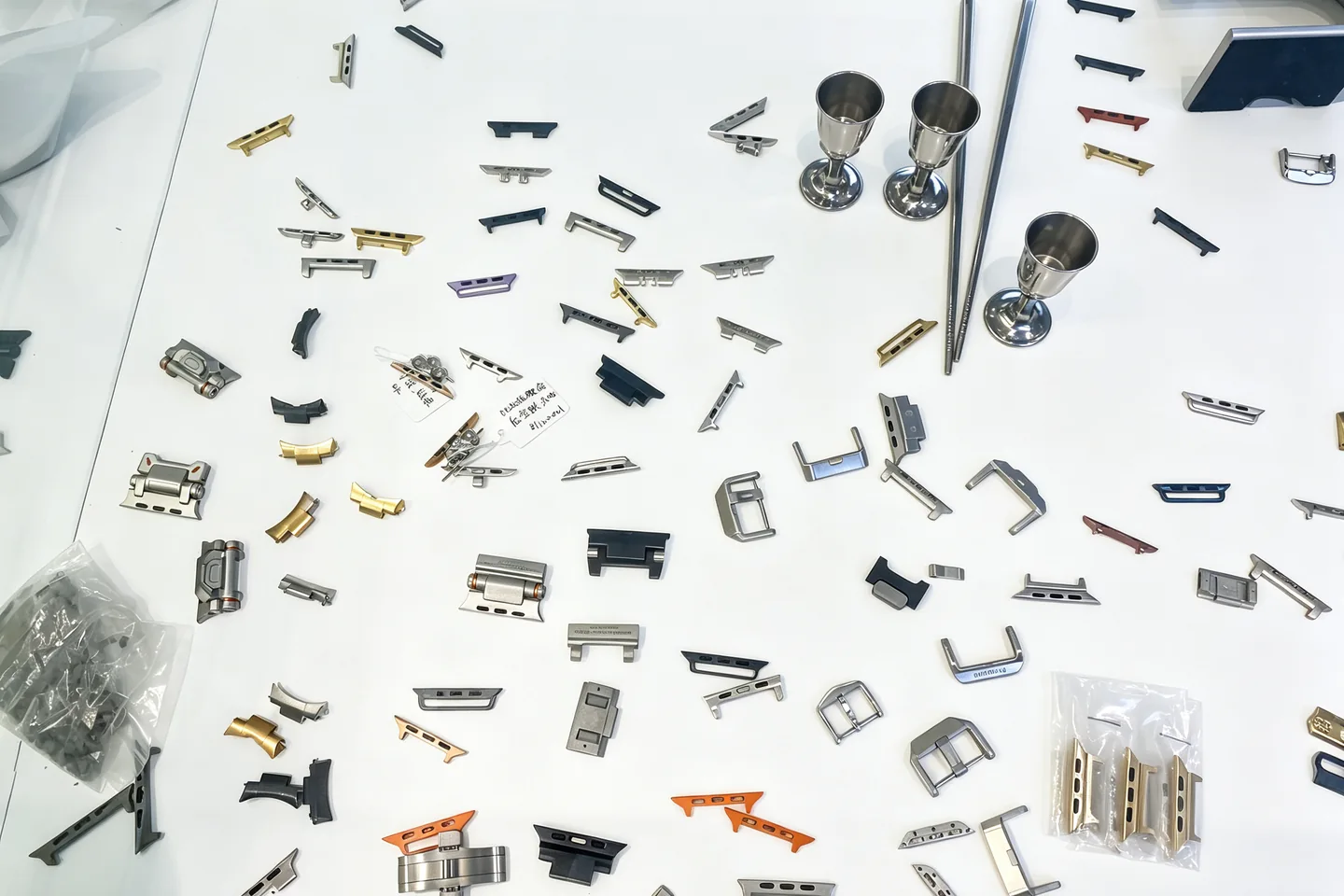
A practical review of interfaces, orientation and functional sample checks.
Treat the connector as an interface
A connector works with another product, so its fit depends on more than its outside width. Provide the mating component information that you are permitted to share, including drawings, reference samples and relevant dimensions. Identify the watch model or interface version precisely. If the reference is incomplete, ask for a fit review before finalizing the band design.
Describe the assembly conditions
Explain how the connector is inserted, locked, released and oriented. Flag moving features, spring elements and areas that may contact the watch housing. Identify any appearance requirements around the interface. If a protective finish is planned, include it in the review because the finished assembly is what the customer will use.
Record the test method
Define the checks with the project team instead of using an informal instruction such as make it tight. Record the mating sample, the sequence of operations and the result expected for each check. Any retention or durability test must have an agreed method and acceptance criterion. A brief hand check should not be presented as a validated durability test.
Keep reference samples under revision control
Label the sample and drawing revision used for approval. If the connector design, material or finish changes later, identify whether the previous fit review is still applicable. Keep photos of the approved arrangement and a short decision log. This provides a clearer basis for discussing future samples and helps avoid feedback based on different versions.
Create an interface record
Record the exact device or mating component reference, the drawing revision, nominal width, pin or rail geometry, engagement length and orientation. Include a photograph showing how the connector is installed and removed. If the drawing was created from a measurement rather than a controlled specification, say so explicitly and identify which dimensions still need validation.
Review more than initial installation
A connector that slides into place is not yet a complete acceptance result. Review retention, release action, freedom of movement and any contact with the surrounding case. Inspect the finish after the agreed checks. Define any repeated-use or load test with the responsible team before performing it; this checklist does not prescribe a universal force or cycle count.
Track the complete combination
A connector, strap and clasp may each look acceptable separately but behave differently when assembled. Record the exact combination being approved. When a component supplier, material, geometry or finish changes, review whether the previous fit approval still applies. Keep rejected and approved samples clearly separated.