
Development component
Identify the fit, assembly access or appearance question. Keep limitations visible when material or process differs from the later configuration.
APPLICATION REVIEW / AUTOMOTIVE
A styling sample, assembly fixture and installed vehicle component do not answer the same procurement question. Explain where the part is used, what it connects to and what release evidence the buyer requires.
KeepWin coordinates partner-supported review. Exact material, responsible operations, process availability, dimensions, inspection, commercial quantities and timing are confirmed in the project proposal; no universal capability or certification is promised.
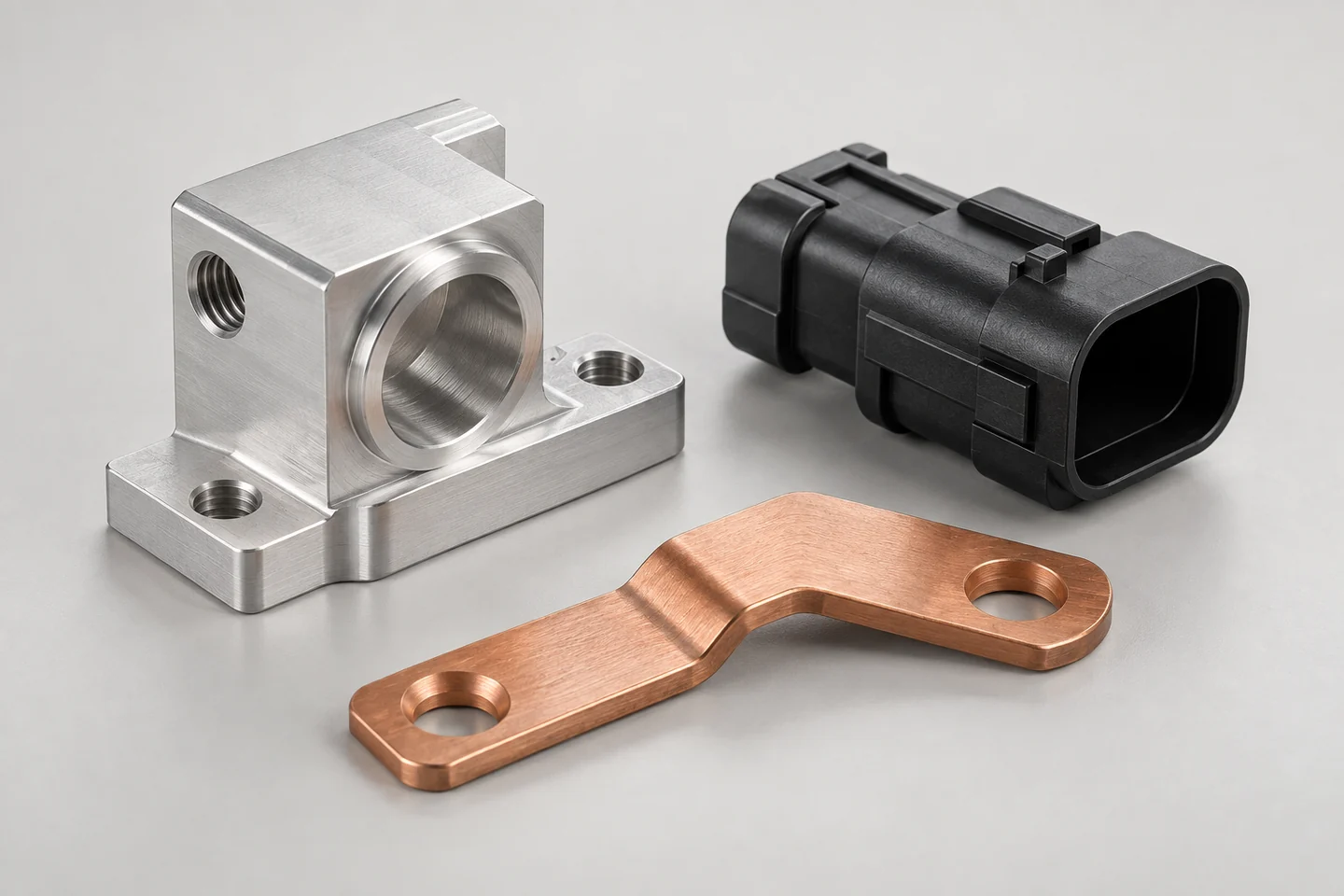
Generated automotive-related component concept. It is not an installed vehicle part, customer programme or validated performance result.
01 / APPLICATION SCOPE
The same geometry may be useful for a concept discussion and inadequate for another use. State the purpose and the conditions represented by the proposed sample.
Identify the fit, assembly access or appearance question. Keep limitations visible when material or process differs from the later configuration.
Describe the reference surfaces, workpiece interaction and operating environment. Identify the checks needed for the equipment owner to accept the aid.
State system role, interfaces and buyer requirements. Safety-related suitability and programme approval need applicable evidence; this page does not grant either.
02 / INTERFACE DEFINITION
A numerical drawing alone may not explain the final mounting or moving relationship. Provide enough assembly context to review the offered manufacturing scope.
Mark datums, mounting holes, engagement and mating references. Explain which relationships must be checked after coating or assembly.
State relevant temperature, fluids, exposure or cyclic use requirements without assuming one material family covers every duty.
Identify visible faces, protected contacts and permitted marks. Agree the reference and delivered condition used for comparison.
Map left/right, platform or trim variants to files and quantities. Confirm how labels and records distinguish similar-looking components.
03 / ROUTE COMPARISON
Development convenience and repeat production may favour different preparation. Compare the complete delivered scope instead of a bare process label.
| Route | Useful review question | Evidence to agree |
|---|---|---|
| Machining | How are critical interfaces reached and finished? | Final dimensions, material identity and revision. |
| Molding | What tooling and resin configuration represents release? | Sample scope, cavity identity and approved changes. |
| Sheet fabrication | What bends and joints define the installed fit? | Final datums, joining scope and surface state. |
| Additive development | Which design questions can the sample answer? | Material/process limitations and later revalidation. |
04 / PROGRAMME HANDOFF
Automotive quality tools may be requested by a particular buyer or programme. Availability, applicability and ownership must be confirmed rather than inferred from an industry heading.
Name the requested document set, level or customer format where applicable. Confirm who prepares it and which entity, site and configuration it covers.
Identify the actual operation chain and responsible sites. No universal automotive certification, approved-supplier status or in-house process coverage is claimed.
Review changed material, tooling, cavity, operation or site against the buyer release basis. Keep approval responsibility explicit.
Agree how deviations, suspect parts and rework are reported and dispositioned. A shipped quantity is not permission to change acceptance criteria.
05 / ACCEPTANCE EVIDENCE
A material record, dimensional report and application test serve different purposes. Define each scope and avoid extending one result to every variant.
| Area | Specify | Identify |
|---|---|---|
| Geometry | Features, method and delivered state. | Part, revision, sample selection and results. |
| Material | Exact specification and required supply evidence. | Grade, condition and relevant lot scope. |
| Application | Buyer-defined checks and acceptance criteria. | Configuration, conditions and responsible approval. |
| Appearance | Faces, reference and viewing basis. | Finish state and agreed comparison. |
06 / QUOTATION INPUTS
Clarify development and delivery milestones beside the quantities. A concept sample and a buyer-approved production configuration are different commercial items.
Provide application, models/drawings, material, critical interfaces, finish, variants, quantities and destination. Include the programme-specific quality requirements.
Identify preparation, samples, tooling where relevant, manufacture, finish, inspection, submission records and packaging. Ask which items are included and which require separate work.
Agree sample purpose, approval owner and any required hold points. Exact capacity, minimum quantities, submission availability and timing are proposal-specific.
07 / QUESTIONS
Explain the role, programme stage and buyer acceptance basis.
No. Requested certification or approved status requires current entity, site, scope and applicability evidence.
Its approval covers only the stated questions. Installed use and programme release require the applicable configuration and evidence.
Only if their scope, availability and responsibility are confirmed for the proposal. State the requested format and programme requirement.
Review its effect on function, process and prior evidence with the buyer approval owner before release.
Send controlled part files, intended use, interfaces, material and finish, programme stage, quantities and required release documents.
PREPARE THE NEXT DECISION
Include controlled CAD/drawings, application, exact material, mating parts, critical interfaces, finish, programme stage, quantities, buyer document requirements and destination.
sales@keepwinco.comAn enquiry starts a team review. Material, fit, quantity, schedule, operation responsibility and supporting records are confirmed in the proposal; this form does not create an order or an instant price.
Start with what you know. Review your details before sending; no account needed.
Start parts inquiry →Your project is saved securely only when submission succeeds.
General material context only; external references do not certify a finished KeepWin product.
AIAG - automotive quality tools context ↗