
Controlled definition
Identify model, drawing, units, material and finished condition. Resolve conflicts between files and any undocumented changes made during development.
PARTNER-SUPPORTED MANUFACTURING / REPEAT ADDITIVE PARTS
A prototype approval is not a complete production handoff. Control the material, files, build and post-processing assumptions that the accepted sample represents, then define delivery evidence and the rules for changes.
KeepWin coordinates partner-supported review. Exact material, responsible operations, process availability, dimensions, inspection, commercial quantities and timing are confirmed in the project proposal; no universal capability or certification is promised.
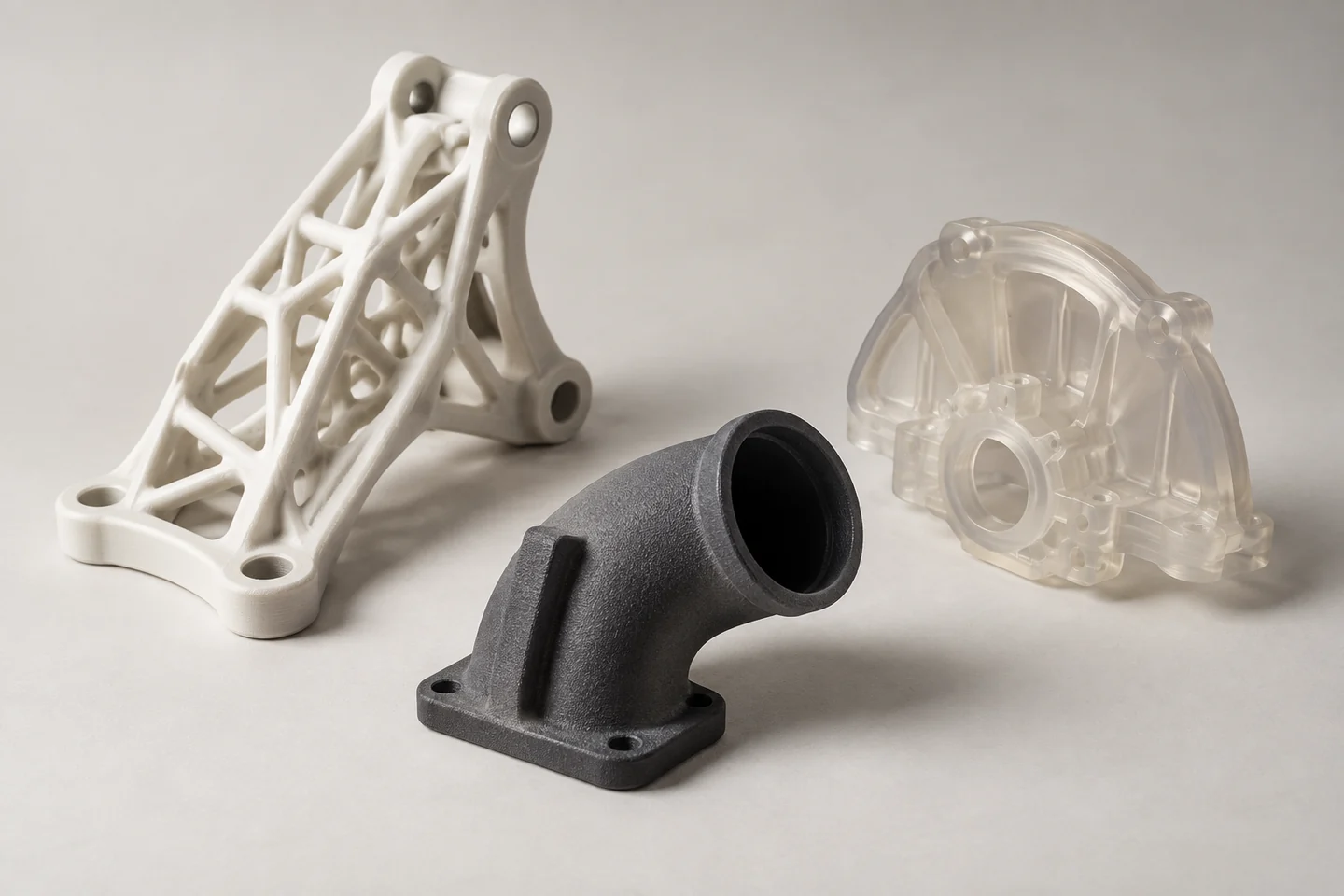
Existing generated additive-part concepts. They do not demonstrate a production batch, equipment capacity, process capability study or actual lot acceptance.
01 / PRODUCTION READINESS
A sample may settle fit, appearance or one functional question. List the remaining decisions before treating it as a release for repeat orders.
Identify model, drawing, units, material and finished condition. Resolve conflicts between files and any undocumented changes made during development.
Record route, material and processing represented by the accepted sample. Confirm which checks are relevant to the proposed repeat configuration.
Define variants, quantities, lot identity and the records expected. Inspection and packaging scope should be explicit rather than inferred from the word production.
02 / CONFIGURATION CONTROL
A repeatable definition includes the delivered state and the relevant processing assumptions. Keep a single revision basis for the order.
Name the model and drawing revisions, units and precedence. Include any approved access openings, support-related changes or assembly instructions.
Record grade or formulation, color and allowed substitutions. A family name should not silently authorize a different material.
Control cleanup, curing where applicable, finish and secondary work represented by the approval. Do not approve an unfinished sample as every finished variant.
List part numbers, revisions, materials, appearances and quantities. Separate development samples, initial production and repeat delivery assumptions.
03 / RELEASE STAGES
These stages answer different questions and can require different evidence. Name the approval purpose and the hold point for each.
| Stage | Purpose | Release requirement |
|---|---|---|
| Development sample | Resolve geometry, fit or appearance. | Record represented condition and open questions. |
| Initial production | Evaluate the agreed production configuration. | Define features, records, approval owner and hold point. |
| Repeat lot | Deliver the controlled accepted definition. | Confirm changes, quantity, identity and lot acceptance. |
| Revised configuration | Evaluate changed material, files or processing. | Review the effect on earlier evidence and release. |
04 / OPERATIONS & IDENTITY
Printing, cleanup, surface work and secondary operations may sit in different parts of the responsible route. Define who supplies which evidence and how the parts remain identifiable.
Generated additive geometry collection, not a production lot photograph or evidence of measured manufacturing consistency.
Ask the proposal to identify the printing and secondary-work scope. Do not assume that all equipment or operations are owned by KeepWin.
Specify the connection between part number, revision, quantity and relevant records. Confirm available identification and traceability scope.
Retain an agreed physical reference and visible-area map where needed. Review color or texture changes before treating them as equivalent.
Define packing, segregation of variants and destination requirements. Confirm responsibility for assembly or work remaining after delivery.
05 / LOT ACCEPTANCE
A sampling plan and all-piece checks are distinct commercial and technical scopes. Agree them for the actual delivery rather than assuming a default.
| Area | Agree | Connect to |
|---|---|---|
| Dimensions | Features, datums, final state and method. | Controlled drawing and delivered geometry. |
| Quantities | Sample selection or stated all-piece scope. | Lot and variant identity. |
| Surface and fit | Reference, assembly check and viewing basis. | Approved finish and mating configuration. |
| Records | Material, processing and report requirements. | Named supply and operation scope. |
06 / REPEAT-ORDER BRIEF
Price and timing depend on configuration, quantities, preparation, finishing and evidence. Name the approval that starts the proposed schedule.
Variants, files, materials and final states.
Responsible route and record availability.
Initial production and open questions.
Approved configuration and lot scope.
Accepted records, identity and packaging.
Ask the offer to identify preparation, samples, print quantity, cleanup, finish, inspection, records and transport where relevant.
State forecast quantities separately from confirmed delivery quantities. Confirm minimum order, route availability, approval dependencies and timing in each actual proposal.
07 / QUESTIONS
Control the definition and the acceptance basis before repeating the order.
Only within its recorded scope. Confirm the production material, files, processing, finish and evidence before release.
No default all-piece or all-feature scope is promised. Agree quantities, features, methods and records.
Only through agreed approval. Review the effect on fit, appearance, processing and application evidence.
No. Quantities, route, processing, inspection and approval dependencies determine the proposal-specific schedule.
The approved files and material, sample record, variant matrix, final-state scope, lot acceptance, identification, packaging and destination.
PREPARE THE NEXT DECISION
Include approved file revision, exact material, sample record, variants and quantities, finishing, inspection, identification, packaging and destination.
sales@keepwinco.comAn enquiry starts a team review. Material, fit, quantity, schedule, operation responsibility and supporting records are confirmed in the proposal; this form does not create an order or an instant price.
Start with what you know. Review your details before sending; no account needed.
Start parts inquiry →Your project is saved securely only when submission succeeds.
General material context only; external references do not certify a finished KeepWin product.
HP - post-processing in the delivered route ↗EOS - operation-chain responsibilities ↗