
Development models
Define shape, access or assembly questions and material differences. Record what the sample demonstrates and which application requirements remain open.
INDUSTRY PROJECT REVIEW / AEROSPACE
A development model, fixture and application component have different acceptance needs. Bring the intended role, controlled files and required evidence so a partner-supported route can be assessed without implying flight qualification.
Aerospace suitability, customer approvals, site qualifications, material/process records and acceptance scope require project-specific review. No flightworthiness, certified supplier status or universal aerospace production approval is claimed.
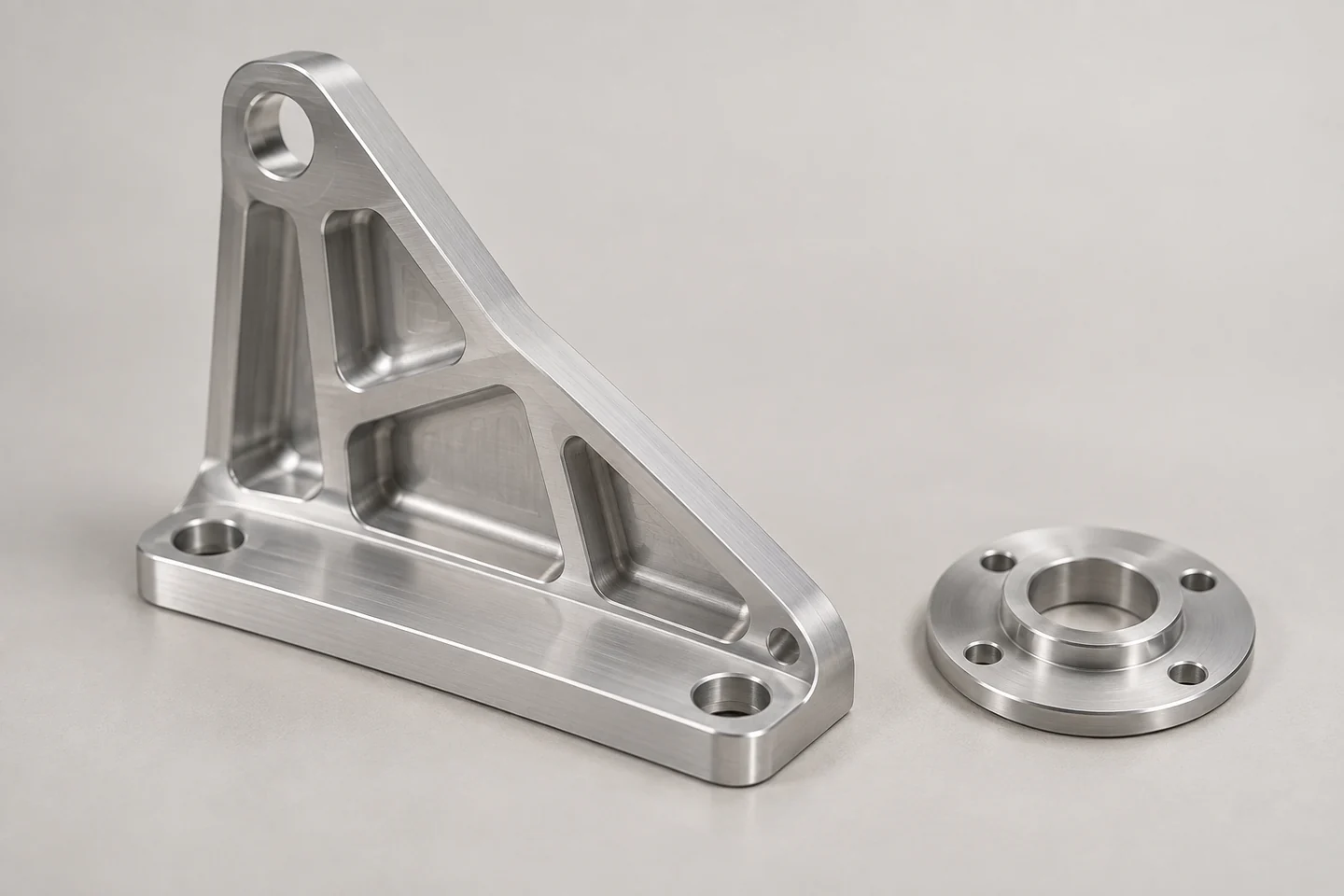
Generated aerospace-related geometry concept. It is not a flight-qualified component, customer program reference or certified manufacturing result.
01 / PROJECT ROLE
The component role determines what evidence matters. A visual model should not silently become approval for a different duty.
Define shape, access or assembly questions and material differences. Record what the sample demonstrates and which application requirements remain open.
Show locating interfaces, loads, contact and environment. Review exact material and relevant use evidence without assuming a generic fixture is qualified.
Provide customer requirements and approval authority. Required material, operation, site and acceptance evidence must be confirmed for the proposed route.
02 / FUNCTIONAL INTERFACES
Datums, material condition and subsequent operations may affect the accepted component. Review the final requirement before simplifying manufacture.
State units, model/drawing revision and precedence. Include customer-defined feature or evidence requirements and allowed design changes.
Mark fits, fasteners, contact faces and functional datum relationships. Provide mating references and final-state conditions.
Name exact grade, supplied condition and required processing. Confirm offered identity and records rather than extending a family description.
Identify machining, printing, forming or secondary operations proposed. Keep customer approval and partner responsibilities visible across the route.
03 / ROUTE COMPARISON
Process choice should preserve required geometry and evidence. No sector-wide machine, tolerance or capacity promise is published.
| Route discussion | Useful question | Evidence to resolve |
|---|---|---|
| Machining | Access, datums and functional faces. | Material and final-state dimensional scope. |
| Additive prototype | What geometry or assembly question is tested? | Represented material, processing and transfer limits. |
| Sheet or fabricated parts | Formed and joined interface requirements. | Stock, final assembly and responsible operations. |
| Combined route | Which operation establishes each requirement? | Handoffs and applicable approval records. |
04 / RECORDS & APPROVAL
Required quality, first-article or traceability packages need exact scope and confirmed availability. A process page is not evidence of compliance.
Provide the exact requested records, forms or approval requirements. Ask which can be supplied for the actual material, operations and site.
Check named entity, site, scope and validity of any certificate. Do not infer universal aerospace approval from another organization or project.
Define linkage between part, revision, material and delivery evidence where required. Confirm the offered traceability scope.
Review substitutions or route changes against customer approval and earlier evidence. Keep the release authority explicit.
05 / ACCEPTANCE
Measurements, material records and application qualification answer different questions. Agree their scope before accepting an offer.
| Area | Define | Confirm |
|---|---|---|
| Dimensions | Features, datums, state and methods. | Sample/lot coverage and report format. |
| Material | Exact identity and processed condition. | Applicable records and supply scope. |
| Application | Intended duty and approval requirements. | Relevant evidence and responsible authority. |
| Delivery | Revision, quantities and records. | Identity, packing and release basis. |
06 / QUOTATION
An offer without the requested documents or approval assumptions may describe a different scope. Keep them beside quantity and geometry.
Send use/role, controlled files, material, critical features, surface/treatment scope, records, quantities and destination.
Ask for responsible sites, operation chain, sample purpose, included evidence and exclusions. Confirm applicable customer approvals before release.
Identify preparation, samples, production, treatment, inspection, records and packing where relevant. Capability, MOQ and timing require proposal confirmation.
07 / QUESTIONS
Define the role and required approvals before treating a route as suitable.
No. It is a generated geometry concept and establishes no flightworthiness, customer approval or production certification.
Only within an explicit scope. Material, route and application requirements need their own relevant evidence and authority.
No. Provide exact requested records and confirm availability and applicability for the actual responsible route.
Review customer requirements, configuration and earlier evidence before accepting any substitution.
Component role, controlled files, exact material/condition, critical interfaces, required evidence and approval scope, quantities and destination.
PREPARE THE NEXT DECISION
Include intended use, controlled drawing/model, exact material and condition, critical interfaces, required supplier/process documents, sample purpose, quantities and destination.
sales@keepwinco.comAn enquiry starts a team review. Material, fit, quantity, schedule, operation responsibility and supporting records are confirmed in the proposal; this form does not create an order or an instant price.
Start with what you know. Review your details before sending; no account needed.
Start parts inquiry →Your project is saved securely only when submission succeeds.
General material context only; external references do not certify a finished KeepWin product.
IAQG - supply-chain requirements guidance context ↗