
Color direction
Provide the target reference and substrate context. A digital swatch may support discussion but does not alone define physical acceptance.
MATERIAL REVIEW / APPEARANCE REFERENCES
A screen color or finish name is a starting point, not a complete acceptance requirement. Connect the substrate, process and visible areas to a controlled physical reference and agreed comparison conditions.
KeepWin coordinates partner-supported review. Exact material, responsible operations, process availability, dimensions, inspection, commercial quantities and timing are confirmed in the project proposal; no universal capability or certification is promised.
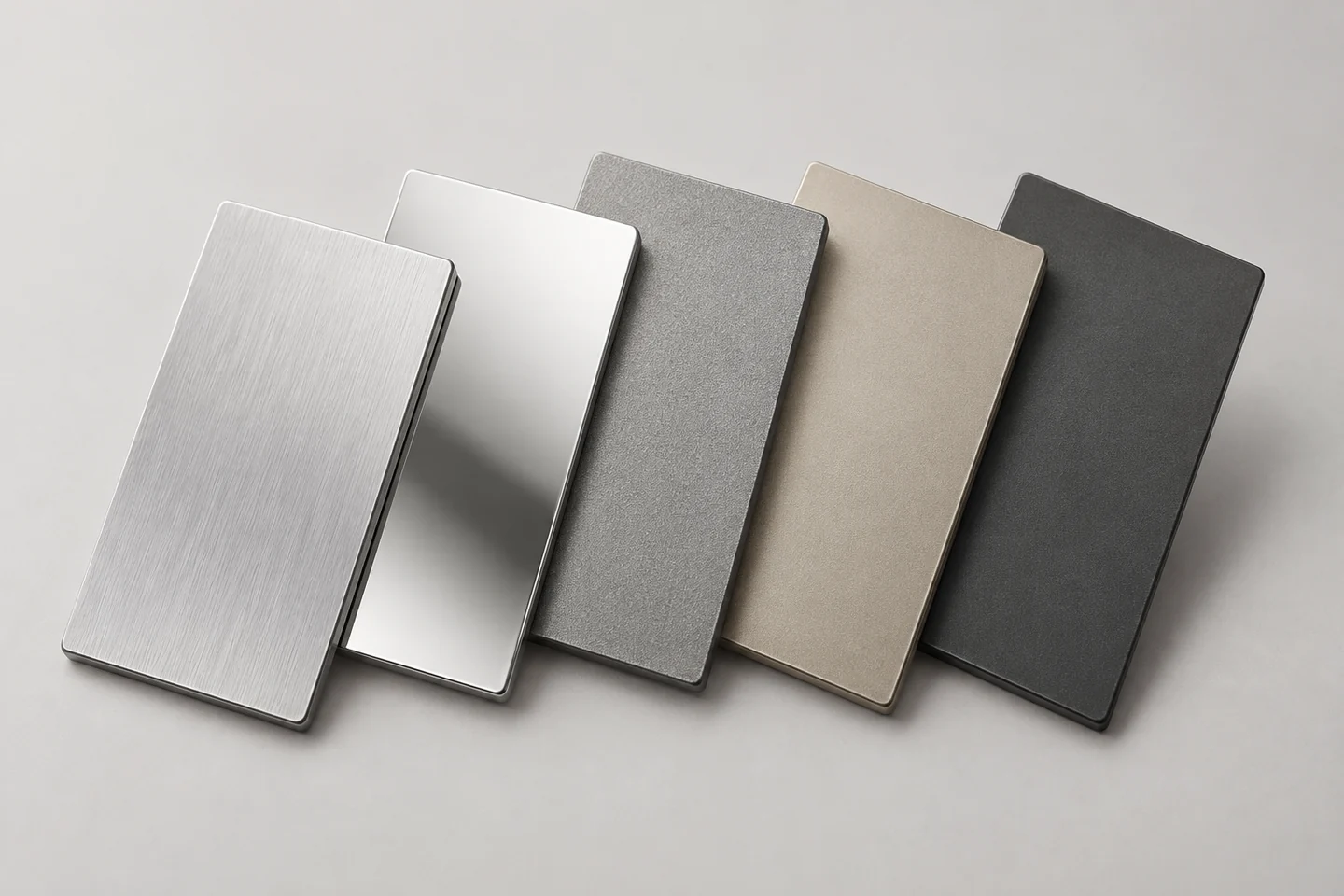
Generated metal-surface concept showing visual variation. It is not a measured color standard, verified treatment or durability result.
01 / APPEARANCE DEFINITION
Two parts can share a color name but differ in gloss, direction or process traces. State which properties matter for the actual product.
Provide the target reference and substrate context. A digital swatch may support discussion but does not alone define physical acceptance.
Identify direction, visible faces and permitted variation. Use an agreed physical reference and viewing basis where appearance controls release.
Map contact, sealing-related, sliding or electrical areas separately. Their requirements may constrain treatment or masking.
02 / SURFACE MAP
A whole-part finish label can hide protected interfaces and mixed treatments. Annotate the drawing with the accepted surface boundaries.
Mark customer-facing surfaces and allowed traces. Identify seams, edges and recesses that need specific review.
Show threads, mating faces or contacts requiring treatment limits. Define the final dimension and responsible masking scope.
Identify substrate and treatment by area or component. Record which physical sample represents each variant.
Supply placement and reference requirements. Confirm the actual marking process and its appearance after all relevant treatment.
03 / PROCESS COMPARISON
These examples organize the review and do not guarantee every substrate/process pairing or numerical performance.
| Operation | Discuss | Approval focus |
|---|---|---|
| Brushing/polishing | Direction, material removal and accessible areas. | Physical reference and final edges/fits. |
| Blasting/texturing | Substrate, texture and protected surfaces. | Accepted appearance and process traces. |
| Coating/plating | Preparation, layer scope and final dimensions. | Compatibility, masking and final state. |
| Molded/printed color | Exact material/process and surface condition. | Configuration-specific reference. |
04 / COMPARISON CONDITIONS
Lighting, substrate and surface shape influence appearance. Record the comparison basis instead of relying on unqualified screen images.
Name the physical sample and the construction it represents. Retain relevant substrate, process and revision details.
Agree lighting, viewing and handling conditions appropriate to the requirement. Numerical color methods or limits apply only if actually specified.
State whether approval applies to one substrate, size or color combination. Do not extend it automatically to a different construction.
Define protection of rub-sensitive or visible surfaces. Review the delivered appearance after agreed processing and handling.
05 / ACCEPTANCE EVIDENCE
A visually accepted sample does not demonstrate corrosion, abrasion or other use performance. Define any additional check independently.
| Scope | Define | Record |
|---|---|---|
| Appearance | Faces, reference and viewing basis. | Actual substrate/treatment and sample identity. |
| Final fit | Protected areas and accepted dimensions. | State, method and features. |
| Use requirement | Relevant exposure/check and criterion. | Conditions and represented configuration. |
| Repeat approval | Unchanged reference and allowed variation. | Changed materials or operations. |
06 / QUOTATION PREPARATION
A generic color label can omit preparation, masking or inspection. Compare offers against the same completed surface requirement.
Send part files, exact substrate, treatment preference, visible/protected map, physical reference, variants and quantities. Include destination and packing needs.
Identify preparation, treatment, masking, marking, final dimensional/appearance checks and protection. Confirm actual process availability for the substrate.
Agree approval for altered substrate, treatment or reference. No universal layer thickness, color match, durability, MOQ or delivery timing is promised.
07 / QUESTIONS
Provide the physical reference and the surface boundary.
It supports initial direction. Physical acceptance needs an agreed reference and comparison basis.
No universal equivalence is claimed. Review the actual substrate, process and shape.
No. Define required exposure or use checks with conditions and criteria.
State the areas and final-state requirements, then confirm the included masking and inspection scope.
Review the change and agree new or extended approval explicitly.
PREPARE THE NEXT DECISION
Include exact substrate, desired treatment, visible/protected areas, physical color/texture reference, viewing conditions, final fit requirements, variants, quantities and destination.
sales@keepwinco.comAn enquiry starts a team review. Material, fit, quantity, schedule, operation responsibility and supporting records are confirmed in the proposal; this form does not create an order or an instant price.
Start with what you know. Review your details before sending; no account needed.
Start parts inquiry →Your project is saved securely only when submission succeeds.