
Metal stock
Name grade, condition and required supply form where relevant. Identify any applicable record request and permitted alternatives.
MATERIAL REVIEW / MACHINING STOCK
A metal or polymer family leaves important procurement questions unresolved. Identify exact grade, supply condition and final treatment, then review access, geometry and evidence for the actual component.
KeepWin coordinates partner-supported review. Exact material, responsible operations, process availability, dimensions, inspection, commercial quantities and timing are confirmed in the project proposal; no universal capability or certification is promised.
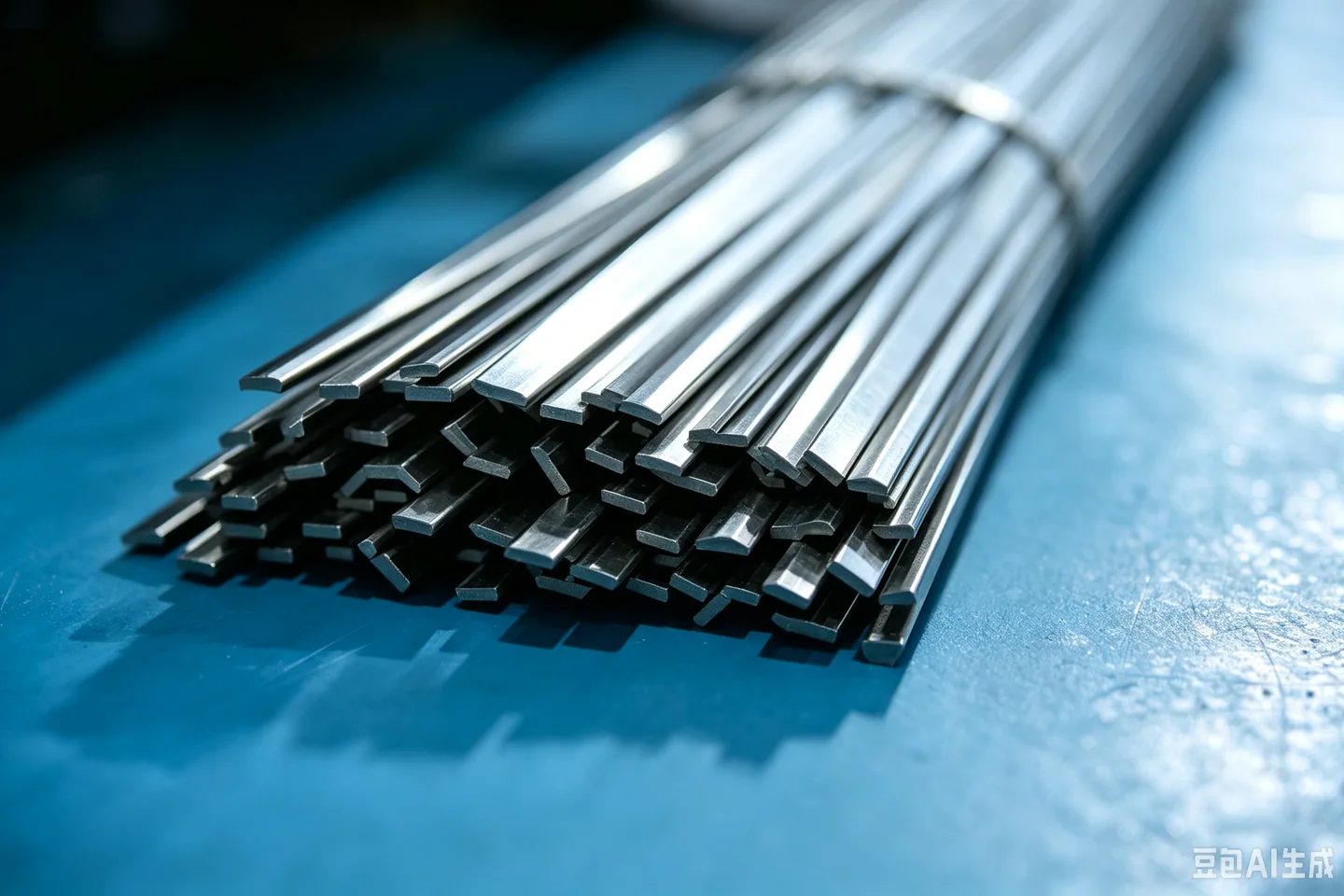
Supplied metal-stock reference. It does not verify a particular grade, condition, inventory or universal machining capability.
01 / SPECIFICATION DEPTH
Aluminum, steel or engineering plastic can describe many different supplies. Ask which exact specification the proposal represents.
Name grade, condition and required supply form where relevant. Identify any applicable record request and permitted alternatives.
Specify exact product/grade and relevant conditioning or use requirements. Do not assume every product in a family behaves identically.
Define surface treatment, assembled contact and critical final dimensions. The accepted state may differ from the incoming stock.
02 / SELECTION QUESTIONS
Material selection and manufacturability should be reviewed together. Avoid comparing generic properties without knowing the required geometry and final state.
State relevant loading, temperature, fluids, contact or wear requirements. Required performance evidence needs the actual specification and use conditions.
Mark slender regions, deep features, threads and important interfaces. Review the offered route without assuming one material permits every shape.
Identify visible, sliding, contact or coating areas. Confirm substrate-treatment compatibility and final acceptance.
List permitted alternatives or require approval of each proposed change. A similarly named family is not automatic equivalence.
03 / MATERIAL FAMILIES
These categories do not promise stock availability or numerical properties. Exact grade, condition and intended use remain controlling.
| Family | Review inputs | Decision question |
|---|---|---|
| Aluminum-related stock | Exact alloy/condition, geometry and finish. | Does the proposed supply meet the required use? |
| Steel/stainless stock | Grade, condition, contact and surface purpose. | Which records and final treatment apply? |
| Titanium/other metals | Exact specification and route feasibility. | What supply and evidence are offered? |
| Machinable polymers | Exact product, use and final state. | How are geometry and relevant conditions checked? |
04 / TREATMENT HANDOFF
Finishing or other processing can affect interfaces and evidence. Agree the responsible route and measurement state before sample approval.
State whether fits and threads are checked before or after relevant treatment. Identify protected areas and permitted changes.
Specify requested identity linkage and record scope. A stock image or generic datasheet is not a project material record.
Review actual substrate, preparation and treatment. Physical references and application requirements need explicit acceptance criteria.
Record changed material, supply condition or treatment and assess the earlier sample scope. Keep approval responsibility visible.
05 / EVIDENCE COMPARISON
Supply identity and part inspection provide different information. Neither automatically proves every application requirement.
| Evidence | Identify | Scope |
|---|---|---|
| Supply document | Grade, condition and applicable supply reference. | The stated material scope. |
| Dimensional report | Part/revision, features, method and final state. | Agreed samples and characteristics. |
| Finish approval | Substrate, treatment and physical reference. | Defined surfaces and conditions. |
| Use evaluation | Configuration, condition and criterion. | Represented application requirement. |
06 / QUOTE INPUTS
Price differences may reflect a changed grade, unfinished state or omitted record. Make those assumptions visible beside the quantity.
Send exact specification, required condition, permitted substitutions, controlling files, important interfaces and relevant use requirements. Include quantity and destination.
Identify stock supply, preparation, machining, secondary treatment, final checks, requested records and packing. Confirm availability of the required documentation.
Agree material substitution and sample-change ownership. Actual grades, limits, MOQ and timing are confirmed per project rather than published as universal promises.
07 / QUESTIONS
Specify stock identity and the accepted final condition.
No. State exact grade, condition and relevant supply requirements.
No stock or universal availability claim is made. Confirm the actual proposed supply.
Only an explicitly permitted or approved change should be used. Review function, finish and earlier evidence.
It supports its stated supply scope. Geometry, finish and application requirements may need separate checks.
Define the accepted state after relevant operations and agree the method for the important features.
PREPARE THE NEXT DECISION
Include controlled CAD/drawing, exact grade and condition, use requirements, critical interfaces, final treatment, permitted alternatives, requested material records, quantities and destination.
sales@keepwinco.comAn enquiry starts a team review. Material, fit, quantity, schedule, operation responsibility and supporting records are confirmed in the proposal; this form does not create an order or an instant price.
Start with what you know. Review your details before sending; no account needed.
Start parts inquiry →Your project is saved securely only when submission succeeds.