
Appearance and form
Map visible areas, colors, texture intent and transparency direction. Agree a physical reference and viewing conditions rather than relying on a rendered image.
PARTNER-SUPPORTED MANUFACTURING / MATERIAL JETTING
An appearance model can combine different visual or tactile intentions. Map those regions and keep support removal, exact photopolymers and prototype purpose visible before approving a material-jetting route.
KeepWin coordinates partner-supported review. Exact material, responsible operations, process availability, dimensions, inspection, commercial quantities and timing are confirmed in the project proposal; no universal capability or certification is promised.
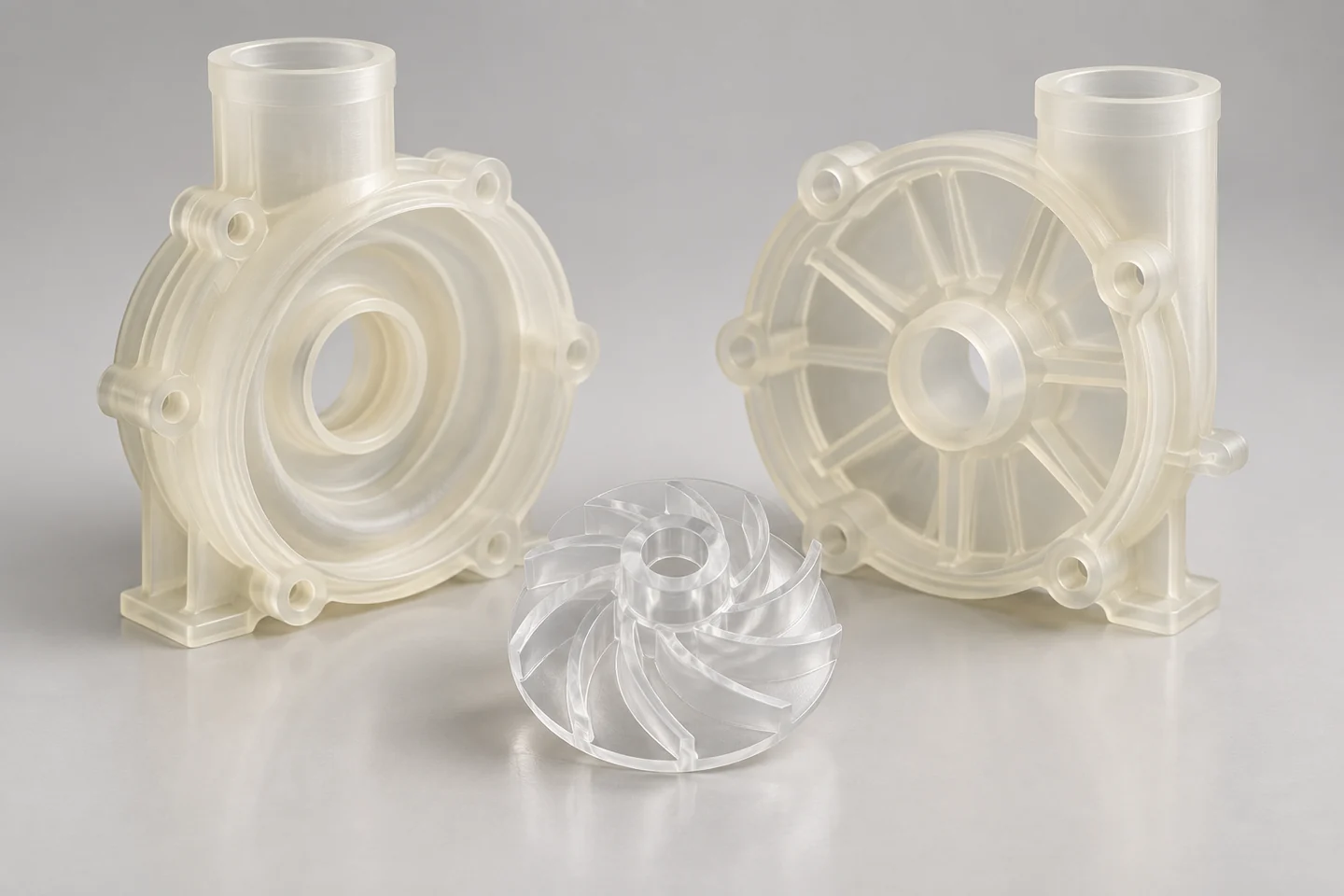
Existing generated resin-prototype concept, not a verified multi-material PolyJet model, color standard or measurement of material behavior.
01 / PROTOTYPE PURPOSE
A photopolymer model can help communicate form, region transitions or handling. The evidence needed for repeated service use is a separate question.
Map visible areas, colors, texture intent and transparency direction. Agree a physical reference and viewing conditions rather than relying on a rendered image.
Identify which areas should feel different and why. Confirm the offered material combination and evaluate the actual processed sample.
Define interfaces and movement demonstrated by the prototype. Record whether the test is for geometry only or also addresses a defined functional requirement.
02 / REGION MAP
Different regions need controlled geometry and an agreed interpretation. A colored screen view alone may not provide enough information for the proposed build.
Provide named bodies, boundaries or a clear region schedule with units and revision. Ask how the proposed file format represents that intent.
Explain whether a transition is visual, tactile, moving or assembled. Review whether the geometry and offered combination can support the intended sample.
Mark critical appearance areas and support-contact limits. Do not assume every side receives the same surface condition.
Highlight narrow openings, small projections and fragile transitions. Review support access and permitted changes before approval.
03 / MATERIAL SELECTION
Material availability and combinations depend on the responsible route. The service name is not an exhaustive material or machine list.
| Decision | Specify | Review |
|---|---|---|
| Formulation | Exact required photopolymer or accepted alternatives. | Offered combination and supporting data. |
| Color or transparency | Region map and physical comparison intent. | Actual processed reference and viewing basis. |
| Flexibility | Movement, section and handling purpose. | Relevant behavior in the evaluated state. |
| Exposure | Temperature, light, liquid or storage conditions. | Application-specific evidence and limitations. |
04 / SUPPORT REMOVAL
Material-jetting routes use support strategies that require a reviewed removal method. Internal and fragile features need explicit access and handling decisions.
Generated resin geometry example; it does not establish a support-removal procedure or a particular PolyJet material combination.
Show cavities, channels and obstructed faces. Ask what removal approach is proposed for the actual geometry and material combination.
Define important surface areas, acceptable contact traces and any included refinement. A detailed model is not automatically a finished appearance standard.
Specify relevant conditions for evaluation and delivery. Do not assume a photopolymer model can be treated like an unspecified production thermoplastic.
Agree which cleanup, surface work and assembly steps precede sample acceptance. Keep material-region changes within the controlled approval process.
05 / PHYSICAL ACCEPTANCE
A visual or tactile approval should name its limits. It does not automatically cover long-term functional behavior.
| Question | Record | Do not extend to |
|---|---|---|
| Appearance | Reference, region identity and viewing conditions. | Universal color accuracy or optical performance. |
| Handling | Actual sample, section and intended interaction. | Unspecified cycle life or service duty. |
| Assembly | Mating reference and checked interfaces. | All dimensions or material qualification. |
| Configuration | Files, formulations and processed state. | A changed region map without review. |
06 / QUOTE & APPROVAL
Separate file preparation, material-region work, cleanup, sample purpose and evidence. Compare only offers describing the same deliverable.
Bodies, regions, purpose and visible faces.
Offered materials and support access.
Physical appearance and handling reference.
Region map, files and processed state.
Identity, protection and agreed checks.
Send CAD, units, revision, region map, sample and repeat quantities, destination and target milestones. State mandatory material or appearance requirements.
Confirm region interpretation, included support removal and surface work, sample checks, records and packaging. Minimum quantities and timing require actual proposal confirmation.
07 / QUESTIONS
Define the prototype purpose and the actual material-region combination.
No equivalence is assumed. Define the intended sample decision and separately review the production material and functional evidence.
Availability and compatibility require review for the responsible route. A generic image is not a material-combination list.
Provide controlled geometry and an explicit region schedule. Agree how the files represent the intended boundaries.
No universal removal guarantee is made. Review access, fragility and the actual support strategy.
Only the agreed scope applies. Record appearance, fit and application questions separately and identify those still unresolved.
PREPARE THE NEXT DECISION
Include file units and revision, separate material or color regions, visible faces, support-access concerns, assembly needs, sample purpose, quantity and destination.
sales@keepwinco.comAn enquiry starts a team review. Material, fit, quantity, schedule, operation responsibility and supporting records are confirmed in the proposal; this form does not create an order or an instant price.
Start with what you know. Review your details before sending; no account needed.
Start parts inquiry →Your project is saved securely only when submission succeeds.
General material context only; external references do not certify a finished KeepWin product.
Stratasys - PolyJet process context ↗Stratasys - support-material selection ↗