
Identification and marking
Provide content, location, legibility and material. Confirm a suitable method and reference; laser imagery does not prove every polymer is compatible.
PARTNER-SUPPORTED MANUFACTURING / MOLDING HANDOFF
Marking, inserted features, surface work and assembly can change the accepted condition. Map the operation, important interfaces and responsible handoffs so the offer describes the finished deliverable.
KeepWin coordinates partner-supported review. Exact material, responsible operations, process availability, dimensions, inspection, commercial quantities and timing are confirmed in the project proposal; no universal capability or certification is promised.
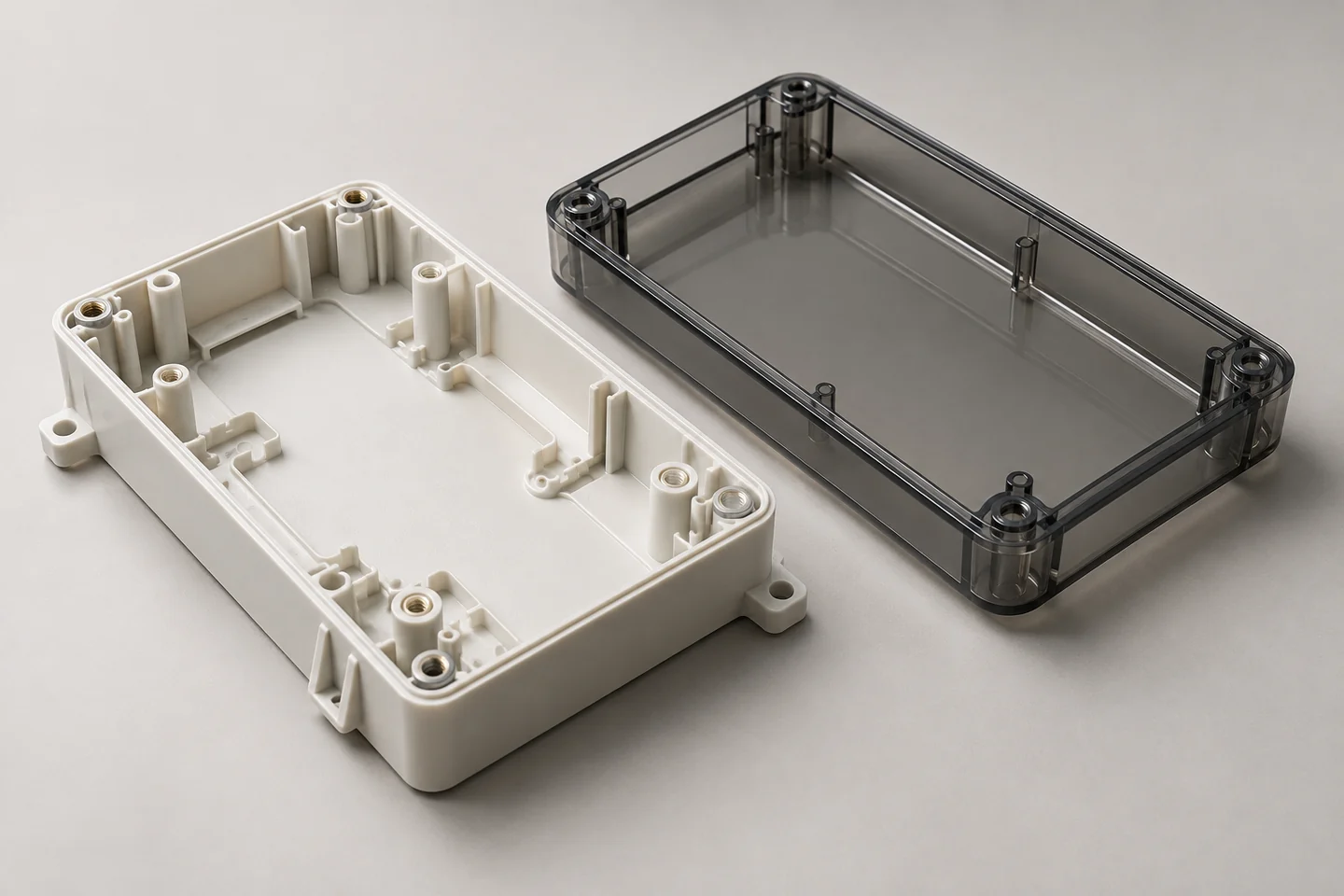
Generated enclosure design study, not a sampled production part, measured inspection result or verified molding facility.
01 / OPERATION PURPOSE
An operation name alone cannot define compatibility, appearance or evidence. Start with what the delivered component must do.
Provide content, location, legibility and material. Confirm a suitable method and reference; laser imagery does not prove every polymer is compatible.
Show holes, fastening or contact interfaces and assembly purpose. Review access, component identity and final-state checks.
Map visible faces, color or texture and mating components. Confirm actual included operations and responsibility rather than assuming a complete assembly package.
02 / ACCESS & PROTECTION
Holding, access and surface changes can affect important geometry. Give each operation a feature map and an acceptance point.
Control part revision, exact resin and surface state received by the operation. Identify any pre-existing features or marks that affect the work.
Show where the operation must reach and where the part can be located. Feasibility and suitable tooling require actual review.
Map fits, contacts, visible surfaces and edges that must be preserved. Confirm protection and permitted changes for the chosen method.
State which work precedes final fit, appearance or application checks. An acceptance made before a changing step may not describe the delivered part.
03 / OPTION COMPARISON
Material grade, geometry and intended use can change compatibility. No universal list of available methods is promised.
| Work | Review | Do not assume |
|---|---|---|
| Marking | Content, contrast, location and substrate. | Every resin accepts every method. |
| Inserts or fastening | Component identity, access and interface duty. | Universal retention strength. |
| Surface refinement | Preparation, visible faces and layer effects. | No dimensional or appearance change. |
| Assembly | Components, sequence and fit reference. | All-piece functional testing by default. |
04 / RESPONSIBILITY
Several operations may involve different sites or supplied components. Identity, defects and change control should remain explicit.
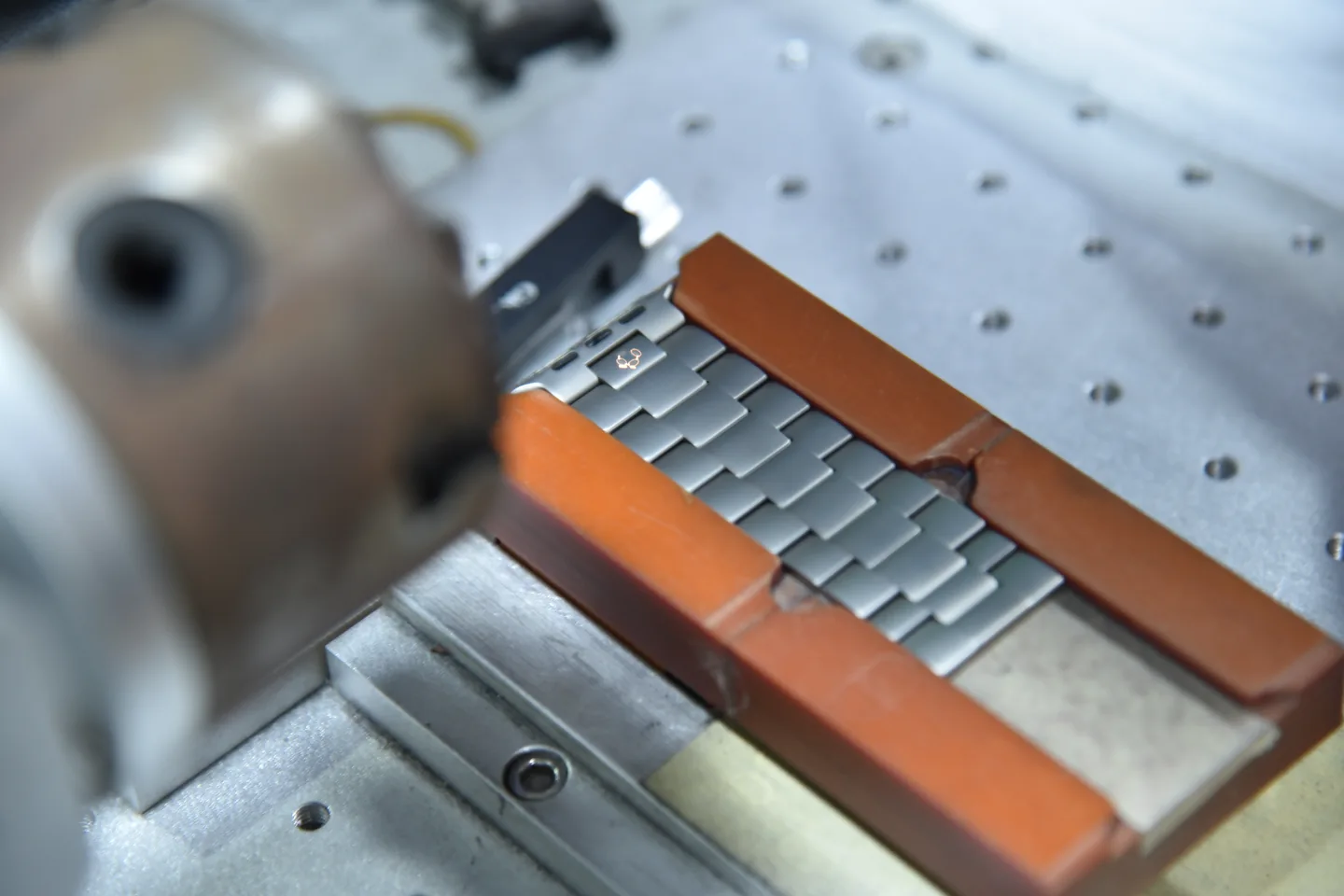
Supplied watch-component laser-marking setup reference. It illustrates an operation type, not compatibility with every molded plastic or an offered machine inventory.
Agree incoming parts or components, quantities, condition and records. Confirm who reviews unsuitable inputs before further work.
Ask the proposal to identify included processes and responsible scope. Do not infer that all work is performed on KeepWin-owned equipment.
State how rejected output, rework and component loss are reviewed and approved. Commercial responsibility should be named in the offer.
A new marking method, insert, finish or assembly sequence can affect final evidence. Review changes before accepting the revised deliverable.
05 / FINAL VERIFICATION
The finished state may need dimensions, marking, appearance and assembly checks. Agree the method and coverage for each.
| Requirement | Agree | Record |
|---|---|---|
| Fit | Final dimensions or mating reference. | Part and component revisions. |
| Marking | Content, location and legibility basis. | Approved reference and sample scope. |
| Appearance | Visible areas, texture/color and conditions. | Actual substrate and surface state. |
| Assembly | Interface purpose and relevant function. | Method, quantities and delivery identity. |
06 / QUOTE SCOPE
An offer for a molded body differs from one for a marked or assembled component. Make preparation, components and checks visible.
Send part files, resin, operation map, marking artwork or component drawings, final-state requirements, quantities and destination.
Ask for setup, fixtures, components, marking, assembly, finish, inspection, records and packing to be distinguished where relevant.
Agree sample/reference approval, responsibilities, exclusions and schedule dependencies. Actual process availability, MOQ and timing remain proposal-specific.
07 / QUESTIONS
Connect the operation to the exact material and delivered requirement.
Do not assume compatibility. Provide exact material, marking intent and reference for method review.
Only agreed scope applies. Supply component identity, interface duty and final-state checks.
It can affect the delivered condition. Mark important interfaces and agree the relevant operation sequence and acceptance.
Review and commercial responsibility must be stated in the proposal. No universal allocation is assumed.
No. Supplied imagery is a reference. Actual process, responsible site and evidence must be confirmed for the project.
PREPARE THE NEXT DECISION
Include exact resin, drawing revision, operation purpose, marked or protected areas, component definitions, final fits, appearance references, quantities and destination.
sales@keepwinco.comAn enquiry starts a team review. Material, fit, quantity, schedule, operation responsibility and supporting records are confirmed in the proposal; this form does not create an order or an instant price.
Start with what you know. Review your details before sending; no account needed.
Start parts inquiry →Your project is saved securely only when submission succeeds.
General material context only; external references do not certify a finished KeepWin product.
Protolabs - part, tooling and acceptance context ↗