
Link profile & movement
Review link height, taper, spacing and freedom to bend around the wrist. Ask where links can pinch, bind or expose an edge during movement, including at the ends of the intended adjustment range.
WATCH BANDS / CONSTRUCTION & FIT
A bracelet is more than its silhouette. Review link movement, adjustment, connector fit and closure as one assembly. KeepWin helps turn your collection direction into a sample brief with clear decisions and approval criteria.
Offered model, material, customization and manufacturing responsibility are confirmed per project. A reference photograph does not establish a universal product specification.
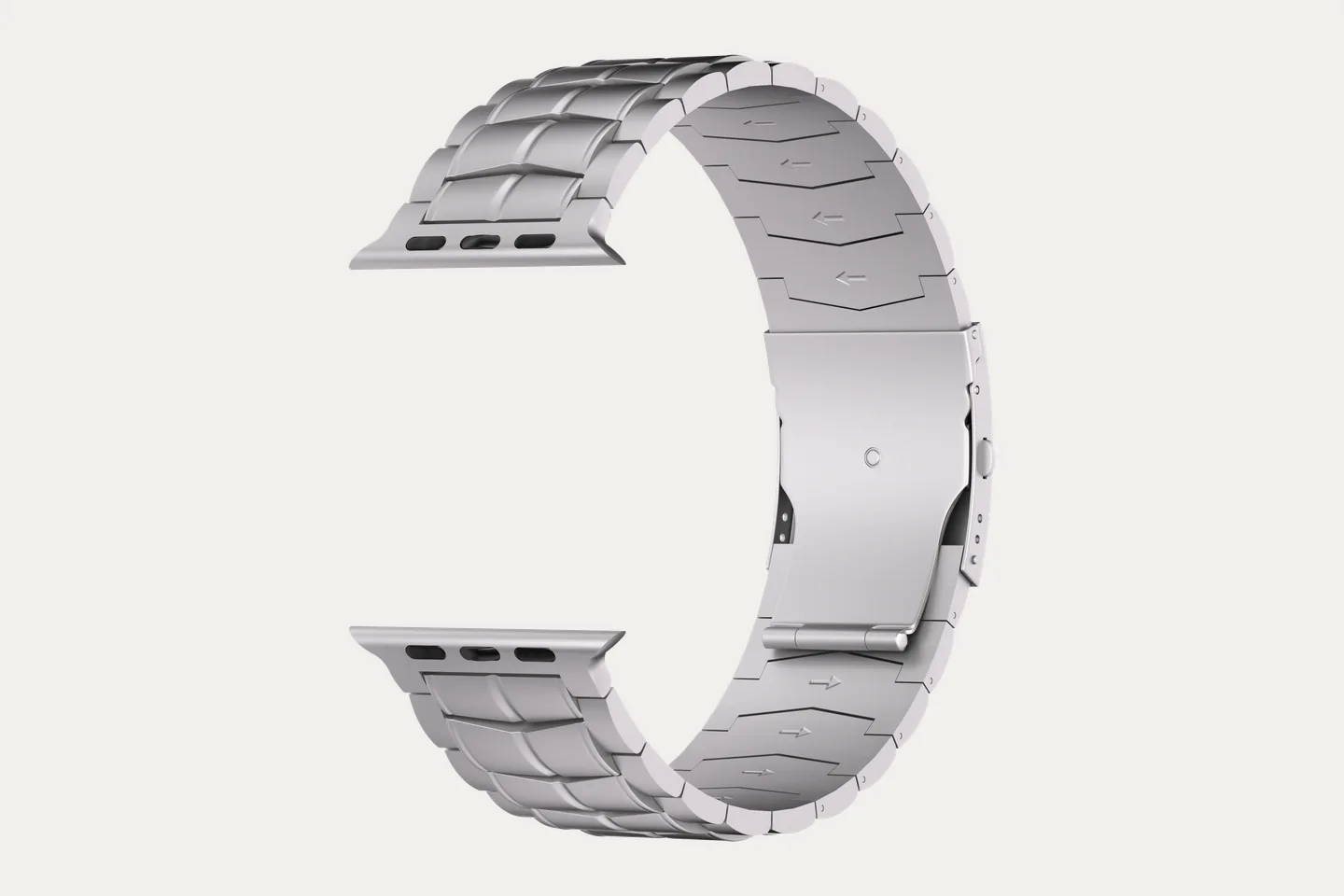
Supplied product reference. Confirm the exact construction and fit of the offered configuration before approval.
01 / CONSTRUCTION
Visible shape, hidden joints and articulation can produce different wearing experiences. Compare an actual sample rather than assuming that similar photographs mean equivalent construction.
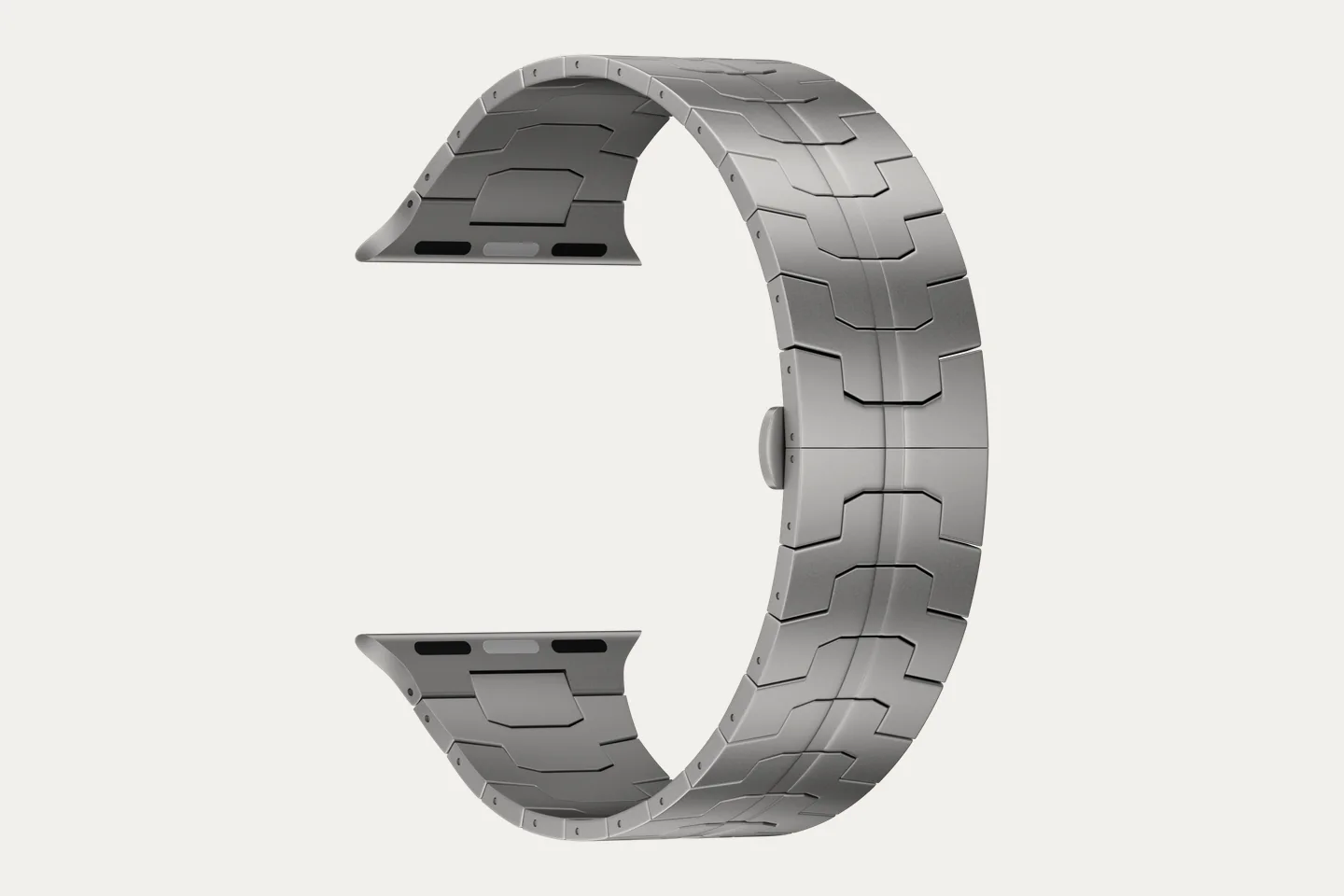
Supplied sculpted-band reference. Styling does not prove a particular joint, material or manufacturing method.
Review link height, taper, spacing and freedom to bend around the wrist. Ask where links can pinch, bind or expose an edge during movement, including at the ends of the intended adjustment range.
Identify removable links, pins or screws, supplied tools and adjustment instructions. Check which hardware can be replaced and how the agreed configuration addresses accidental loosening.
Compare closure feel, release controls, wrist position and any requested secondary retention. Decorative appearance does not demonstrate resistance to unintended release.
02 / INTERFACE & SIZING
Provide the watch reference or a controlled connector drawing and, where possible, a physical mating reference. Nominal width alone does not define engagement, retention or case clearance.
| Decision | Define in the brief | Review on the complete sample |
|---|---|---|
| Watch interface | Mating reference and connector revision. | Insertion, retention and release on the intended reference. |
| Wrist range | Measurement method, link count and adjustment options. | Comfort and clasp centering at the intended adjusted lengths. |
| Clearance | Case contact areas and required articulation. | Movement without binding, rubbing or unintended damaging contact. |
| Adjustment kit | Link removal method, tools and instructions. | Repeatable adjustment with the supplied hardware and kit. |
03 / APPEARANCE
Brushed, polished and coated surfaces need a defined scope. Mixed finishes create transitions that should be shown on a sample rather than reduced to one color name.
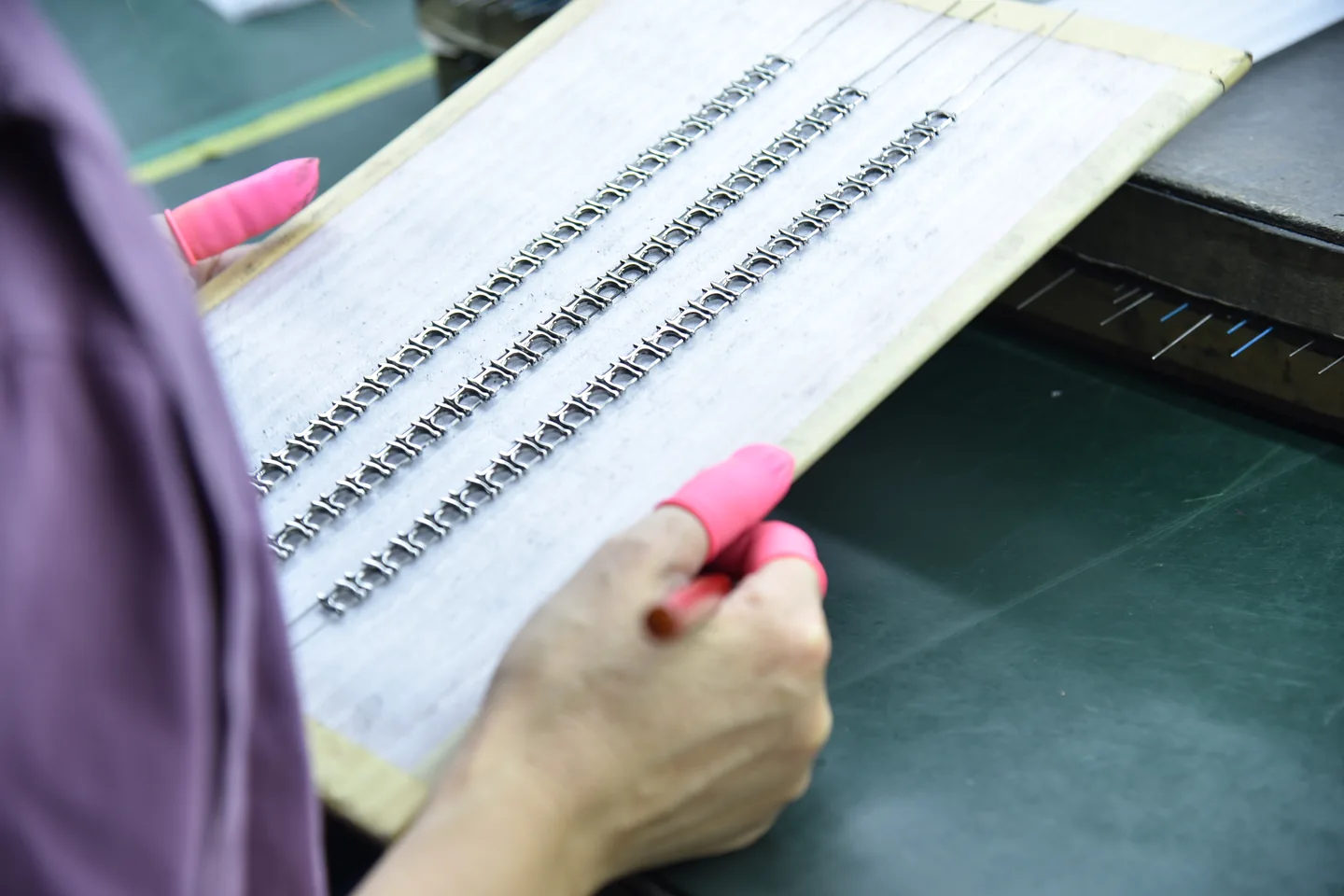
Supplied finish-inspection reference. Project-specific methods and records must be agreed separately; the photograph is not a test certificate.
Mark brushing direction, polished edges and treatment boundaries. Identify visible faces and the appearance defects that matter to the buyer.
Agree a retained sample or other physical reference and consistent viewing conditions. Metallic surfaces can change appearance with angle; a screen image is not a final color standard.
Review burrs, protruding fasteners, snagging points and surfaces touching skin or the watch. Give these features acceptance criteria instead of an undefined “premium feel” note.
Confirm material by component. Surface color does not establish stainless grade, titanium content or skin-contact suitability.
04 / COLLECTION ROUTE
A collection proposal should explain what is retained, what changes and what needs a new approval. This makes cost and responsibility easier to compare.
| Route | Information needed | Proposal decision |
|---|---|---|
| Existing model selection | Chosen reference, connector, finish and length. | Offered configuration, availability and sample scope. |
| Adapt an existing design | Changes to taper, clasp, connector, finish or branding. | Revised component scope, setup or tooling and approval points. |
| Develop a new bracelet | Design intent, controlled drawings or permitted changes to a reference. | Design responsibility, tooling scope, sample revisions and production plan. |
Separate quantities by model, connector, finish and size. One combined quantity can conceal multiple setup, stock and packing requirements.
Define adjustment tools, spare parts, instructions, retail packaging and carton identification. Review whether labels distinguish visually similar connector variants.
Compare material, construction, sample scope and delivery basis. Confirm whether setup, tooling, accessories, finishing and inspection are included in the unit price.
05 / SAMPLE APPROVAL
Agree what the sample must demonstrate and record changes against the same revision. Requested tests, thresholds, sampling and reports belong in the proposal.
Identify model, connector, clasp and material requirements.
Review fit, movement, edges, adjustment and closure on the intended configuration.
Separate accepted features from required changes and decide whether another sample is needed.
Approve variant quantities, packaging, acceptance, responsibilities and schedule assumptions.
Use agreed identifiers and records to check the delivered configuration.
06 / QUESTIONS
Start with mandatory requirements and identify the decisions where alternatives can be considered.
Only after each intended interface and offered connector has been reviewed. A nominal width or a similar end-piece silhouette is not sufficient evidence.
Not necessarily. Ask for the material scope of the offered assembly, including hidden joining hardware. Appearance alone cannot establish composition.
Explain the functional purpose and required geometry. Feasibility, revised components, tooling and sample steps are confirmed in the proposal.
These depend on construction, variants, customization and supply route. Send quantity and target timing for review; no fixed numerical promise is stated here.
A style reference, watch interface, intended wrist range, material and finish preferences, quantity per variant, packaging and the checks expected of the sample.
PREPARE THE NEXT DECISION
Send a style reference and identified watch interface, then describe the material, finish, adjustment and changes you want reviewed.
sales@keepwinco.comAn enquiry starts a team review. Material, fit, quantity, schedule, operation responsibility and supporting records are confirmed in the proposal; this form does not create an order or an instant price.
Start with what you know. Review your details before sending; no account needed.
Start watch band inquiry →Your project is saved securely only when submission succeeds.