
File register
List model, drawing, specification and reference files with revision and purpose. State units and precedence when information differs.
PROJECT GUIDE / AUTOMOTIVE RFQ
Use the enquiry to resolve who owns the files, what the samples demonstrate and what the buyer expects before shipment. Keep open issues visible as the project moves from development to repeat orders.
KeepWin coordinates partner-supported review. Exact material, responsible operations, process availability, dimensions, inspection, commercial quantities and timing are confirmed in the project proposal; no universal capability or certification is promised.
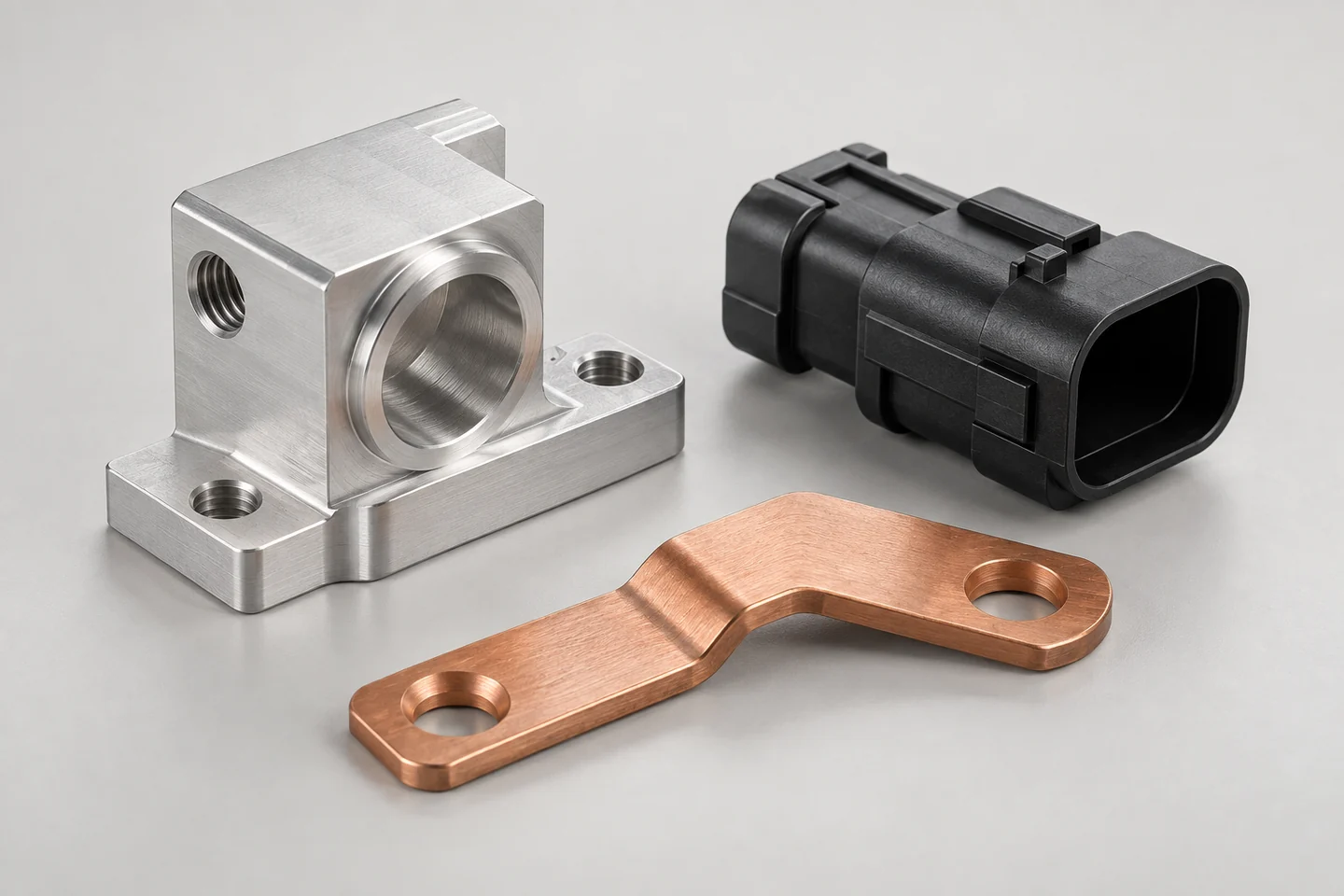
Generated component concept for planning discussion, not a customer programme, approved component or measured result.
01 / RFQ PACKAGE
Multiple attachments can describe different revisions or states. Build a concise register that tells the reviewer what controls geometry, material, finish and acceptance.
List model, drawing, specification and reference files with revision and purpose. State units and precedence when information differs.
Connect each configuration to quantities, component identities and distinguishing features. Identify common and variant-specific requirements.
Separate confirmed requirements from decisions still awaiting buyer approval. Name the owner and the effect each issue has on quotation or release.
02 / SUBMISSION PLANNING
A generic dimensional report may not meet a programme submission. Agree the required scope and responsible source during review.
Supply the actual requested submission or inspection format. Confirm required data, signature responsibility and represented configuration.
Identify which party supplies material, tooling, manufacture, finish and final checks. Ask which responsible entity prepares each record.
Link important characteristics to methods, state and sampling. Keep application approval separate from routine dimensional or appearance checks.
Clarify whether submission preparation, additional samples and external testing are included. No certification or buyer approval is promised by default.
03 / SAMPLE GATES
Development samples are more useful when their limitations and next decisions are recorded. Do not treat a favourable review as an undefined production release.
| Gate | Review | Release condition |
|---|---|---|
| Concept review | Shape, access or assembly idea. | Record questions and unrepresented properties. |
| Manufacturing sample | Offered material and operation chain. | Agree checks and configuration identity. |
| Buyer submission | Requested evidence and criteria. | Approval owner and remaining actions. |
| Repeat-order review | Changes since earlier approval. | Confirm continued applicability or new checks. |
04 / CHANGE LOG
File, tooling, material and site changes can affect different evidence. A visible log makes the new review scope easier to agree.
Identify affected features and documents. Prevent obsolete files from remaining active in the released package.
Record changed process, tooling or site and ask which prior checks remain representative. Confirm responsible approval.
Document exact old and proposed specification and condition. Do not treat a family name as equivalent supply.
Define the affected quantity and proposed disposition. Keep temporary acceptance separate from a permanent drawing change.
05 / DELIVERY PACKAGE
Part labels, packing and records should follow the approved variant and delivery scope. The transport plan is part of the deliverable.
| Item | Define | Confirm |
|---|---|---|
| Identity | Part/revision, variant and requested lot references. | Correct relationship between parts and records. |
| Protection | Contact, coating and deformation-sensitive areas. | Agreed packing and handling method. |
| Documents | Requested report or submission set. | Configuration, coverage and responsible issuer. |
| Shipment | Quantity, destination and delivery assumptions. | Milestones and included logistics scope. |
06 / RFQ CHECKLIST
Compare quotations using the same files, sample gates and document requirements. An unexplained gap can become a later release delay.
Resolve controlling files, materials, final state, quantities and programme requirements. Attach relevant buyer formats and identify open decisions.
Record the sample identity, represented questions, results and limitations. State whether approval permits preparation, manufacture or shipment.
Check changed files, material, tooling, operations and packing against earlier approval. Confirm milestones and applicable evidence instead of copying an old price alone.
07 / QUESTIONS
The package should show both technical requirements and decision ownership.
Requirements depend on the buyer and project. Supply the actual requested scope and confirm applicability.
The buyer should identify the governing definition and approve conflict resolution before work is released.
Only the represented and agreed scope. Explain shared features and variant-specific checks before extending a decision.
Reconfirm files, quantities, material, route, evidence and delivery conditions. Review changes against the previous approval.
No. It organizes the project inputs and responsibilities; applicable buyer release remains a separate decision.
PREPARE THE NEXT DECISION
Include a file register, governing drawing/model, variant quantities, buyer quality requirements, sample plan, approval contacts, packing instructions and requested milestones.
sales@keepwinco.comAn enquiry starts a team review. Material, fit, quantity, schedule, operation responsibility and supporting records are confirmed in the proposal; this form does not create an order or an instant price.
Start with what you know. Review your details before sending; no account needed.
Start parts inquiry →Your project is saved securely only when submission succeeds.
General material context only; external references do not certify a finished KeepWin product.
AIAG - buyer quality tool context ↗