
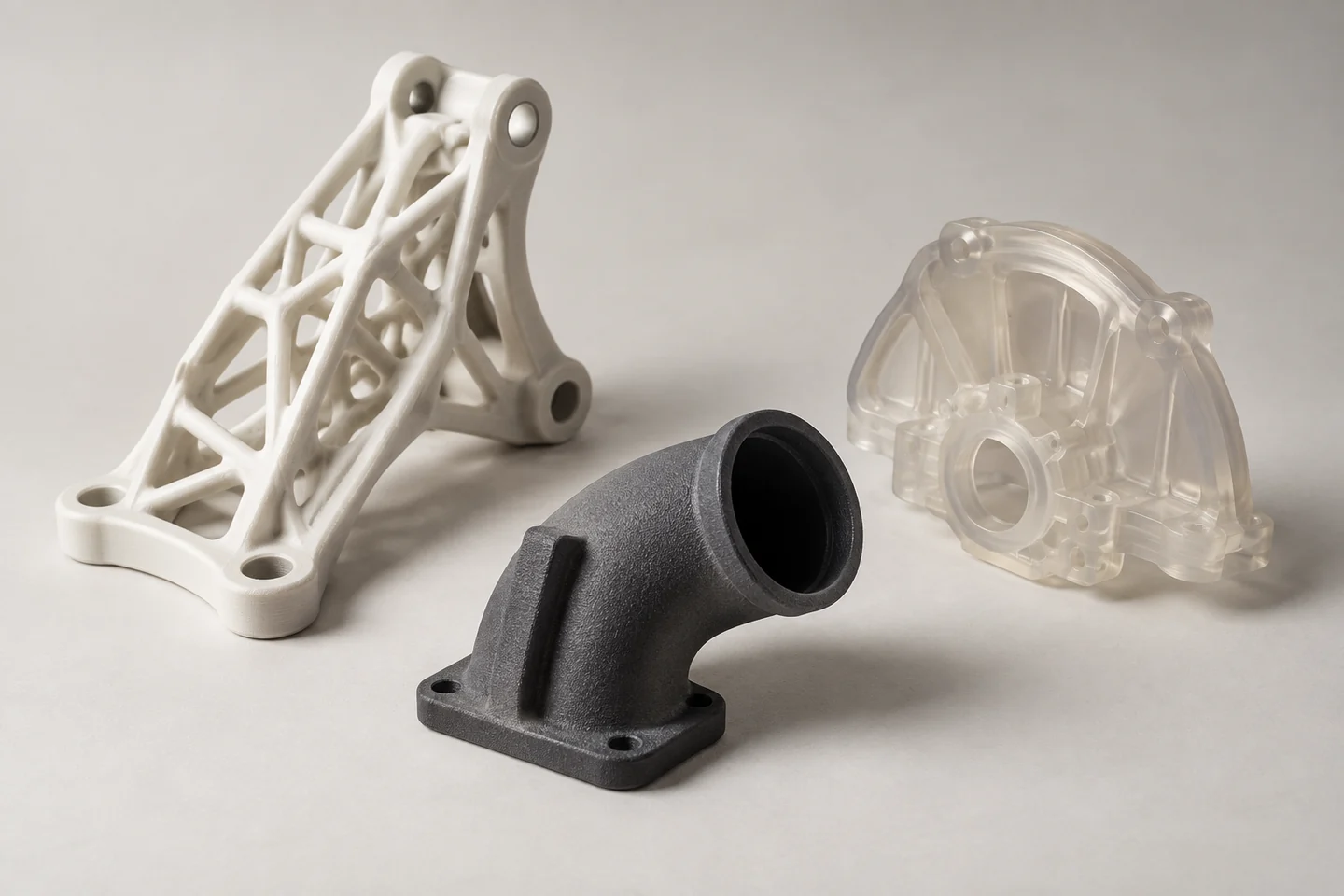
Start with the question your prototype needs to answer, then compare process and material options.
Decide what you are trying to learn
An appearance model, an assembly fit check and a functional trial are different assignments. State the purpose before choosing a printing route. Explain which features must be represented accurately and which are only illustrative. A prototype should be judged against that purpose, rather than against a broad expectation that it will behave like every possible production material.
Describe the operating conditions
For a functional trial, provide the expected loads, temperature range, contact conditions and any other relevant environment. Ask the proposed supplier for material-specific information and process limitations. A material name alone does not establish suitability. If the part will enter a regulated or safety-critical application, the required qualification process must be addressed separately.
Review orientation and post-processing
Discuss visible surfaces, support removal, access to internal features and planned finishing. Identify any faces or holes that may require additional operations. Ask whether the proposed orientation affects the features you care about. Record these assumptions with the quotation so the review is based on a specific production route rather than a generic process label.
Capture learning from the first sample
Photograph the relevant interfaces and record the actual observations from the test. Keep design issues separate from process or finishing issues. Decide whether the next step is another prototype, a different material or a review of the production method. A short test record gives the next iteration a clear purpose and prevents repeated discussion of the same unresolved question.