
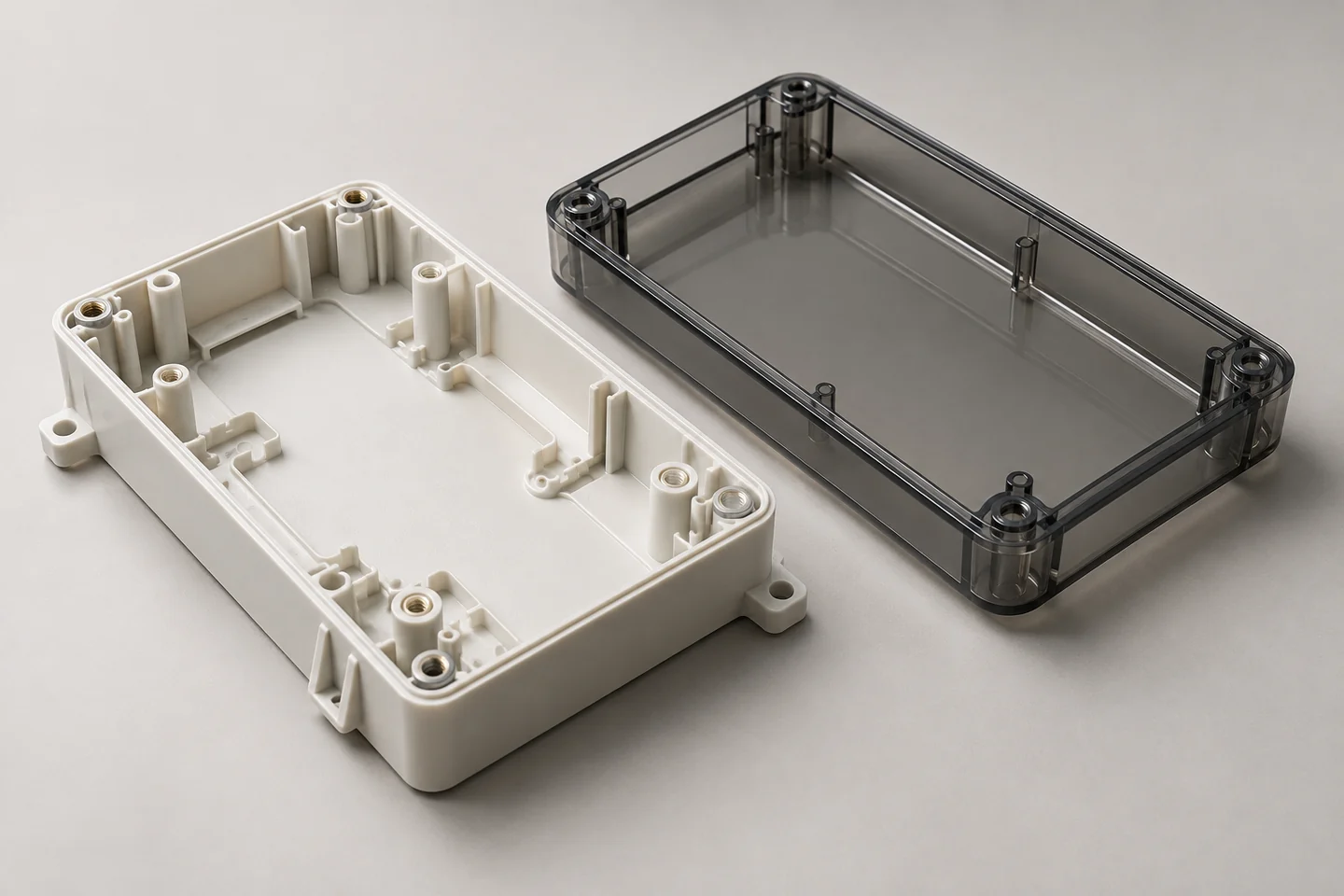
Organize design, resin, appearance and demand assumptions before a tooling discussion.
Write down the intended outcome
Explain what the part does, what it fits with and how it will be used. Provide the current model, key dimensions and any appearance references. Separate the prototype requirement from the expected production demand. A forecast helps start the discussion, but the quotation should state the quantities and scope it actually covers.
Invite a manufacturability review
Wall transitions, ribs, bosses, release direction and other molded features should be reviewed before tooling decisions are finalized. Identify cosmetic faces so gate, parting-line and ejection discussions have the right context. Do not alter the design from generic advice alone; the proposed changes need to be checked against the selected process and material.
Make resin and color requirements explicit
State the resin grade if it is already specified. Otherwise describe the performance, environment and appearance requirements that guide selection. Identify any required documentation and whether an alternative material may be considered. Use a physical color or texture reference for approval where necessary, rather than relying only on a screen image.
Agree the sample review and next step
Record what the sample must demonstrate and who has authority to approve it. Discuss dimensional review, appearance checks and any application-specific testing before the sample is made. Clarify tooling scope, anticipated changes and production planning in the quotation or agreement. Keep unresolved questions visible instead of treating a first sample as automatic production approval.
Further reading
External guidance provides general context. Published capabilities belong to that provider and are not KeepWin capability commitments.