
Component definition
State part number, intended role and governing files. Distinguish development geometry, tooling and application components.
PROJECT GUIDE / AEROSPACE PROCUREMENT
Use a controlled brief to connect component role, drawing, material, responsible operations and required records. Separate available evidence from open qualification questions and identify who can release the project.
This guide supports enquiry preparation, not flight qualification or a claim of certified aerospace supply. Customer requirements, document applicability and route approvals need explicit review for the actual project.
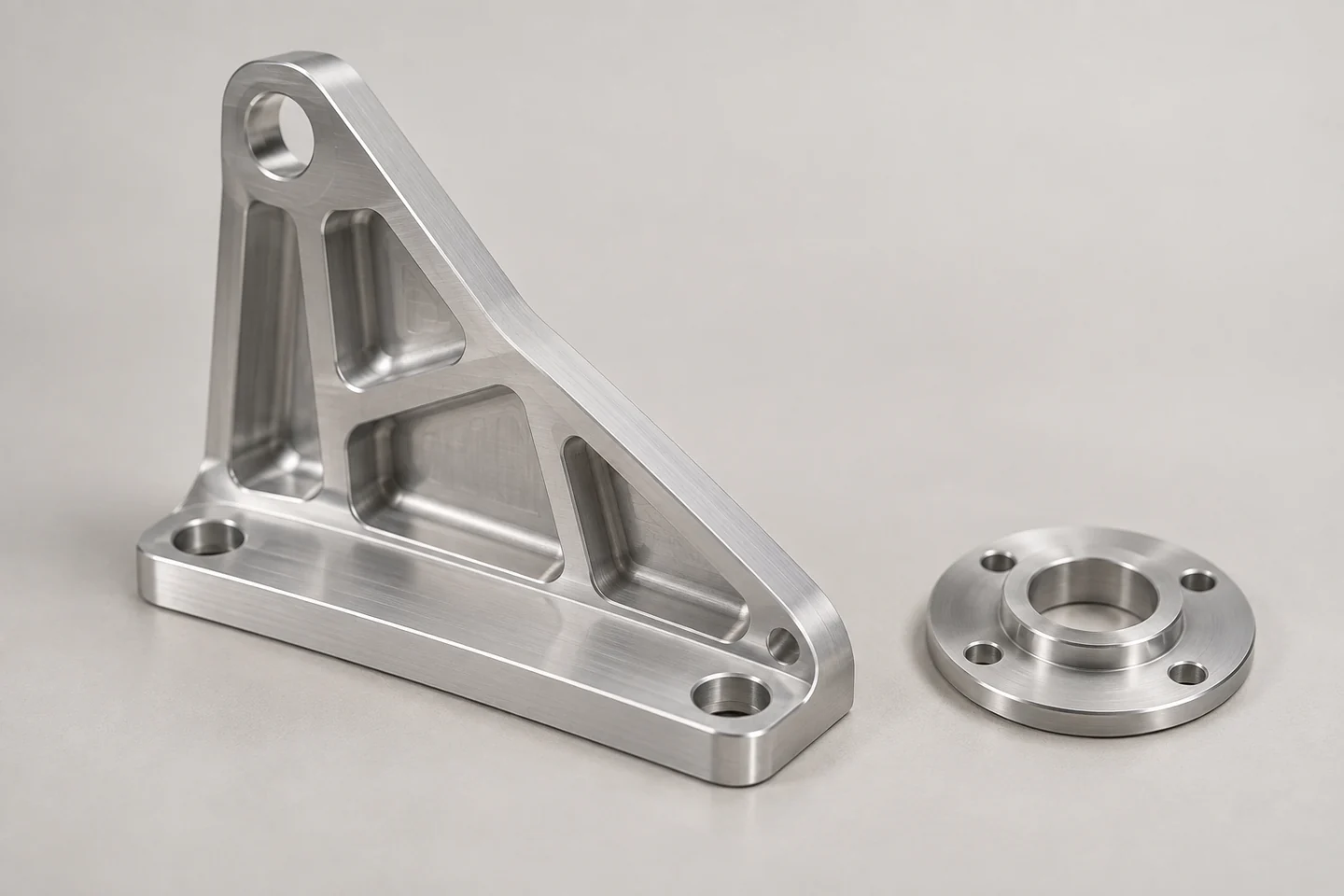
Generated geometry reference, not a customer program, approved flight part or evidence that any supplier qualification has been met.
01 / BRIEF ASSEMBLY
A complete brief lets an offer state what is actually provided. Separate mandatory requirements from alternatives and unresolved decisions.
State part number, intended role and governing files. Distinguish development geometry, tooling and application components.
List material, process, inspection, traceability and approval records requested. Avoid an undefined instruction to supply aerospace quality.
Separate sample and production quantities, variants, destination and target milestones. Identify which approval must precede the proposed schedule.
02 / EVIDENCE MATRIX
The matrix should make gaps visible before release. No certificate, method or customer approval is assumed from a service label.
Name model/drawing precedence, units and revision. Record customer-authorized design changes and the evidence affected.
Specify exact grade and required treatments or final state. Ask which records connect actual supply to the component.
Identify preparation, manufacture, secondary work and final checks. Confirm which site or party provides the requested evidence.
State who approves the sample, a deviation, a substituted material or changed route. Keep open qualification questions outside an unqualified release.
03 / EVIDENCE REVIEW
Documents with similar titles can describe different entities, materials, operations or quantities. Review the actual identity and scope.
| Item | Check | Gap to resolve |
|---|---|---|
| Material record | Grade, condition and represented supply. | Connection to required component identity. |
| Inspection record | Features, method, state and sample scope. | Uncovered requirements or quantities. |
| Certificate | Entity, site, scope and validity. | Applicability to the proposed operation. |
| Customer approval | Required authority and represented configuration. | Changes or requirements not covered. |
04 / SAMPLE PLANNING
A sample review should create a documented decision with limits. It is not automatic permission for all future quantities or applications.
Name fit, appearance, material or route questions. Specify the represented geometry and final-state operations.
Agree relevant dimensional, assembly or application checks and the record format. Availability requires confirmation for the actual route.
List remaining requirements and evidence gaps after review. A positive local result does not close unrelated qualification questions.
Define triggers for review and further evidence when files, material, site or processing change.
05 / RELEASE CHECKLIST
The release package should identify the actual accepted definition and the work or evidence still required.
| Release item | Include | Reason |
|---|---|---|
| Configuration | Files, material, state and operation scope. | Names the approved component. |
| Evidence | Applicable records and coverage. | Shows what supports acceptance. |
| Decisions | Sample approval, deviations and limits. | Prevents unsupported transfer. |
| Delivery | Quantities, identity, packing and destination. | Defines the accepted shipment scope. |
06 / QUOTATION HANDOFF
The price comparison should expose missing evidence and different assumptions. Confirm the responsible route before treating the offer as equivalent.
Controlled brief, requirement/evidence matrix, material, final interfaces, sample purpose, quantities and destination.
Operation scope, available documents, proposed methods, exclusions and approval dependencies alongside the cost breakdown.
Resolve unmet mandatory requirements and release authority. MOQ, capabilities, record availability and schedule are proposal-specific; no flight qualification is claimed.
07 / QUESTIONS
Keep evidence gaps and approval authority explicit.
No. Required customer and route approvals must be reviewed with applicable evidence and responsible authority.
Check entity, site, scope and validity and whether it covers the required operation. It is not a universal component approval.
State the exact required format, features and represented configuration and confirm availability for the actual project.
Record the gap and resolve it before release rather than assuming another document covers it.
Files, material, processed state, responsible route, evidence scope, changes and delivery identity.
PREPARE THE NEXT DECISION
Include drawing/model revisions, component role, exact material, required documents and customer approvals, acceptance methods, sample scope, quantities and destination.
sales@keepwinco.comAn enquiry starts a team review. Material, fit, quantity, schedule, operation responsibility and supporting records are confirmed in the proposal; this form does not create an order or an instant price.
Start with what you know. Review your details before sending; no account needed.
Start parts inquiry →Your project is saved securely only when submission succeeds.
General material context only; external references do not certify a finished KeepWin product.
IAQG - supply-chain guidance context ↗