
Visual and ergonomic review
Identify visible faces, handling requirements, scale and appearance intent. Keep visual approval separate from material or dimensional qualification.
PARTNER-SUPPORTED MANUFACTURING / ADDITIVE
A visual model, an assembly prototype and a production component need different evidence. Start with the application, then compare printing routes, material identity, geometry and the delivered condition before approving a project.
KeepWin coordinates partner-supported project review. Available processes, exact materials, equipment suitability, dimensions, inspection, minimum quantities and schedule are confirmed in the proposal; this page is not an equipment inventory or universal capability promise.
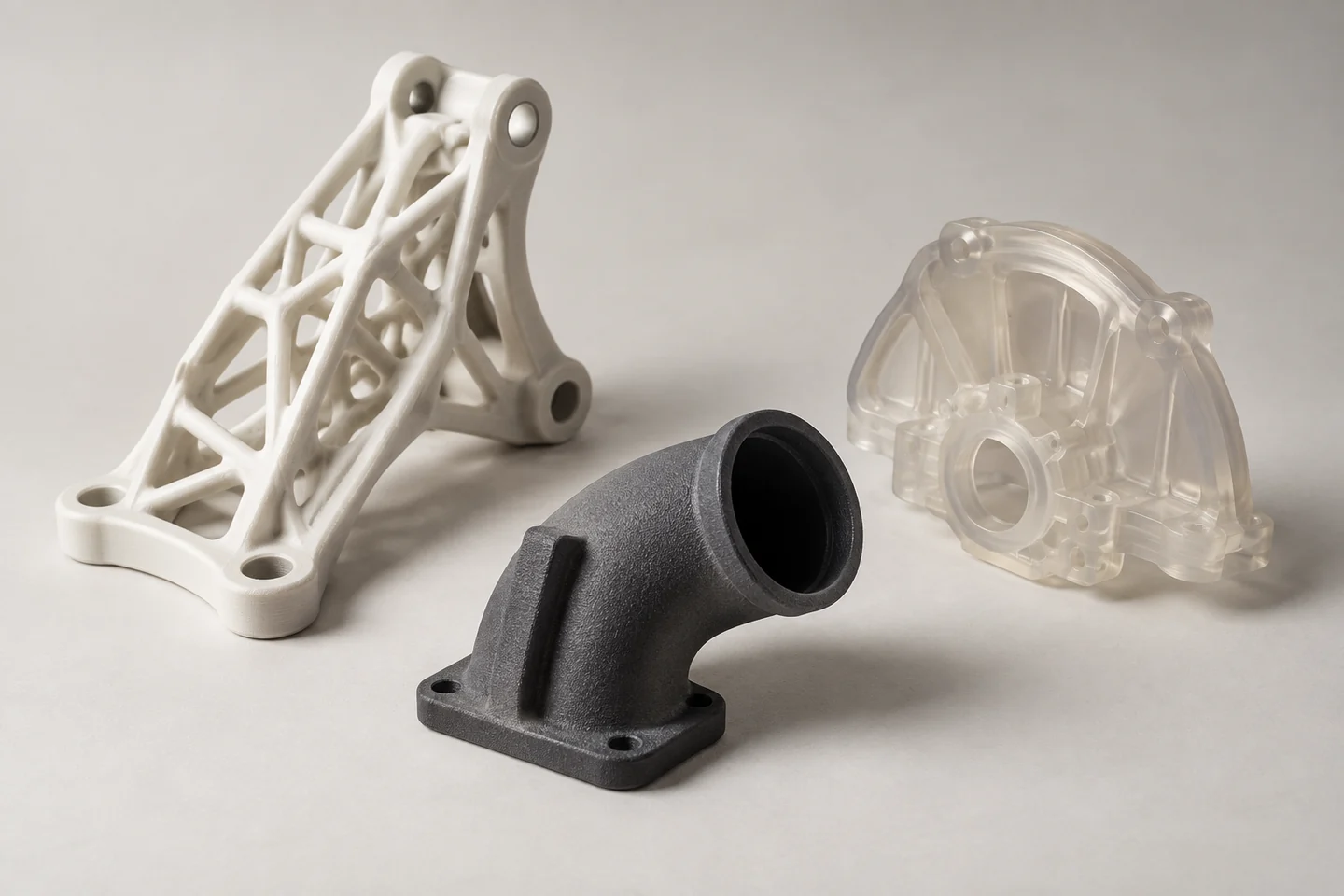
Existing generated additive-part concepts. They illustrate geometry, not supplied customer parts, equipment ownership or measured material performance.
01 / APPLICATION
The same model can be useful for shape review and unsuitable for a service-load test. Make the sample purpose and the decision it supports explicit.
Identify visible faces, handling requirements, scale and appearance intent. Keep visual approval separate from material or dimensional qualification.
Mark mating geometry, fastening and movement. Provide reference parts and final-state checks; a successful one-time assembly is not evidence of every material property.
Describe loads, temperature, exposure and duty. Review the exact material, processing condition and application evidence rather than extending prototype approval to production.
02 / ROUTE COMPARISON
Printing routes create different material and post-processing questions. The options below guide a discussion; the offered combination is confirmed for the actual project.
| Family | Review first | Evidence and handoff |
|---|---|---|
| Filament extrusion / FDM | Orientation, support contact, layer structure and exact filament. | Functional interfaces, surface intent and the delivered material condition. |
| Resin / SLA or material jetting | Exact formulation, support locations and required cleaning or curing. | Post-processed state and whether evidence represents the application. |
| Polymer powder / SLS or MJF | Exact powder, orientation, openings and powder-removal access. | Cleanliness, fit and finishing scope for the delivered part. |
| Metal additive | Alloy, support strategy, treatment and any secondary machining. | Agreed records and final-state acceptance through a reviewed partner route. |
A photopolymer, a filament and a powder with similar marketing descriptions are not automatically equivalent. Ask for exact identity and applicable evidence.
A process link explains what to discuss. It does not certify a fixed printer fleet, build envelope, approved material list or service-wide timing.
03 / GEOMETRY & ORIENTATION
Orientation connects geometry to supports, cleanup, appearance and feature verification. Explain which interfaces matter before accepting a build arrangement.
State units, file revision and whether CAD or a drawing governs acceptance. Check that the supplied geometry represents the intended solid, openings and assemblies.
Highlight thin, long or delicate features and sharp transitions. Obtain process-specific review rather than borrowing one minimum wall value across all technologies.
Identify cavities, channels and access for removing supports, liquid resin or powder as relevant. A closed exterior does not demonstrate a clean internal path.
Rank fit, visible faces and structural intent. Discuss the effect of proposed orientation and post-processing on the requirement; a digital render cannot establish the result.
04 / MATERIAL BRIEF
A material family is a starting point. The exact formulation or grade, build condition and post-processing determine what the offered evidence actually describes.
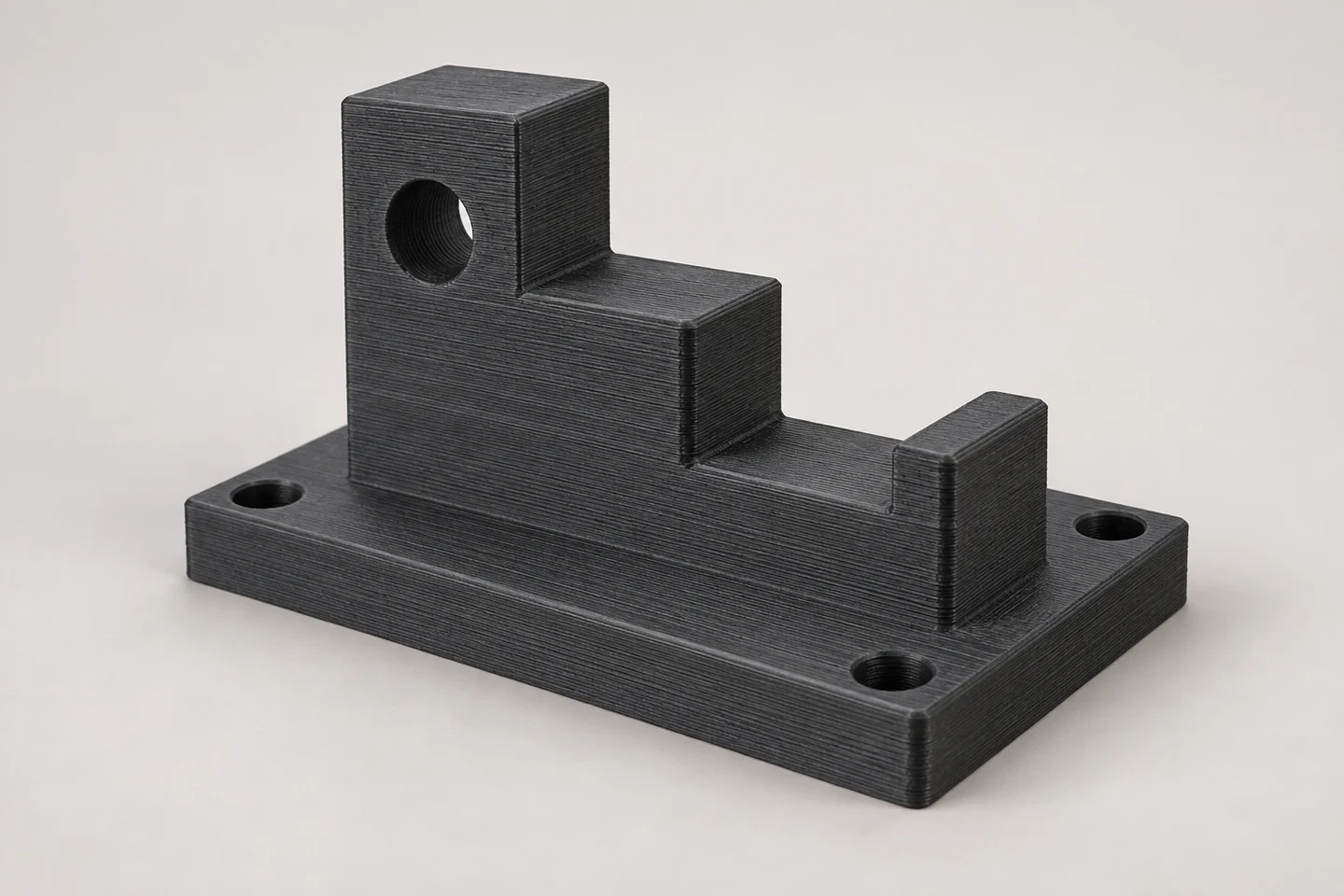
Existing generated filament-printing concept, used to contrast route families. It does not demonstrate a particular polymer grade or mechanical test result.
| Requirement | Provide | Resolve in review |
|---|---|---|
| Mechanical use | Load, flexing, impact, fastening and expected duty. | Exact material, orientation and application evaluation. |
| Environment | Temperature, moisture, light or chemical exposure. | Applicable condition and evidence, without assumed universal resistance. |
| Surface and appearance | Visible areas, texture, color or transparency intent. | Actual sample and post-processing scope. |
| Documentation | Needed identity, traceability or application records. | Availability, named material and relevance to the delivered state. |
05 / POST-PROCESSING
Cleanup, support removal, curing, surface work or secondary machining can affect interfaces and appearance. Agree which operations and acceptance checks are included.
Match application, geometry and exact material.
Review orientation, support and cleanup access.
State functional, visible and protected areas.
Check the agreed final-state requirements.
Approve revision, quantity, records and packaging.
06 / QUOTATION BRIEF
An unfinished model and an accepted production component are different deliverables. Include secondary work, inspection and approval assumptions alongside the part quantity.
Send model, drawing if available, units and revision. Mark critical geometry, assemblies and surfaces that may be altered only with approval.
Separate development samples from production quantities. State variants, destination and desired milestones for project-specific review.
Identify cleanup, curing, finishing, inserts or secondary machining where needed. Ask the proposal to distinguish included and optional work.
Specify sample checks, reports, material evidence, packaging and delivery. Confirm responsibility, minimum quantity and schedule assumptions in the actual offer.
07 / QUESTIONS
Use the application and the required evidence to guide the route rather than choosing by appearance alone.
Only for the agreed purpose. Shape or fit evaluation does not automatically validate service loads, exposure or later production processing.
No. Describe the application, geometry and material needs. A project review can compare routes and clarify which combination is actually offered.
These are reviewed against the exact route, material, orientation, geometry and final-state checks. This page does not publish universal numerical limits.
Only the agreed operations should be assumed. Define the delivered condition, internal access, surface scope and inspection with the quotation.
This is partner-supported manufacturing. Responsible operations and sites are clarified for the offered route.
Approve a controlled configuration and acceptance scope. Record unresolved questions and changes before assuming the sample authorizes repeat production.
PREPARE THE NEXT DECISION
Include file units and revision, intended use, material needs, critical interfaces, visible faces, quantity, finishing, required evidence and destination.
sales@keepwinco.comAn enquiry starts a team review. Material, fit, quantity, schedule, operation responsibility and supporting records are confirmed in the proposal; this form does not create an order or an instant price.
Start with what you know. Review your details before sending; no account needed.
Start parts inquiry →Your project is saved securely only when submission succeeds.
General material context only; external references do not certify a finished KeepWin product.
Formlabs - resin post-processing context ↗HP - powder removal and finishing context ↗