
Multi-cavity discussion
Consider repeated copies of the same geometry. Review cavity consistency, identity, sampling and the actual quantity basis for the tool proposal.
PARTNER-SUPPORTED MANUFACTURING / TOOLING STRATEGY
A tool that produces repeated copies and a tool that produces different components answer different procurement questions. Compare the required quantities, material and acceptance scope before choosing a cavity arrangement.
KeepWin coordinates partner-supported review. Exact material, responsible operations, process availability, dimensions, inspection, commercial quantities and timing are confirmed in the project proposal; no universal capability or certification is promised.
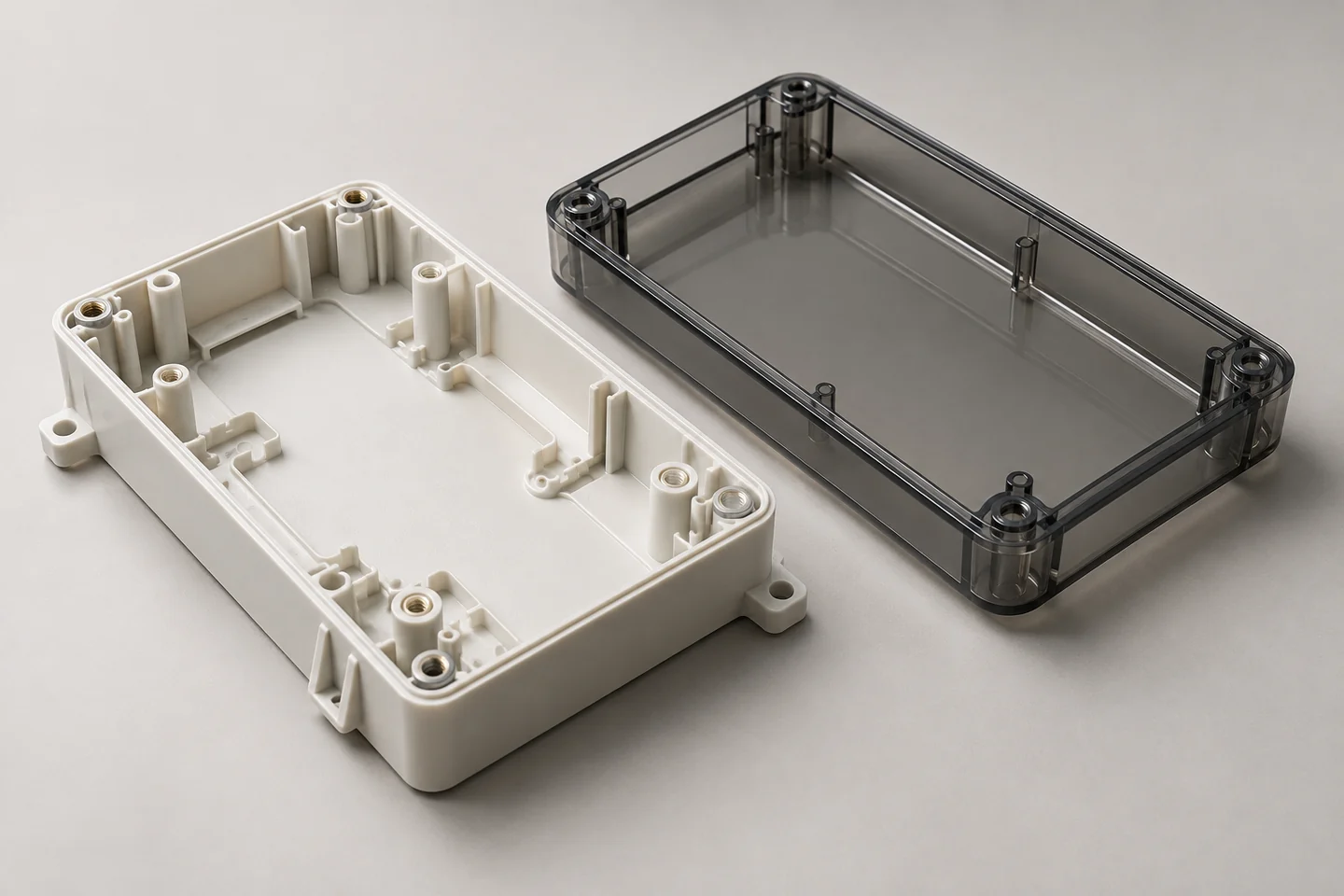
Generated enclosure design study. It does not show a family tool, cavity count, shot result or validated production balance.
01 / STRATEGY COMPARISON
The procurement decision depends on what must be delivered together and how demand changes. Neither strategy is automatically the lowest-cost route.
Consider repeated copies of the same geometry. Review cavity consistency, identity, sampling and the actual quantity basis for the tool proposal.
Consider different related components proposed in one tool. Review material, output ratios and whether the parts are required together.
Compare independent schedules or quantities where a shared arrangement creates unwanted output or constrains a changed component. Include tooling and acceptance in the comparison.
02 / DEMAND & GEOMETRY
A convenient tooling arrangement may not match how parts are purchased or replaced. Provide real variant demand and identify uncertain forecasts.
List part revisions, quantities, colors and repeat expectations. Separate confirmed demand from forecasts and identify matched-set needs.
State exact grades and color requirements for each component. Do not assume that visually related parts can share the same processing conditions.
Provide each controlled model and drawing. Review whether the proposed mix creates different filling, cooling or release questions.
Explain which components may change or stop. Ask how a revised part affects the shared tool, other components and earlier approval evidence.
03 / COMMERCIAL COMPARISON
Tool price and unit price do not describe excess output, acceptance or later changes. Make those assumptions visible.
| Decision | Provide | Resolve |
|---|---|---|
| Output ratio | Required quantities for each part. | Proposed cavity mix and any surplus assumptions. |
| Tool scope | Ownership, changes and maintenance needs. | Responsible work and commercial terms. |
| Acceptance | Features, samples and variant identity. | Cavity-related scope and records. |
| Repeat orders | Expected mix and change dependencies. | Schedule, availability and minimum quantities. |
04 / CAVITY HANDOFF
The evidence should describe which parts and cavities it covers. A single accepted piece does not automatically demonstrate every cavity.
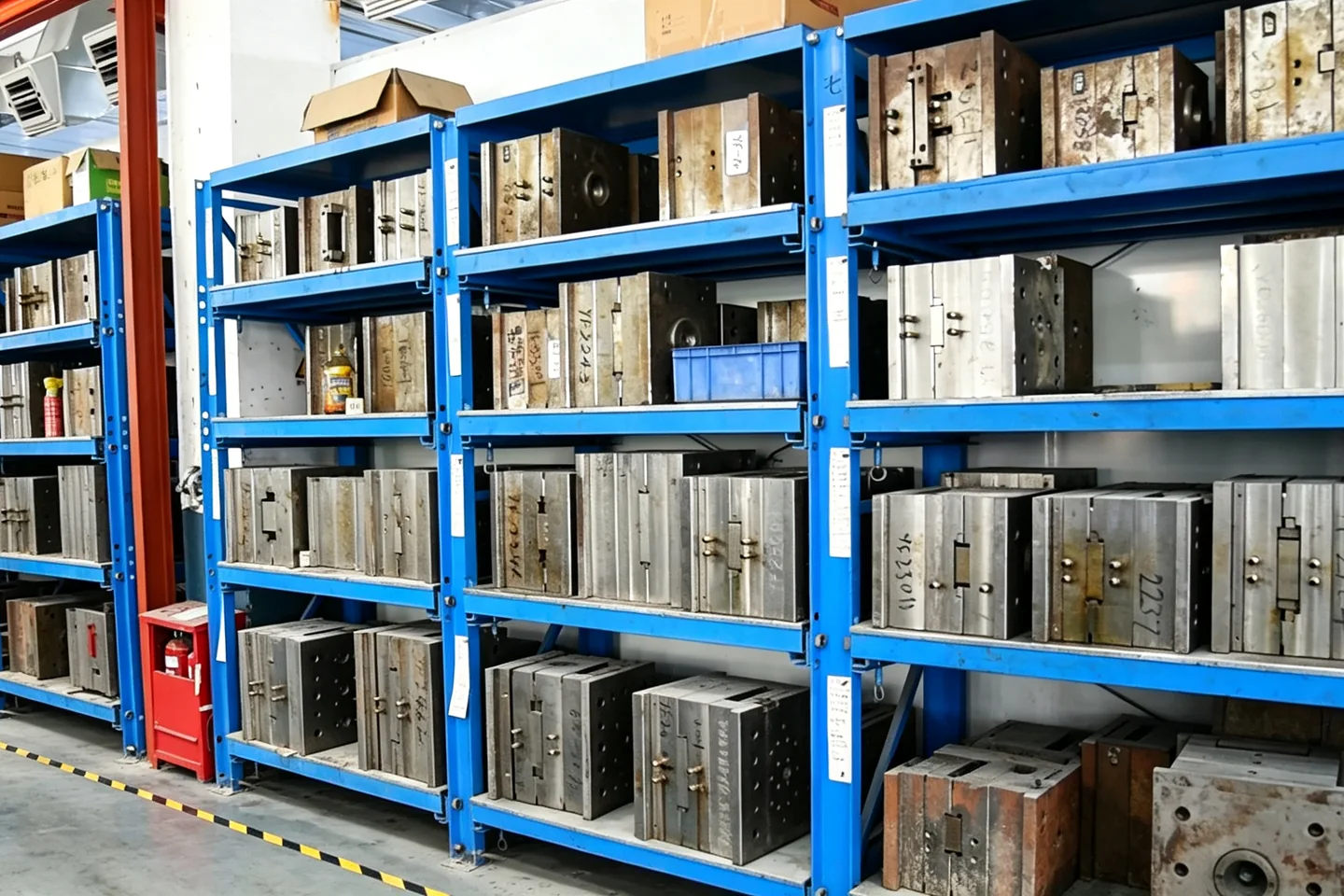
Supplied tooling-storage reference; it does not establish cavity count, tooling availability or measured output.
If required, agree how output is identified and how records connect to cavities. Availability and method are proposal items.
Define the part and cavity selection basis and checked features. Do not infer all-cavity or all-piece inspection from the tooling label.
Specify how related components are accepted and packed. A common tool does not automatically prove assembly fit between every delivered pair.
Review additions, blocked cavities or geometry changes for their effect on output and acceptance. Record who approves the revised configuration.
05 / ACCEPTANCE EVIDENCE
Dimensions, appearance and assembly evidence should match the actual cavity and variant scope.
| Area | Agree | Link to |
|---|---|---|
| Dimensions | Features, datums, methods and sample selection. | Part revision and relevant cavity scope. |
| Appearance | Physical references and permitted marks. | Grade, color and proposed surface state. |
| Assembly | Matching interfaces and set checks. | Controlled component combination. |
| Delivery | Quantities, variants and packing. | Approved output mix and identity. |
06 / QUOTE INPUTS
Ask each proposal to explain the assumed mix, accepted material and change responsibility. A universal output or savings claim is not provided here.
Send every component model and drawing, revisions, materials, surface maps and quantity matrix. State which parts must be delivered together.
Identify tooling, samples, setup, production, cavity evidence, packing and change work where relevant. Confirm whether surplus output is included or excluded.
Agree samples, approval owner and records before production. Capacity, minimum orders, tool life and timing require confirmation for the actual arrangement.
07 / QUESTIONS
Compare the part mix and acceptance scope before approving tooling.
A family arrangement can contain different components; a multi-cavity discussion commonly concerns repeated copies. Confirm the actual proposed layout.
No universal saving is promised. Compare tooling, demand mix, output, inspection and later changes.
Do not assume compatibility. Exact grades, colors and processing requirements need review for the proposed route.
Only within an explicit scope. Agree cavity identification, sample selection, features and records.
Review its effect on tooling, other parts, quantities and earlier acceptance before approving the revised arrangement.
PREPARE THE NEXT DECISION
List each part, revision, material and color, quantities and repeat demand, matching-set requirements, tooling terms, cavity evidence and destination.
sales@keepwinco.comAn enquiry starts a team review. Material, fit, quantity, schedule, operation responsibility and supporting records are confirmed in the proposal; this form does not create an order or an instant price.
Start with what you know. Review your details before sending; no account needed.
Start parts inquiry →Your project is saved securely only when submission succeeds.
General material context only; external references do not certify a finished KeepWin product.
Protolabs - family and multi-cavity distinction ↗Protolabs - cavity and tool design context ↗