
Single-material parts
Define the exact resin, geometry, fits and appearance. Review tooling release and the final-state evidence needed for the actual assembly.
PARTNER-SUPPORTED MANUFACTURING / MOLDING
A molded-part offer includes decisions about resin, geometry, tooling, samples and repeat delivery. Keep the drawing, important surfaces and responsible operations visible before approving a production route.
KeepWin coordinates partner-supported review. Exact material, responsible operations, process availability, dimensions, inspection, commercial quantities and timing are confirmed in the project proposal; no universal capability or certification is promised.
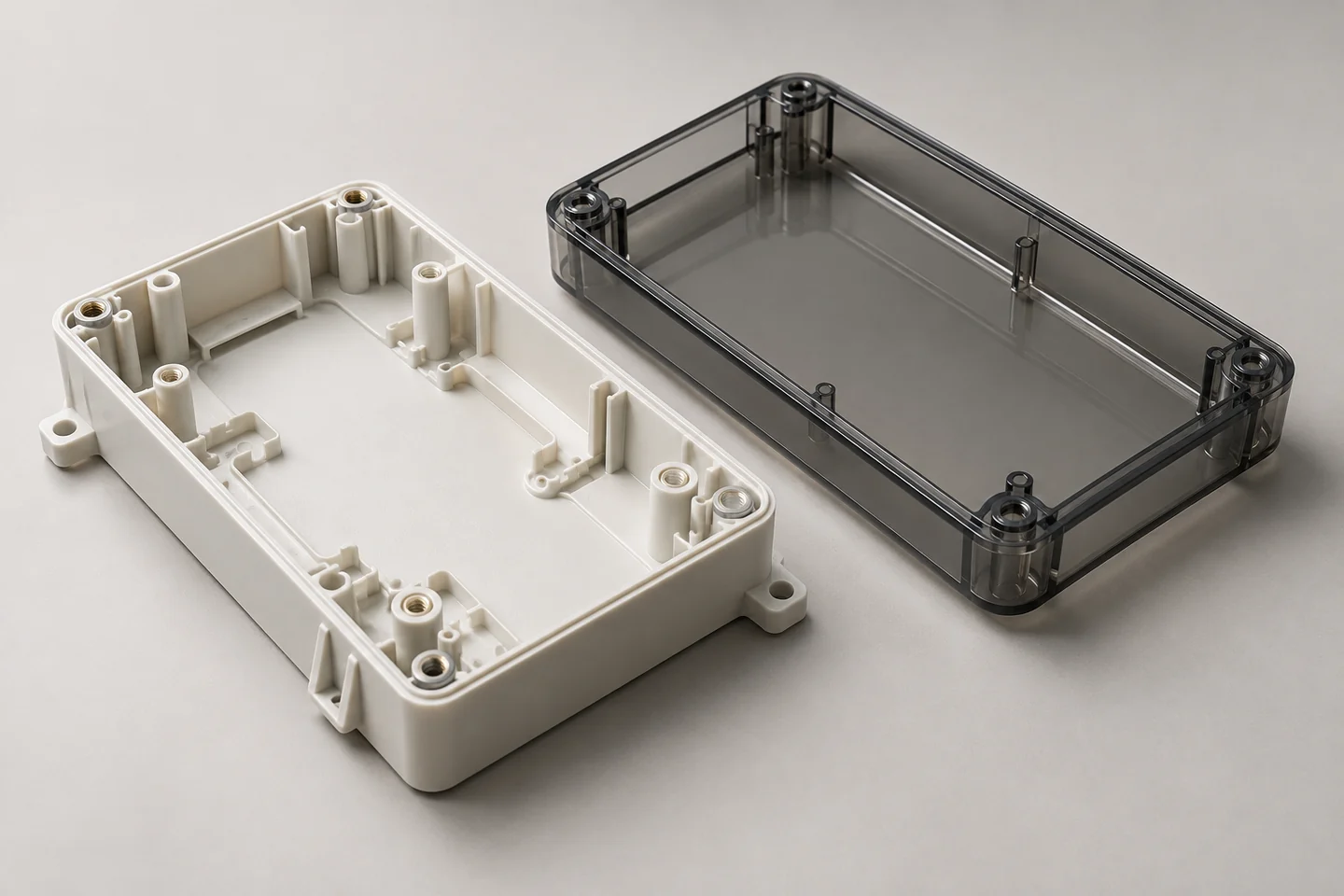
Generated enclosure design study, not a validated mold design, actual production sample or evidence of a molding machine fleet.
01 / ROUTE SELECTION
A housing, an insert-bearing part and a soft-touch assembly can need different tooling and process discussions. Explain the use before selecting a label.
Define the exact resin, geometry, fits and appearance. Review tooling release and the final-state evidence needed for the actual assembly.
Identify preformed components or separate material regions. Review positioning, protection, compatibility and responsibility instead of treating the assembly as one unspecified process.
List part numbers, colors, materials and quantities. Compare cavity or family-tool options with the demand mix and accepted configuration.
02 / DESIGN REVIEW
The model defines shape, but release, visible surfaces and functional relationships need additional intent. Proposed manufacturability changes should be documented.
Highlight thin regions, thick sections, ribs and bosses. Review the actual resin and geometry rather than applying a universal wall or rib ratio.
Identify parting-line preferences, undercuts and important faces. Confirm the proposed tool approach and permitted changes; no mechanism is automatically available.
Map cosmetic and functional zones. Agree allowable locations and marks instead of assuming every surface is free of process traces.
Show mating parts, assembly direction and critical relationships. Define the delivered condition and measurement basis before the tool is approved.
03 / MATERIAL & FINISH
Resin family names do not control every property or processing behavior. Compare the exact material and physical surface reference.
| Item | Provide | Confirm |
|---|---|---|
| Resin | Exact grade, color, reinforcement or use requirement. | Offered supply, alternatives and records. |
| Appearance | Visible faces, texture and color reference. | Sample basis and permitted process marks. |
| Application | Loads, exposure and contact requirements. | Evidence for the exact grade and finished part. |
| Dimensions | Critical fits and final-state condition. | Method, sample scope and acceptance. |
04 / TOOLING SCOPE
Tool preparation is a commercial and technical scope. The offer should describe who supplies, maintains and approves the tool-related work.
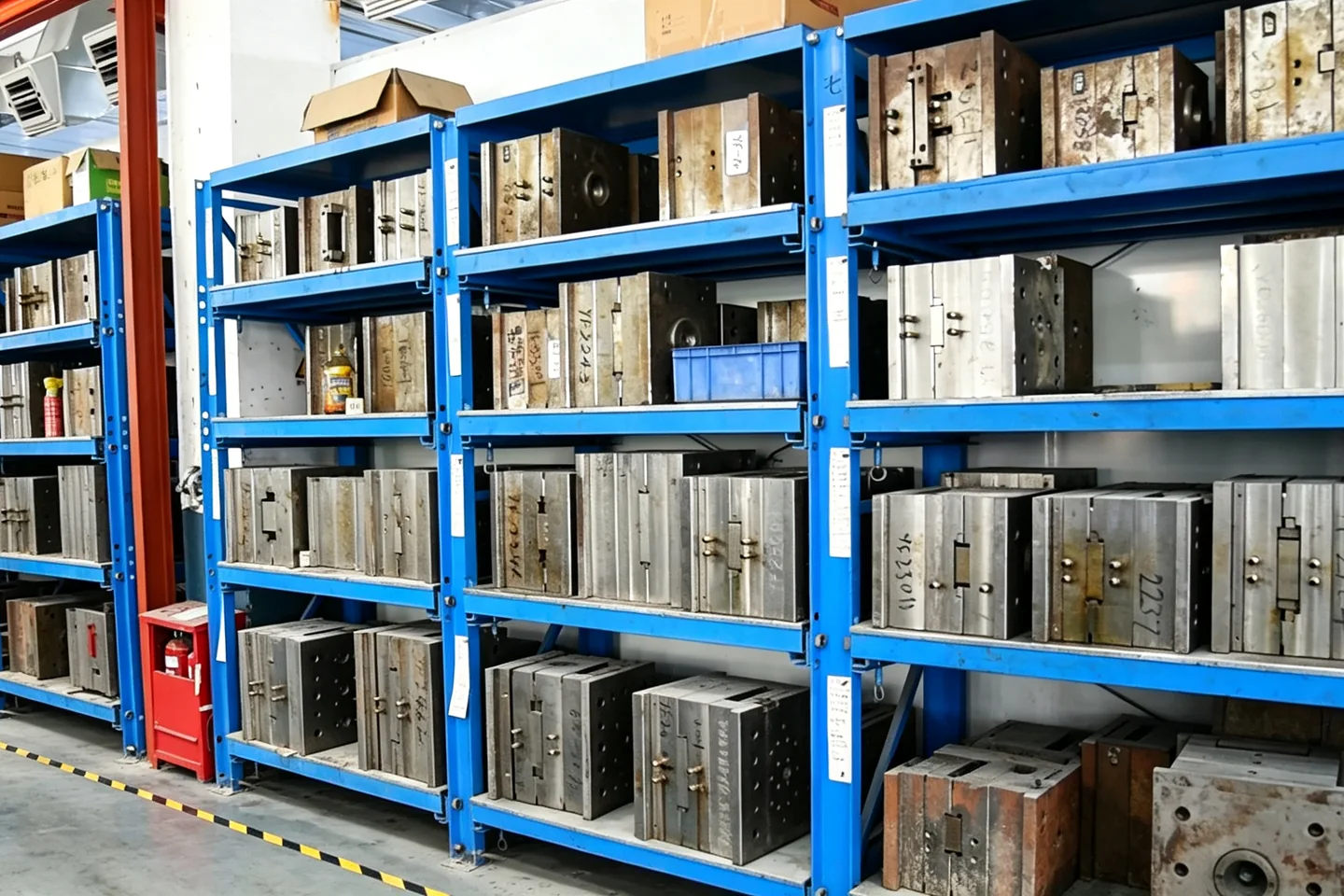
Supplied tooling-storage reference. It does not identify the mold for this project or establish universal ownership, capacity or service terms.
Confirm proposed tooling scope, responsible site, sample purpose and relevant delivery assumptions. An image of shelves does not establish tool inventory or life.
Ask who owns the tool, what access or transfer terms apply and which records are supplied. Do not assume a standard ownership package.
Record design revisions, permitted modifications and who approves them. Material or geometry changes may require new samples or tool work.
Confirm maintenance, storage and future-order assumptions where relevant. Actual capacity, minimum quantities and timing must be agreed for the proposal.
05 / ACCEPTANCE
Sample and production evidence need a controlled material, files and surface state. A visual sample does not settle all functional questions.
| Area | Agree | Record |
|---|---|---|
| Fit | Important dimensions, datums and assembly check. | Files, method and represented sample state. |
| Appearance | Texture, color and permitted marks. | Physical reference and viewing conditions. |
| Material | Exact grade and requested identity evidence. | Named supply and applicable records. |
| Delivery | Quantity, variant and lot acceptance scope. | Identification, sampling and packing. |
06 / QUOTE PREPARATION
Comparable offers describe the same part, material, operations and evidence. Unit price alone may hide different tooling or acceptance assumptions.
Send units, revisions, quantities and variants, destination and target milestones. Include mandatory material, surface and documentation needs.
Ask for tooling, setup, samples, unit production, secondary work, inspection, records, packaging and transport to be identified where relevant.
Define which sample or configuration approval starts the schedule. Confirm responsibility, minimum quantity, tool changes and exclusions in the actual offer.
07 / QUESTIONS
Keep the material, tool and acceptance in one controlled brief.
Describe use and mandatory requirements if undecided. Exact material and acceptable alternatives are reviewed before approving the route.
Ownership, storage, maintenance and transfer terms must be stated in the proposal. No universal arrangement is assumed.
These require project-specific confirmation against geometry, material, tool scope, quantities and evidence. No blanket numerical promise is made.
Only within its recorded scope. Changes may affect appearance, processing and fit and can require further evaluation.
This is partner-supported review. Responsible sites and operation scope should be clarified for the offered route.
PREPARE THE NEXT DECISION
Include CAD and drawing revision, exact resin or application requirements, critical fits, appearance map, quantities, tooling ownership needs, sample checks and destination.
sales@keepwinco.comAn enquiry starts a team review. Material, fit, quantity, schedule, operation responsibility and supporting records are confirmed in the proposal; this form does not create an order or an instant price.
Start with what you know. Review your details before sending; no account needed.
Start parts inquiry →Your project is saved securely only when submission succeeds.
General material context only; external references do not certify a finished KeepWin product.
Protolabs - molding design and project context ↗