
Repeated openings
Define pattern, sizes and important distances. Review tool suitability and the accepted stock rather than assuming any array is possible.
PARTNER-SUPPORTED MANUFACTURING / TOOL-CREATED FEATURES
Openings, repeated patterns and formed details need a stock and tool discussion, not only an outline. Define the important surfaces, final feature relationships and edge condition before accepting a punching route.
KeepWin coordinates partner-supported review. Exact material, responsible operations, process availability, dimensions, inspection, commercial quantities and timing are confirmed in the project proposal; no universal capability or certification is promised.
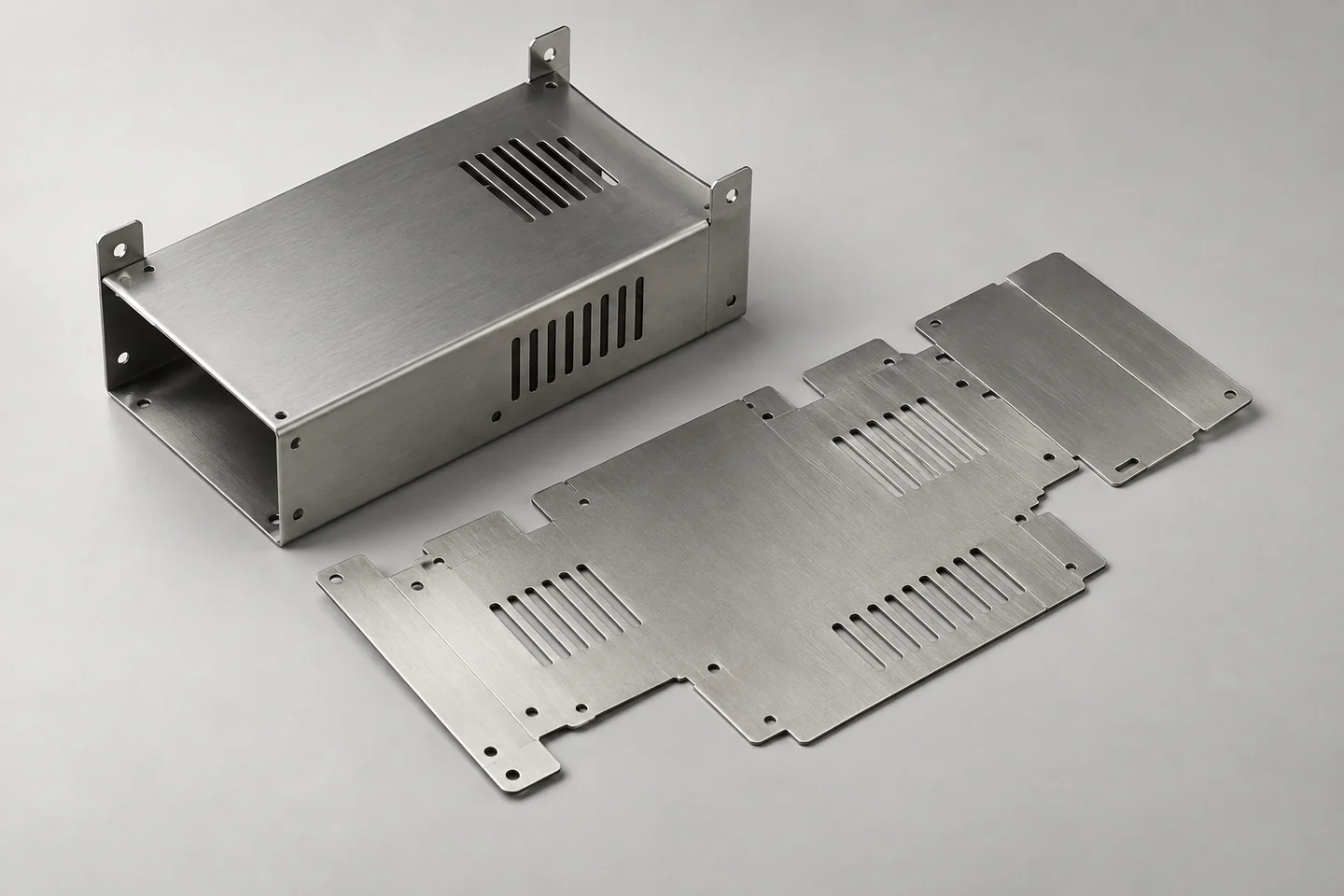
Generated sheet geometry concept, not an accepted customer part, measured process result or actual production lot.
01 / ROUTE DECISION
Tool-created features and cut profiles can have different preparation and surface questions. Choose through geometry and final acceptance.
Define pattern, sizes and important distances. Review tool suitability and the accepted stock rather than assuming any array is possible.
Identify tabs, embossing or other proposed features and their use. Availability depends on actual tooling and geometry; no universal feature list is offered.
Compare a cut profile where it answers the same requirement. Include edge work, formed details, preparation and evidence in the comparison.
02 / TOOL & GEOMETRY
Stock, thickness and actual tools influence feasibility. No blanket minimum hole, spacing or tool range is published.
State units and revisions and controlling model/drawing. Resolve duplicate or conflicting profile geometry before preparation.
Highlight narrow regions, close openings and edge distances that matter to function. Review permitted changes with the actual stock and route.
Identify obstruction, formed features and later operations. Confirm the proposed sequence and available tooling rather than inferring it from an equipment photo.
Mark locating edges, mounting holes and mating geometry. Agree which relationships are checked after forming or surface work.
03 / STOCK & FACE
The appearance and edge on one face may differ from another. State which side governs function and whether later refinement is required.
| Item | Provide | Confirm |
|---|---|---|
| Stock | Exact grade, thickness and supplied condition. | Offered supply and allowed alternatives. |
| Face | Visible, mating and protected surfaces. | Orientation and permitted tool traces. |
| Geometry | Pattern and formed-feature purpose. | Tooling route and approved changes. |
| Completion | Edge and later finish requirements. | Included operations and final checks. |
04 / COMPLETION
Burrs, tool marks and feature refinement need an agreed criterion. A clean-looking sample is not a universal edge guarantee.

Supplied press-equipment reference. It does not prove a punching machine, available tool set, capacity or process site for this project.
Mark functional or handled edges and required completion. Review refinement effects on the small geometry.
Map important faces and permitted traces. Confirm protection and any cosmetic work included in the proposal.
Identify forming, hardware, joining or coating after punching. Final acceptance should follow relevant changing operations.
Record stock, tool or pattern changes and their effect on prior fit or appearance approval.
05 / EVIDENCE
Geometry, edge, appearance and material evidence answer different questions. Agree coverage and methods.
| Area | Agree | Record |
|---|---|---|
| Pattern | Critical sizes, distances and datum basis. | Controlled revision and method. |
| Formed feature | Final geometry and interface purpose. | State and sample selection. |
| Edges/surface | Completion and permitted marks. | Accepted reference and operation scope. |
| Identity | Stock, variant and lot linkage. | Required records and quantity scope. |
06 / QUOTE PREPARATION
Offers can differ in tool work, profile changes or later operations. Compare the same stock and final part.
Profile/model, drawing, grade/thickness, feature purpose, important faces, edge requirement, sample and production quantities and destination.
Which tools and preparation are proposed? What deburring, forming, finishing, inspection and records are included?
Approve geometry changes, sample scope and responsible operations. Tool availability, capacities, minimum quantities and timing remain proposal-specific.
07 / QUESTIONS
Define the feature, tool relationship and final edge.
No universal tool range is claimed. Exact geometry, stock and responsible tooling need review.
They are different routes. Compare preparation, feature purpose, edges, secondary work and acceptance for the actual part.
No. Show the intended geometry and use for tooling and sequence review.
No blanket result is promised. State required completion and the functional edge criterion.
No. It is a supplied reference; actual equipment suitability, site and operations require confirmation.
PREPARE THE NEXT DECISION
Include CAD/drawing, exact stock, openings and formed details, critical distances, visible or protected faces, edge completion, quantities and destination.
sales@keepwinco.comAn enquiry starts a team review. Material, fit, quantity, schedule, operation responsibility and supporting records are confirmed in the proposal; this form does not create an order or an instant price.
Start with what you know. Review your details before sending; no account needed.
Start parts inquiry →Your project is saved securely only when submission succeeds.
General material context only; external references do not certify a finished KeepWin product.
TRUMPF - punching and sheet operation context ↗