
Full-size design review
Identify packaging space, ergonomics and access questions. Distinguish areas that only represent shape from interfaces needing a specific check.
PARTNER-SUPPORTED MANUFACTURING / LARGE PARTS
A full-size model is a build, assembly and delivery problem. Compare a one-piece route with controlled segments, then define the joints, critical local features, appearance and handling needed for the delivered result.
KeepWin coordinates partner-supported review. Exact material, responsible operations, process availability, dimensions, inspection, commercial quantities and timing are confirmed in the project proposal; no universal capability or certification is promised.
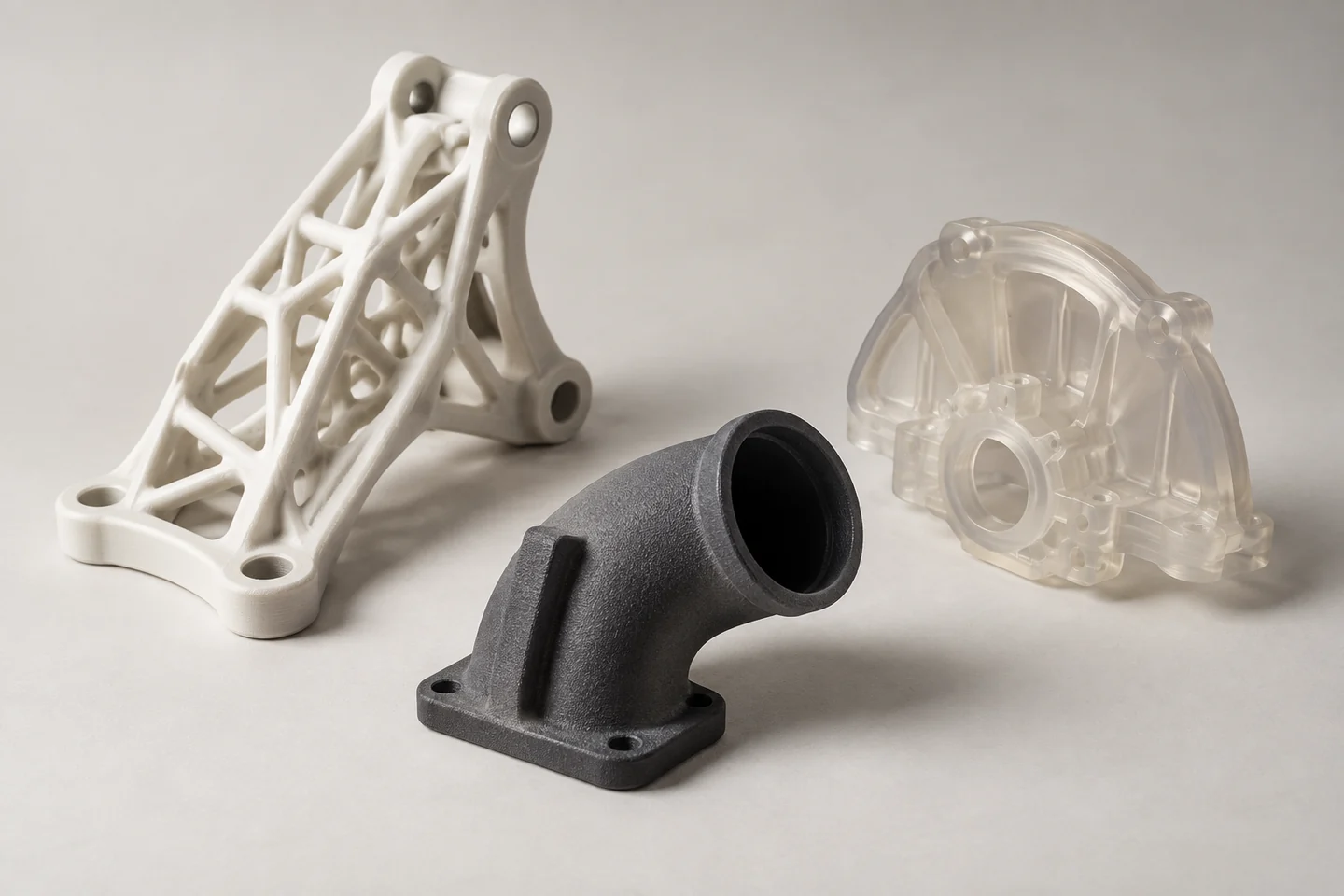
Existing generated additive geometry concepts. Their image does not establish actual scale, build envelope or an available large-format machine.
01 / USE & ENVELOPE
Overall size alone does not define material, accuracy or finish. Explain whether the deliverable is a visual mockup, a handling model, a fixture or a component expected to carry a defined load.
Identify packaging space, ergonomics and access questions. Distinguish areas that only represent shape from interfaces needing a specific check.
Map visible faces, seams and texture priorities. Agree the physical appearance reference rather than assuming a large print arrives presentation-ready.
Describe load, clamping, contact and exposure. Material and finished-state evidence need review for this duty, not just for the displayed geometry.
02 / ONE PIECE OR SEGMENTS
A smaller build is not necessarily a simpler delivery. Segment joints introduce assembly, alignment and surface-transition questions that need explicit approval.
| Route | Review | Acceptance |
|---|---|---|
| One piece | Feasible envelope, holding, support and handling. | Overall geometry plus important local interfaces. |
| Segmented geometry | Approved cut locations, joint type and assembly access. | Joint alignment, seam appearance and assembled state. |
| Hybrid assembly | Printed sections with other components where proposed. | Responsibility, interface definition and final checks. |
03 / SCALE & LOCAL FEATURES
A large envelope can contain small holes, edges and mating details. Review the local requirement instead of applying one general accuracy statement to the whole model.
Provide reference geometry for assembly or measurement. Identify the local features controlling fit and how the assembled model is located.
Highlight spans, thin shells, flat faces and delicate details. Discuss proposed support, reinforcement or segmentation without accepting undisclosed shape changes.
Review orientation against important faces, support access and the proposed material. A small-scale sample does not automatically validate the enlarged build.
State whether geometry is full scale and which model or drawing governs. Check units, revisions and approved segment naming before manufacture.
04 / MATERIAL & FINISHING
State the intended environment and appearance. The exact material, build condition and finishing plan should describe the offered deliverable.
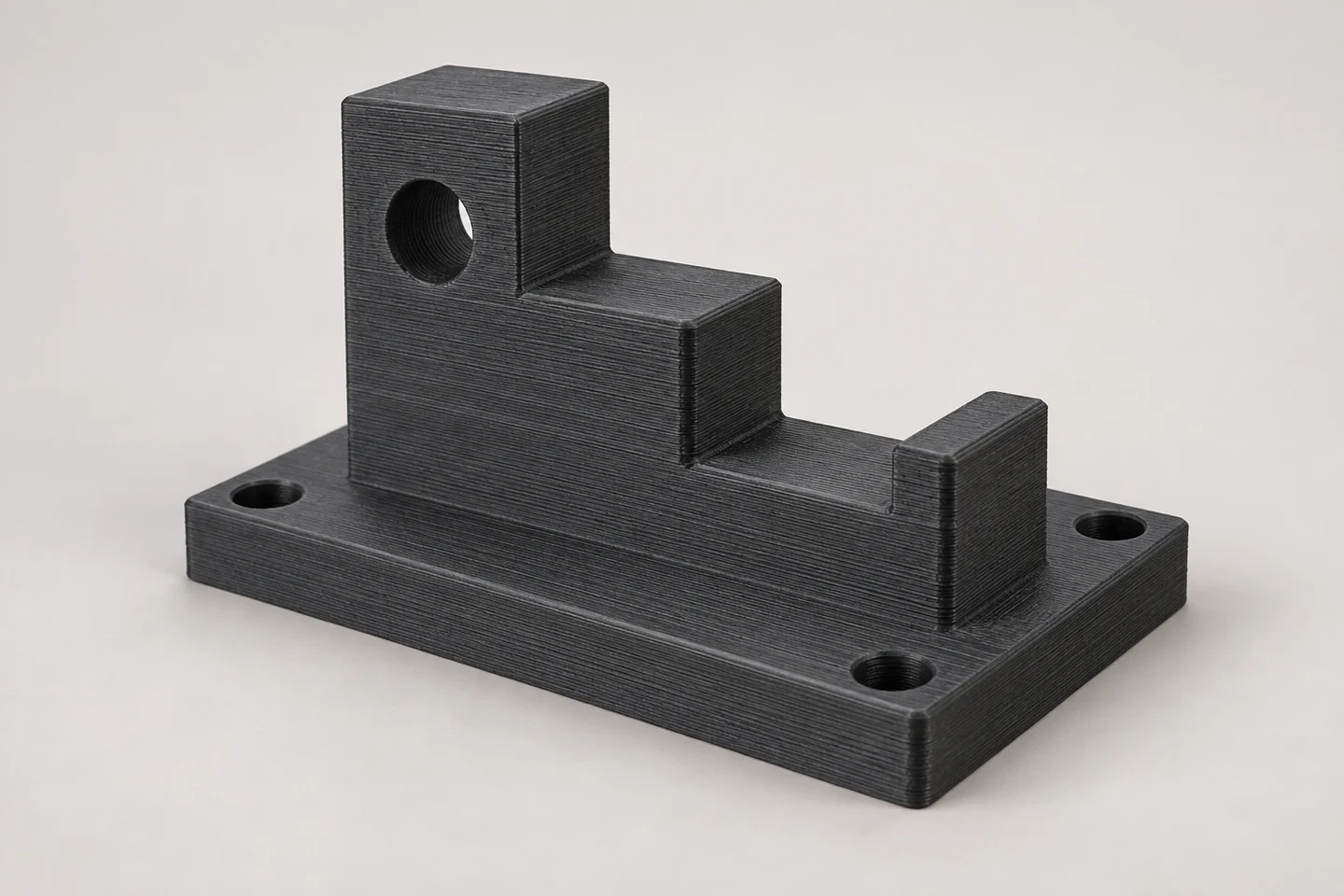
Generated filament-printing concept used to explain a possible route; it does not establish the actual printing technology or size offered.
| Need | Provide | Confirm |
|---|---|---|
| Material | Exact grade or functional requirement and allowed alternatives. | Offered supply and applicable finished-state evidence. |
| Visible areas | Seam map, texture, color and viewing conditions. | Physical reference and included surface work. |
| Assembly | Joint type, access and repeated-use intent. | Assembly responsibility and final-state checks. |
| Exposure | Handling, storage and use conditions. | Material suitability for the stated application. |
05 / HANDLING & SHIPMENT
Large geometry can create packing, movement and installation constraints. Make the delivery state and assembly owner visible before comparing prices.
State whether the proposal covers loose segments, assembled model or installation-related review. Confirm what work remains after delivery.
Discuss agreed lifting or handling points and protected surfaces where relevant. Do not assume a printed feature is a rated lifting point.
Provide destination and practical access constraints. Confirm protective packing and transport scope without publishing universal transit or damage guarantees.
Ask for segment identity, revision, interface notes and agreed checks. Keep the final assembled requirement connected to the delivered parts.
06 / QUOTATION & SAMPLE
A local joint sample can resolve one question while leaving overall shape and handling unresolved. Record the scope of each approval.
Overall dimensions, use and important features.
One-piece and segmented proposals.
Joint, material and surface questions.
Files, assembly, evidence and commercial scope.
Identity, protection and agreed assembled checks.
Ask the offer to identify segment preparation, joining, finishing, assembly, inspection and packing alongside print quantity.
Define the sample questions, approval owner and records needed. Available size, minimum quantity and timing are confirmed for the responsible route.
07 / QUESTIONS
Treat size, assembly and delivery as parts of the same specification.
Provide the actual dimensions and proposed use. Envelope, orientation, segmentation and the responsible route require project-specific confirmation.
Not automatically. Compare local interfaces, support access, handling, seams and delivery scope before choosing the route.
It can answer agreed local or visual questions, but may not represent the enlarged build, joints, overall geometry or handling requirement.
Only the agreed design and assembly scope should be assumed. Define joint intent, responsibility and acceptance in the proposal.
Specify the delivered state, appearance reference, assembly and destination constraints. The actual scope and schedule must be confirmed.
PREPARE THE NEXT DECISION
Include units, full dimensions, split permissions, joint intent, load or model purpose, visible faces, finishing, assembly and packaging requirements, quantity and destination.
sales@keepwinco.comAn enquiry starts a team review. Material, fit, quantity, schedule, operation responsibility and supporting records are confirmed in the proposal; this form does not create an order or an instant price.
Start with what you know. Review your details before sending; no account needed.
Start parts inquiry →Your project is saved securely only when submission succeeds.
General material context only; external references do not certify a finished KeepWin product.
BigRep - segmentation and assembly planning ↗BigRep - orientation and large-build context ↗