
Shafts and stepped diameters
Identify mating diameters, shoulder locations and how each relates to the functional axis. Avoid treating every dimension as equally critical.
PARTNER-SUPPORTED MANUFACTURING / TURNING
Bring shafts, sleeves, rings and concentric interfaces into a clear design review. KeepWin coordinates partner-supported machining around your geometry, drawing, material and acceptance requirements.
The responsible site, offered process, equipment suitability, tolerance, size and schedule are confirmed in the proposal. No universal machine inventory or machining limit is stated.
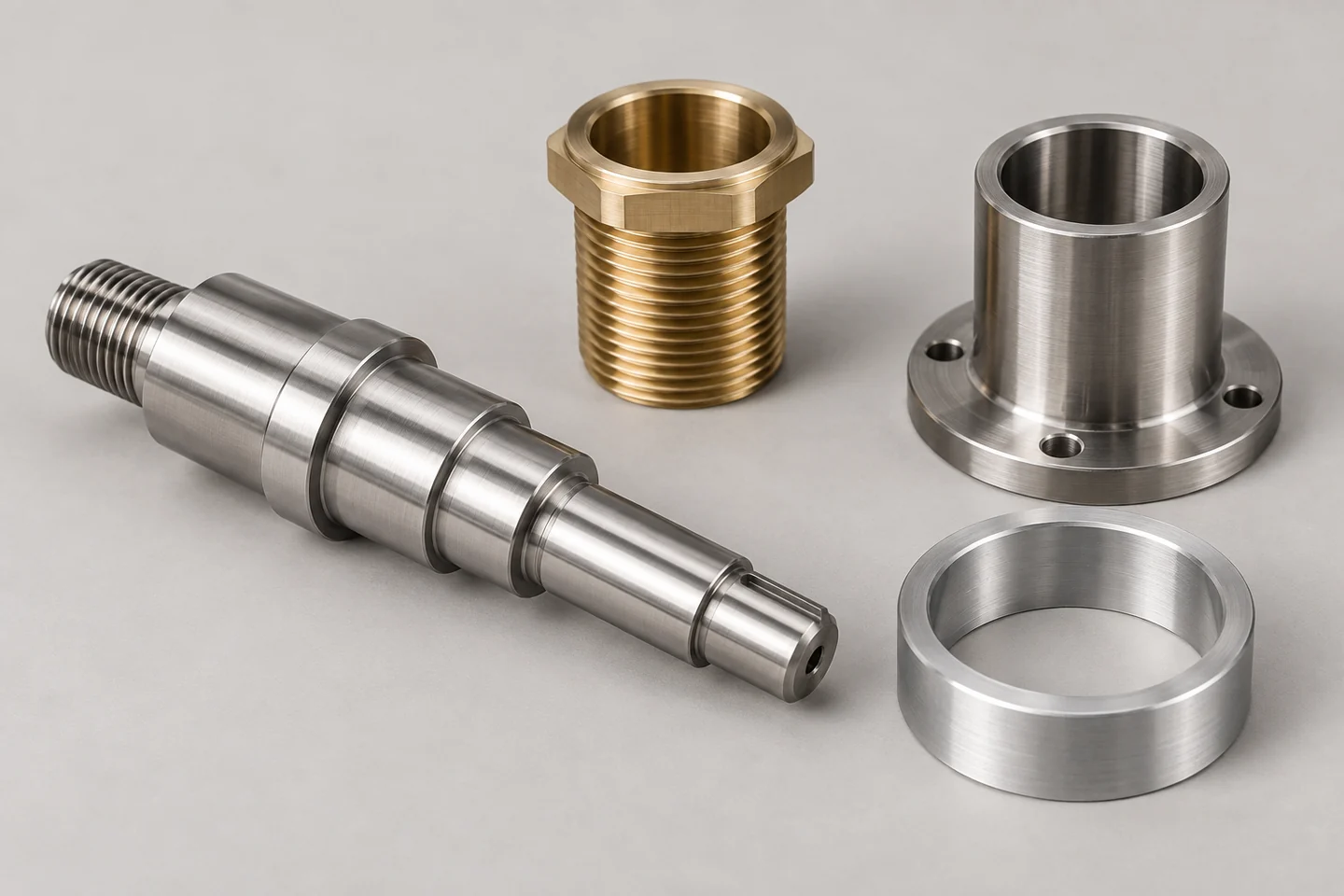
Generated turning geometry reference, not a documented customer part or photograph of KeepWin manufacturing.
01 / GEOMETRY CHOICE
Turning removes material from a rotating workpiece. It is often considered for concentric diameters, axial shoulders, grooves and bores; flats or off-axis features can require another operation or combined route.
Identify mating diameters, shoulder locations and how each relates to the functional axis. Avoid treating every dimension as equally critical.
Review internal access, bore depth, wall stiffness and relationships between internal and external surfaces. The required fit and measurement method matter to the route.
Define groove function, shoulder clearance and edge treatment. Show any retaining, sealing or assembly interface on the drawing.
| Feature intent | Turning discussion | Milling discussion |
|---|---|---|
| Rotational diameters | Workpiece rotation and axial relationships are central. | Review whether milling is needed for secondary non-rotational features. |
| Pockets, flats or angled holes | May need additional operations or combined equipment. | Tool access and feature orientation can guide a milling route. |
| Combined part | Identify sequence, re-clamping and datum transfer. | Agree which final relationships are verified after all operations. |
02 / DESIGN REVIEW
A model communicates shape, while the drawing defines fits, datums, thread details and acceptance intent. Resolve any conflict between the files before approving a route.
Mark functional fits and axial locations with a consistent datum scheme. State whether dimensions apply before or after heat treatment or finishing.
Long unsupported sections can deflect or vibrate. Review how the workpiece can be held and supported without assuming a universal length-to-diameter limit.
Identify bore function, depth, surface requirements and the features a tool must reach. Deep internal features can create access and stability constraints.
Allow space for tool access and assembly where required. Define critical reliefs and acceptable edge treatment; a visually sharp corner is not a complete requirement.
03 / MATERIAL CHOICES
The material family alone does not define machinability, final properties or suitable finishing. Confirm exact grade, stock condition and any required evidence in the proposal.
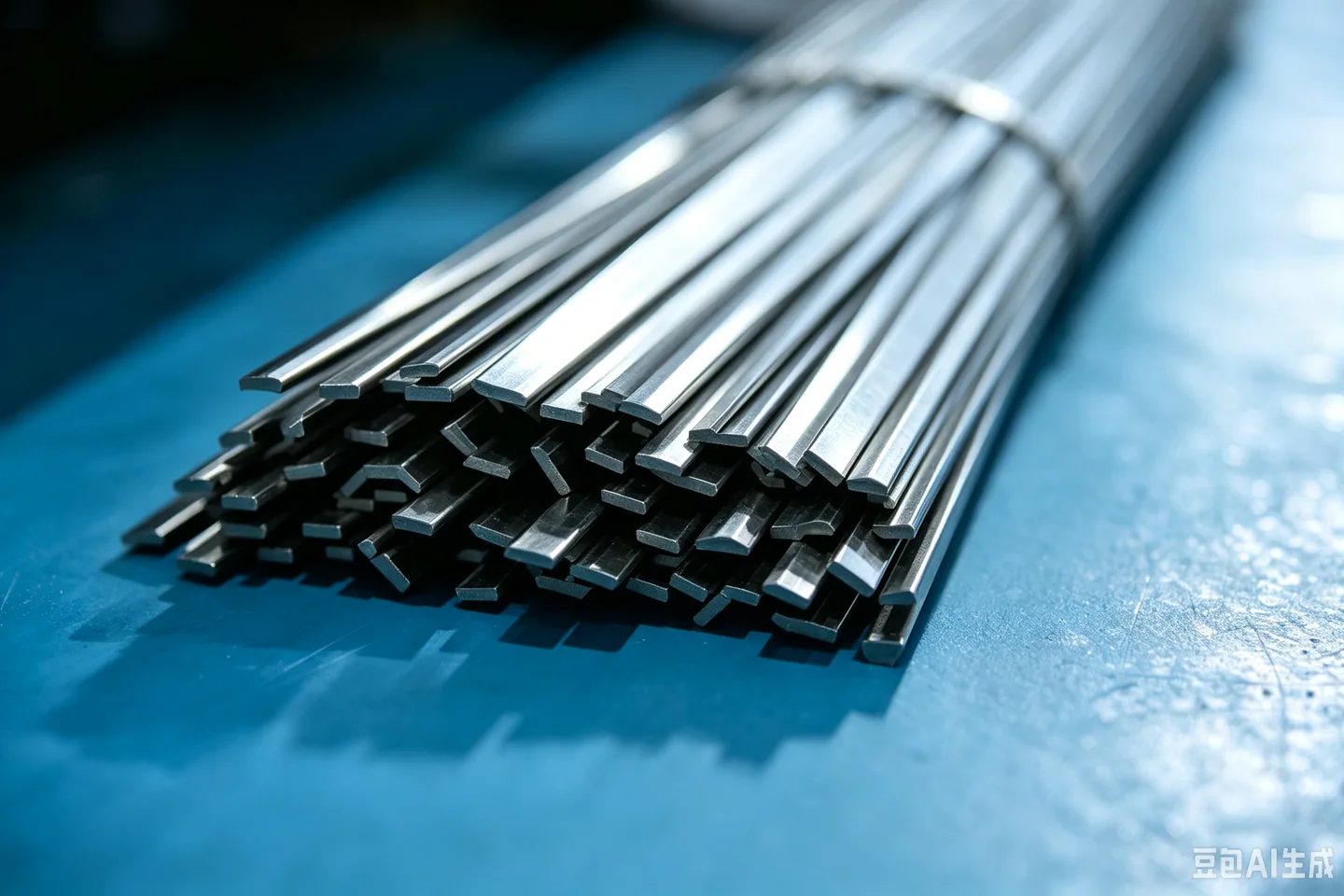
Supplied stock-material reference. It does not identify the offered grade, stock availability or responsible production site.
| Family | Questions to resolve | Include in the requirement |
|---|---|---|
| Aluminum | Which alloy and condition fit the load and finish intent? | Grade, condition, functional interfaces and appearance scope. |
| Stainless or alloy steel | What corrosion, hardness or treatment requirements apply? | Grade, supplied condition and final-state requirements. |
| Brass or copper | Which alloy and conductivity or fitting function is intended? | Alloy, contact conditions, threads and finish. |
| Engineering polymer | How do stiffness, heat, moisture or creep affect function? | Exact polymer, use environment and inspection condition. |
04 / WORKHOLDING & FINISH
The part needs a stable reference while material is removed. Secondary operations and surface treatment should preserve the relationships that matter to the assembly.
Identify where the part can be gripped and which finished or cosmetic faces must be protected. Discuss any setup transition affecting critical features.
Mark flats, cross-holes or other non-rotational features. Confirm the route, sequence and responsibility rather than inferring a particular live-tool machine.
Define usable engagement, treatment and any masking. Added layers or material removal can affect mating fits and edge appearance.
Agree inspection after the operations that control acceptance. A pre-finish dimension may not represent the delivered functional surface.
05 / REVIEW & DELIVERY
Dimensional reports, material records and sample scope are project-specific. Define the evidence needed before quotation approval rather than assuming it is automatically included.
CAD, drawing revision, grade, quantities and open geometry questions.
Responsible operations, workholding, finishing and sample scope.
Functional diameters, axial relationships, surface and assembly requirements.
Approved revision, acceptance, records, packaging and schedule assumptions.
Agreed final-state features, identification and delivery evidence.
Specify critical dimensions, datum reference, measurement method and required report. Agree sampling or first-article scope if needed.
Send sample and production quantities separately, destination, target timing and documentation needs. Ask the proposal to identify setup, finishing, inspection and transport items.
06 / QUESTIONS
A controlled geometry and functional drawing are more useful than a generic request for “high precision”.
These may require secondary or combined operations. Identify the features and critical relationships so the offered route and responsibility can be reviewed.
No universal value is published here. Material, geometry, workholding, finish, equipment suitability and inspection scope must be reviewed against your drawing.
This service is partner-supported. Generated examples and supplied process references do not establish machine ownership; responsible sites and operations are confirmed per project.
Mark the functional datums, diameters and surface requirements and identify protected holding areas. Support and stability need route-specific review.
Only the evidence agreed in the proposal should be assumed. Specify record type, traceability and sample or production inspection scope.
PREPARE THE NEXT DECISION
Send the model and drawing, intended fits, material and finish, sample and production quantities, and any unresolved workholding or inspection questions.
sales@keepwinco.comAn enquiry starts a team review. Material, fit, quantity, schedule, operation responsibility and supporting records are confirmed in the proposal; this form does not create an order or an instant price.
Start with what you know. Review your details before sending; no account needed.
Start parts inquiry →Your project is saved securely only when submission succeeds.
General material context only; external references do not certify a finished KeepWin product.
Sandvik Coromant · turning stability and geometry ↗Protolabs · rotational geometry selection context ↗