Published September 2, 2026
Refrigerant pressure often rises on the low side after an air conditioner shuts off because the compressor is no longer maintaining a pressure difference between the evaporator and condenser. Refrigerant continues moving through the system, causing the low-side pressure to rise and the high-side pressure to fall until the two sides approach equilibrium.
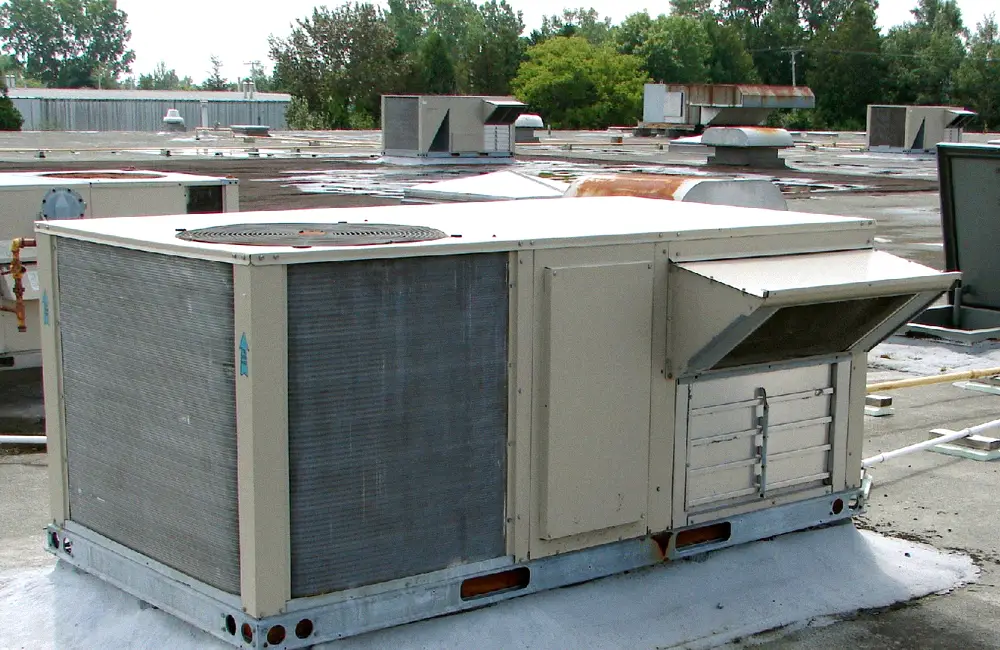
If the refrigerant and surrounding equipment continue getting warmer after shutdown, both gauge readings may eventually rise. This second effect is called heat soak and is especially noticeable in hot mechanical rooms, rooftop units exposed to sunlight, and automotive AC systems after the engine and cooling fans stop.
These pressure changes are frequently normal. The important questions are which side is rising, how quickly it changes, whether the high side is falling, what temperature the refrigerant is approaching, and how the system performed while the compressor was running.
The Short Answer
An operating compressor creates two pressure zones:
- A lower-pressure evaporator and suction side
- A higher-pressure condenser and liquid or discharge side
When the compressor stops, it stops actively separating those zones. Refrigerant vapor and liquid continue moving through available flow paths until the pressure difference becomes smaller.
Three processes can then affect the gauges:
- Pressure equalization: Low-side pressure rises while high-side pressure falls.
- Temperature equalization: Warm and cool sections move toward the surrounding temperature.
- Heat soak: Stored heat from the compressor, condenser, engine compartment, roof, or mechanical room warms the refrigerant and can raise the final static pressure.
A rising low-side gauge immediately after shutdown is therefore not automatically evidence of overcharging, a restriction, or compressor failure.
What the Compressor Does While the AC Is Running
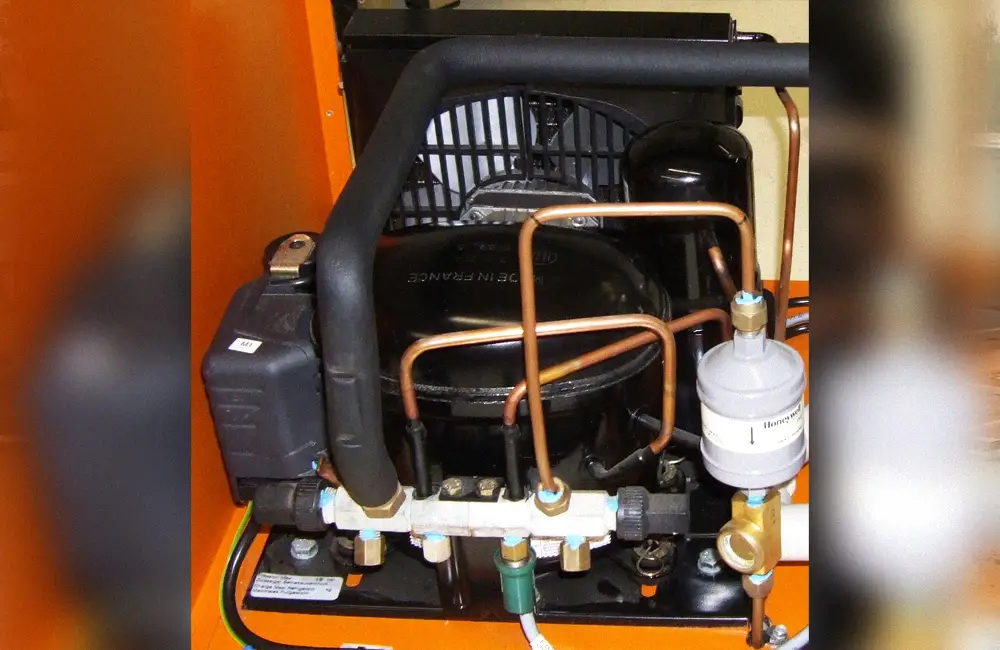
The compressor is what creates the pressure difference needed for refrigeration. It draws lower-pressure refrigerant vapor from the evaporator and compresses it into higher-pressure, higher-temperature vapor.
As Trane’s explanation of HVAC compressors describes, this pressure difference allows refrigerant to absorb heat in the evaporator and reject it through the condenser.
During normal cooling operation:
- The suction side remains at a lower pressure.
- The discharge and condenser side remain at a higher pressure.
- The expansion device separates the two pressure zones.
- The compressor continuously removes vapor from the evaporator.
- Refrigerant circulates through the closed system.
The gauge readings seen during operation are dynamic values. They depend on indoor load, outdoor temperature, airflow, compressor capacity, expansion-device behavior, refrigerant charge, and other operating conditions.
What Happens Immediately After Shutdown
When the thermostat is satisfied or a control stops the compressor, the compressor no longer pulls vapor from the evaporator or sends compressed vapor into the condenser.
Refrigerant can continue passing through the metering device. Depending on system design, some high-pressure vapor may also move backward through or around the compressor. The Copeland scroll-compressor application guidelines explain that high-pressure gas can equalize toward the low side during shutdown and that discharge check valves can slow rapid reverse flow.
| System Condition | Low-Side Pressure | High-Side Pressure | What Is Happening |
|---|---|---|---|
| Compressor running | Held lower | Held higher | The compressor maintains the pressure difference. |
| Immediately after shutdown | Usually rises | Usually falls | Refrigerant begins redistributing between the two sides. |
| After pressure equalization | Approaches static pressure | Approaches static pressure | The system is no longer divided into ordinary operating pressures. |
| During heat soak | May rise further | May also rise | Warmer refrigerant produces a higher static pressure. |
Technical basis: Trane’s compressor overview, Copeland’s shutdown guidance, and Danfoss refrigeration fundamentals.
Why the Low-Side Pressure Rises
The evaporator and suction line contain lower-pressure refrigerant while the compressor is operating. After shutdown, refrigerant from warmer, higher-pressure sections continues moving toward lower-pressure sections.
The low-side gauge therefore rises as:
- Refrigerant passes through the expansion device.
- Higher-pressure vapor expands into lower-pressure areas.
- Liquid remaining in the evaporator continues to boil.
- Temperatures throughout the circuit begin moving toward equilibrium.
- Compressor leakage paths or internal design features allow gradual pressure transfer.
At the same time, the high-side gauge should generally fall. Looking at only the suction gauge can make a normal equalization process appear to be an unexplained pressure increase.
Why Both Gauges Can Rise Later
Pressure equalization does not always end the movement seen on the gauges. The entire refrigerant circuit may warm after the fans and compressor stop.
According to Danfoss refrigeration fundamentals, when liquid and vapor refrigerant coexist in thermal equilibrium, pressure and temperature are directly related. Increasing the temperature of that two-phase refrigerant increases its saturation pressure.
Possible sources of post-shutdown heat include:
- Heat stored in the compressor shell and discharge line
- A condenser that remains hotter than the outdoor air
- Solar heating of rooftop equipment
- Warm air entering an attic or mechanical space
- Engine-compartment heat in a vehicle
- Warm gauge hoses or a manifold exposed to sunlight
This means the system may first equalize and then settle at a higher static pressure as its average refrigerant temperature rises. Later, when the equipment cools overnight or surrounding conditions change, the static pressure may fall again.
How Long Should Pressure Equalization Take?
There is no universal equalization time. The rate depends on the equipment and the paths available for refrigerant movement.
Important variables include:
- Capillary tube, fixed-orifice, TXV, or electronic expansion-valve design
- Compressor type and internal leakage rate
- Discharge or suction check valves
- Liquid-line solenoid valves
- Pump-down controls
- Refrigerant charge distribution
- Temperature differences between the evaporator and condenser
- Equipment size and piping volume
Some systems approach equal pressure relatively quickly. Others retain a pressure difference for much longer. Danfoss notes in its hermetic-compressor application material that pressure equalization in certain capillary-tube systems may take more than 10 minutes.
A technician should therefore compare the observed behavior with the equipment’s sequence of operation. A system designed with a liquid-line solenoid and pump-down control may intentionally retain a different pressure pattern from a basic residential split system.
Equalization time by itself is not a reliable pass-or-fail test.
Does High Static Pressure Mean the AC Is Overcharged?
Not necessarily. Static pressure is primarily a temperature-related measurement when liquid and vapor refrigerant are present together.
Two systems containing different amounts of the same refrigerant can show similar static pressure when they are at the same temperature. One may have the correct charge and the other may be substantially undercharged, yet both can still contain enough liquid and vapor to establish approximately the same saturation pressure.
Static pressure can help with preliminary questions such as:
- Is there any measurable pressure in the system?
- Is the pressure plausible for the labeled refrigerant and measured temperature?
- Have the two sides had enough time to approach equilibrium?
- Could the gauge be significantly out of calibration?
- Might the system contain air, another refrigerant, or a contaminated mixture?
It cannot establish the correct charge by itself. Charge evaluation normally requires the manufacturer’s procedure, operating pressures, line temperatures, superheat or subcooling, airflow, load conditions, and sometimes weighing the recovered or installed refrigerant.
The EPA also cautions that pressure checks and charging-chart readings are not methods that locate a refrigerant leak. Its Section 608 technician guidance says these measurements must be combined with methods capable of finding the actual leak location when a leak inspection is required.
Normal Equalization or Possible Fault?
| Observation | Likely Interpretation | Recommended Next Check |
|---|---|---|
| Low side rises while high side falls gradually | Usually normal shutdown equalization | Observe whether readings stabilize and compare with the equipment sequence. |
| Both sides rise after becoming similar | Often heat soak or rising ambient temperature | Measure line or component temperature and compare it with the correct pressure-temperature data. |
| Suction pressure rises abnormally fast and the compressor also pumps poorly | Possible internal compressor-valve leakage | Evaluate operating pressure differential, pump-down behavior, and compressor condition. |
| High and low sides remain different | May be normal with check valves or pump-down controls | Review the service manual before diagnosing a restriction. |
| Pressure is inconsistent with the known refrigerant temperature | Possible gauge error, wrong refrigerant, contamination, or noncondensables | Verify gauge calibration, refrigerant identity, and measurement conditions. |
Troubleshooting source: The Danfoss refrigerant-system troubleshooter identifies damaged compressor valve reeds as one possible cause of an abnormal suction-pressure rise after shutdown. That observation should be confirmed with operating tests rather than used as a diagnosis by itself.
What About Automotive AC?
The same basic physics applies to a vehicle. When the automotive compressor disengages, the low-side pressure rises and the high-side pressure falls toward equilibrium.
Automotive readings can be especially affected by heat soak. After the engine stops:
- Radiator and condenser airflow may stop.
- Engine-compartment temperature may temporarily increase.
- The compressor and discharge line remain hot.
- Gauge hoses and service equipment may be exposed to direct sunlight.
A higher static reading several minutes after engine shutdown can therefore reflect a warmer refrigerant circuit, not an additional refrigerant charge.
Professional motor-vehicle AC work is regulated differently from stationary HVAC service. The EPA’s MVAC service requirements require Section 609 certification for compensated MVAC service and approved refrigerant-handling equipment.
A Better Diagnostic Process
Instead of judging the system from one pressure reading after shutdown, a technician should collect the conditions surrounding the measurement.
A useful process includes:
- Identify the refrigerant. Confirm the equipment label and do not assume refrigerant type from pressure alone.
- Check the instruments. Zero the gauges when appropriate and verify temperature sensors are making good contact.
- Record operating conditions. Note indoor and outdoor temperatures, humidity or wet-bulb temperature, airflow, and system mode.
- Allow operation to stabilize. Compare readings with the manufacturer’s charging and service procedures.
- Measure both pressure and temperature. Calculate the applicable superheat or subcooling rather than relying on pressure alone.
- Watch both sides after shutdown. Record whether the low side rises, the high side falls, and when each reading stabilizes.
- Account for control design. Check for solenoid valves, check valves, pump-down controls, restart delays, or electronic expansion valves.
- Investigate the actual symptom. Poor cooling, abnormal amperage, unusual noise, repeated short cycling, and loss of pressure differential are more useful when evaluated together.
Never release refrigerant simply to reduce a gauge reading. The EPA’s refrigerant-management requirements prohibit intentional venting of regulated refrigerants and their substitutes during stationary AC and refrigeration service.
Frequently Asked Questions
Should the low and high sides become exactly equal?
They may approach the same pressure in many systems, but an exact match is not guaranteed. Gauge accuracy, temperature differences, check valves, solenoid valves, piping layout, and system controls can preserve a small or substantial difference.
Why does the suction pressure rise so quickly?
The suction side was held at a lower pressure by the running compressor. Once the compressor stops, refrigerant moves toward the low side through available flow paths. An unusually rapid rise accompanied by weak compression during operation may require further compressor testing.
Why did the pressure rise even though no refrigerant was added?
A sealed refrigerant system does not need additional refrigerant for pressure to rise. Redistribution and increasing refrigerant temperature can both raise the observed low-side pressure.
Can static pressure confirm that the refrigerant charge is correct?
No. Static pressure is mainly useful as a temperature-related and refrigerant-identification clue. Correct charging requires the equipment manufacturer’s procedure and additional operating measurements.
Is a hissing sound after shutdown normal?
A brief hissing or flowing sound can be refrigerant moving through the expansion device while pressures equalize. A new, unusually loud, prolonged, or externally audible leak-like sound should be inspected rather than assumed normal.
Should an AC be restarted before the pressures equalize?
Follow the equipment controls and service manual. Many systems include a restart delay, while some compressor designs can restart against a remaining pressure difference. Do not bypass protective delays to force an immediate restart.
Final Takeaway
Refrigerant pressure rises after AC shutdown mainly because the compressor stops maintaining the low-pressure side. The low side rises, the high side falls, and the circuit moves toward static equilibrium. If the equipment continues warming, heat soak can raise the final pressure on both sides.
The reading becomes meaningful only when it is considered with refrigerant temperature, system design, operating performance, and the manufacturer’s procedures. Refrigerant Centers recommends treating shutdown pressure as one diagnostic clue—not as proof of correct charge, overcharge, leakage, or compressor failure.