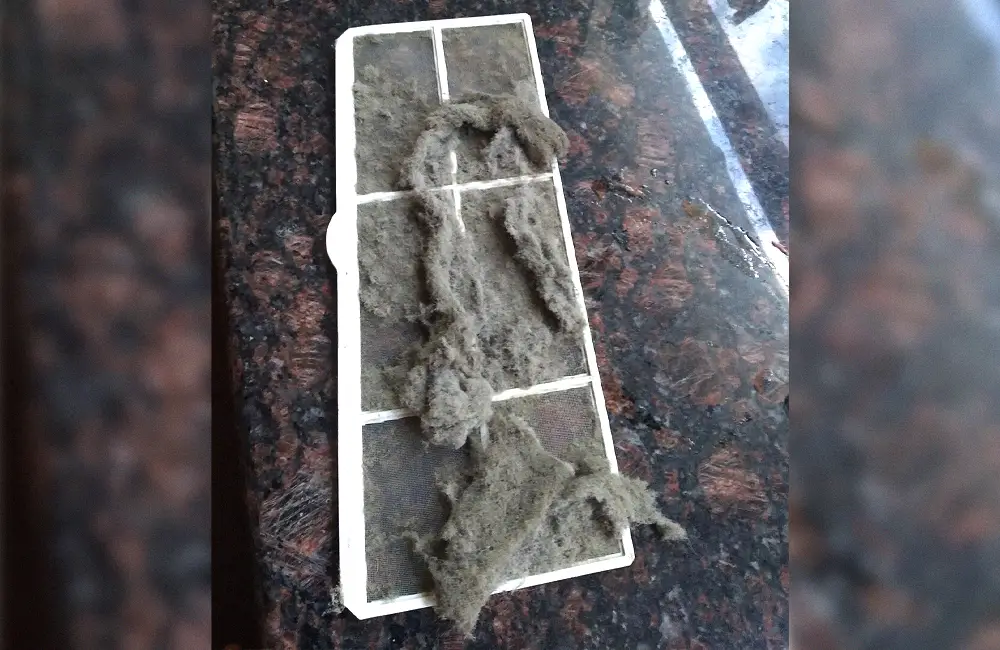
Low airflow and low refrigerant can both cause weak cooling, long operating cycles, low suction pressure, condensation problems, and an iced evaporator coil. That overlap is why neither frost nor a low gauge reading can identify the real problem by itself.
The most reliable approach is to verify airflow first, allow the system to stabilize, and then evaluate refrigerant pressures together with line temperatures, superheat, subcooling, indoor conditions, and manufacturer charging data.
A manufacturer troubleshooting chart from Carrier illustrates the problem clearly: dirty filters, restricted ducts, a frosted indoor coil, low refrigerant, and liquid-line restrictions can all appear under the same low-suction-pressure complaint. (Carrier air-conditioner troubleshooting chart)
Why the Two Problems Look So Similar
The evaporator needs two things to operate correctly:
- Enough refrigerant moving through the coil
- Enough warm air moving across the coil
If airflow is too low, the refrigerant absorbs less heat. Evaporating temperature and suction pressure can fall, the coil becomes colder, and moisture on the coil may freeze.
If the refrigerant charge is too low, the evaporator may not receive enough liquid refrigerant. Part of the coil becomes starved, cooling capacity falls, suction pressure may drop, and frost can appear near the refrigerant inlet or other cold areas.
Both conditions can therefore produce:
- Low suction pressure
- Ice on the evaporator or suction line
- Reduced cooling capacity
- Long compressor runtimes
- Weak comfort performance
- Water near the indoor unit after ice melts
- A compressor that eventually cycles on a safety control
The difference becomes clearer when airflow measurements are combined with superheat and subcooling—not when pressure is considered alone.
Low Airflow vs. Low Refrigerant: Diagnostic Patterns
| Diagnostic observation | More consistent with low airflow | More consistent with low refrigerant |
|---|---|---|
| Filter and return system | Dirty filter, blocked return, closed dampers, collapsed duct, or excessive static pressure | Filter and return path are clean and correctly sized |
| Blower operation | Low speed, dirty wheel, incorrect rotation, slipping belt, or intermittent motor operation | Measured airflow remains within the equipment target |
| Suction pressure | Often low because the evaporator receives less heat | Often low because the evaporator is starved of refrigerant |
| Superheat | May be low on fixed-orifice equipment; may remain closer to target when a TXV is controlling | Frequently high once inadequate liquid reaches the evaporator |
| Subcooling | May remain normal or change for reasons unrelated to charge | Frequently below the manufacturer’s target on an undercharged system |
| Coil icing pattern | May spread across a large portion of the coil as airflow deteriorates | May begin near the distributor or refrigerant inlet, but the pattern is not conclusive |
| Result after correcting airflow | Pressures, temperature split, and coil temperature move toward normal | High superheat, low subcooling, or inadequate capacity remains |
| Leak evidence | No direct connection unless both faults are present | Electronic, ultrasonic, bubble, dye, isolation, or standing-pressure testing may locate a leak |
Technical source note: The U.S. Department of Energy diagnostic guide explains that airflow must be measured to eliminate uncertainty and that both superheat and subcooling are needed for a dependable charge diagnosis.
Evidence That Points Toward Low Airflow
Low airflow is more likely when there is a visible or measurable restriction in the air side of the system.
Dirty or Incorrect Air Filter
A heavily loaded filter can create a large pressure drop. An overly restrictive replacement filter can also reduce airflow if the return system and filter area were not designed for it.
Inspecting the filter is a useful first step, but appearance is not the final test. A filter that looks clean may still be restrictive, and a slightly dirty filter may not be responsible for the complaint. Pressure drop across the filter provides better evidence.
High External Static Pressure
Total external static pressure indicates how much resistance the blower is working against. Excessive static pressure can result from:
- An undersized return duct
- A blocked return grille
- Closed or poorly adjusted dampers
- A restrictive filter
- A dirty evaporator coil
- An undersized supply duct
- Crushed or disconnected flexible duct
- A clogged zoning bypass or improperly operating zone damper
Static pressure must be compared with the air handler or furnace manufacturer’s fan-performance data. A universal pressure target should not be substituted for the equipment documentation.
Blower or Fan Problems
The blower may run while still moving too little air. A dirty wheel, incorrect speed tap, improper ECM setup, weak capacitor on applicable motors, incorrect rotation, damaged wheel, slipping belt, or cycling motor protector can reduce actual airflow.
Noise is not a dependable airflow measurement. A loud return grille may indicate excessive velocity through a restriction rather than adequate total airflow.
Airflow Improves and Refrigerant Readings Recover
One of the strongest indicators is what happens after the restriction is corrected. If a clean filter, restored blower speed, open dampers, and a clean coil bring suction pressure and coil temperature back toward normal, the refrigerant charge may not have been the original problem.
Evidence That Points Toward Low Refrigerant
Low refrigerant becomes more likely after airflow has been measured and found acceptable.
High Superheat and Low Subcooling
On many systems, an undercharge produces an evaporator that is short of refrigerant and a condenser that contains less stored liquid. The resulting pattern is often:
- Low suction pressure
- High superheat
- Low subcooling
- Reduced compressor amperage
- Poor total cooling capacity
- A warmer-than-expected suction line after the remaining liquid has boiled away
This is a pattern, not a universal rule. The correct charging method depends on the metering device, outdoor temperature, indoor wet-bulb conditions, equipment design, and manufacturer instructions.
A restricted liquid line or metering device can also starve the evaporator. Unlike a simple undercharge, a restriction may leave normal or elevated subcooling upstream of the restriction. A noticeable temperature change across a filter drier or other liquid-line component may provide additional evidence.
A Confirmed Leak
A sealed comfort-cooling system does not normally consume refrigerant. If the system previously operated correctly but is now undercharged, the refrigerant escaped or was removed during service.
Oil residue may help identify a leak location, but many leaks leave no obvious stain. A technician may need an electronic detector, bubble solution, ultraviolet inspection where appropriate, component isolation, or standing-pressure testing.
The related guide Can an Air Conditioner Lose Refrigerant Without a Visible Leak? explains why small, intermittent, and inaccessible leaks may not be visible during a basic inspection.
The Symptoms Remain After Airflow Is Corrected
If airflow is verified against equipment data but high superheat, low subcooling, low capacity, and a starved evaporator remain, refrigerant shortage becomes a stronger diagnosis. The charge should still be checked using the exact manufacturer procedure rather than a generic pressure target.
Measure Airflow Before Adjusting the Charge
Guessing airflow from the temperature coming out of one register is not enough. Professional airflow verification may use:
- A flow hood
- A calibrated airflow grid
- Fan tables combined with measured static pressure
- A pitot-tube traverse
- A hot-wire or rotating-vane anemometer
- Pressure drop across a clean coil or other calibrated component
The AHRI/ACCA HVAC Quality Installation Specification recognizes several measurement methods and separately requires refrigerant charging to follow OEM data and instructions. This separation matters: airflow is a prerequisite to interpreting many refrigerant measurements correctly.
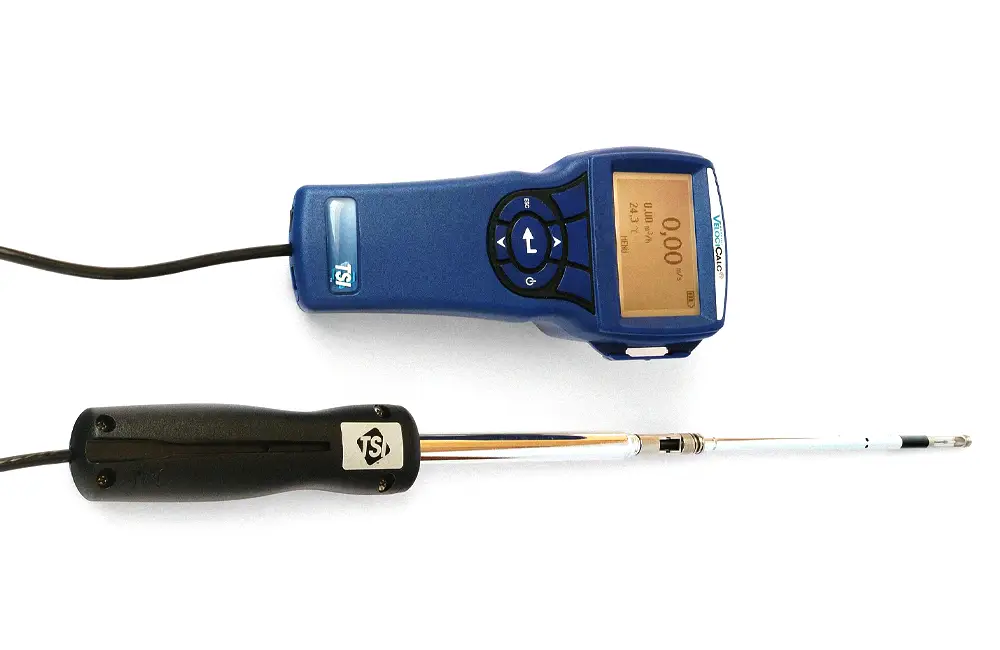
Do not assume that every open register receives the intended airflow. Duct leakage, balance problems, zoning controls, filter pressure drop, and blower configuration can change total flow and its distribution.
Stabilize the System Before Reading the Charge
Once airflow is corrected, the system needs time to stabilize. Record indoor return-air conditions, supply-air temperature, outdoor temperature, suction and liquid-line temperatures, operating pressures, fan status, and compressor current.
One Carrier installation manual specifies that its charging procedure is valid only when indoor airflow is within the stated range and instructs technicians to operate the unit for at least ten minutes before checking charge. That number is equipment-specific, but the principle is broadly useful: follow the applicable manufacturer’s airflow limits, operating conditions, stabilization time, and charging target. (Carrier installation and charging instructions)
Match the Charging Method to the Metering Device
For fixed-orifice systems, target superheat is commonly determined using indoor and outdoor conditions. For TXV- or EEV-equipped systems, subcooling is often the primary charging value because the valve attempts to regulate evaporator superheat.
Those are common arrangements, not permission to ignore the manual. Some systems require a weighed charge, an approach-temperature method, proprietary service software, a specific operating mode, or another OEM procedure.
Why Temperature Split Is Not Enough
A return-to-supply temperature difference can confirm that some cooling is occurring, but it cannot reliably distinguish low airflow from low refrigerant.
Low airflow may initially produce a larger temperature difference because less air crosses a cold coil. As frost builds, total cooling and airflow may then collapse. Low refrigerant can create a small temperature difference because part of the coil is starved, but indoor humidity, load, blower speed, and duct leakage can change the result.
The DOE diagnostic guide warns that a seemingly acceptable temperature split can occur even when other refrigerant faults are present. It should be treated as supporting information, not a standalone charge test.
A Practical Diagnostic Sequence
A technician can minimize false conclusions by using this order:
- Confirm the complaint. Record runtime, thermostat demand, indoor humidity, outdoor temperature, and whether the problem is constant or intermittent.
- Inspect the air side. Check filters, return grilles, supply registers, dampers, the blower wheel, motor operation, evaporator cleanliness, and visible duct problems.
- Measure airflow. Compare actual airflow or the fan operating point with the equipment’s published data.
- Remove existing ice. Refrigerant readings taken while the evaporator is frozen are not representative of normal operation.
- Run the system under valid conditions. Confirm that the indoor and outdoor fans are operating correctly and allow readings to stabilize.
- Measure both refrigerant and air conditions. Record suction and liquid-line temperatures, both operating pressures, superheat, subcooling, temperature split, indoor wet-bulb conditions, and outdoor dry-bulb temperature.
- Look for a complete pattern. Do not diagnose undercharge from suction pressure alone.
- Test for a restriction or leak. If evidence still points toward low refrigerant, inspect the liquid line and metering device before performing an appropriate leak test.
- Repair before charging. Correct the leak or restriction, evacuate where required, and charge using the manufacturer’s specified method.
What a Homeowner Can Check Safely
A homeowner or facility operator can inspect accessible air-side conditions without connecting refrigeration tools:
- Confirm the thermostat is set to cooling
- Inspect or replace the filter according to the equipment instructions
- Make sure return grilles are not covered
- Keep supply registers open unless a balancing plan states otherwise
- Listen for an indoor blower that starts and stops unexpectedly
- Note whether airflow weakens as the system runs
- Photograph visible frost, then turn cooling off to prevent continued icing
- Check whether the outdoor unit is obstructed by leaves or debris
Carrier’s homeowner troubleshooting guidance similarly recommends checking thermostat settings and the filter before treating the complaint as a refrigerant problem, while leaving refrigerant diagnosis to a qualified technician. (Carrier AC troubleshooting guidance)
Do not open electrical compartments, chip ice from a coil, adjust an expansion valve, or add refrigerant.
Why “Topping It Off” Can Make the Problem Worse
Adding refrigerant to a low-airflow system does not restore airflow. It can overcharge the system once the filter, blower, duct, or coil problem is corrected. The result may be excessive subcooling, elevated condensing pressure, reduced efficiency, or compressor stress.
Adding refrigerant to a system with a liquid-line restriction can create the same problem. Refrigerant accumulates upstream while the evaporator remains starved.
For stationary refrigeration and air-conditioning equipment, the EPA Section 608 certification requirements cover service activities that include attaching or disconnecting gauges and adding or removing refrigerant. The EPA prohibition on intentional refrigerant venting also applies during service, subject to the rule’s specified exceptions.
If an undercharge is confirmed, read How Long Can an AC Run With Low Refrigerant? before continuing to operate the equipment. Low charge can also imitate a metering-device fault, as explained in Can Low Refrigerant Damage an Expansion Valve?.
After diagnosis, leak repair, and nameplate verification, professionals can consult the appropriate air-conditioning and heat-pump refrigerant collection or review the complete refrigerant catalog from Refrigerant Centers. A collection link is not a substitute for confirming the exact refrigerant and service procedure.
Frequently Asked Questions
Can low airflow cause low suction pressure?
Yes. Reduced airflow lowers the heat load on the evaporator. The refrigerant can evaporate at a lower temperature and pressure, making the gauge reading resemble an undercharged system.
Does a frozen coil mean the AC is low on refrigerant?
No. Low airflow and low refrigerant can both cause icing. Dirty filters, blower problems, blocked ducts, control faults, and metering-device restrictions should also be considered.
Does low airflow cause high or low superheat?
On fixed-orifice equipment, low airflow often produces lower superheat because less heat reaches the evaporator. A TXV may reduce refrigerant flow to maintain superheat, so the observed value can remain closer to target. Equipment type and operating conditions matter.
Does low refrigerant always produce low subcooling?
It frequently does, but not in every system or operating condition. Receiver-equipped equipment, variable-capacity systems, unstable loads, restrictions, and incorrect measurements can change the pattern.
Can both problems exist at the same time?
Yes. A system can have a refrigerant leak and a dirty filter, incorrect blower setting, or duct restriction simultaneously. Correcting only one fault may improve performance without restoring it completely.
Should airflow be checked before refrigerant charge?
Yes. Incorrect airflow changes evaporator load and can make pressure and temperature readings misleading. Verify airflow, remove any ice, stabilize operation, and then follow the manufacturer’s charging procedure.
Can I determine the charge from suction pressure alone?
No. Suction pressure must be evaluated with discharge pressure, superheat, subcooling, indoor and outdoor conditions, airflow, metering-device type, and OEM targets.
Conclusion
The fastest way to distinguish low airflow from low refrigerant is not to start with the refrigerant cylinder. Start with the air side.
Low airflow is supported by measurable duct or filter resistance, incorrect blower performance, or readings that recover after airflow is restored. Low refrigerant is more likely when airflow is correct but the system continues to show a starved evaporator pattern, commonly including high superheat, low subcooling, inadequate capacity, and evidence of leakage.
Pressure, ice, vent temperature, or runtime alone cannot settle the question. A complete diagnosis protects the compressor, prevents accidental overcharging, and ensures that any refrigerant supplied through Refrigerant Centers is used only after the equipment requirements and actual fault have been confirmed.